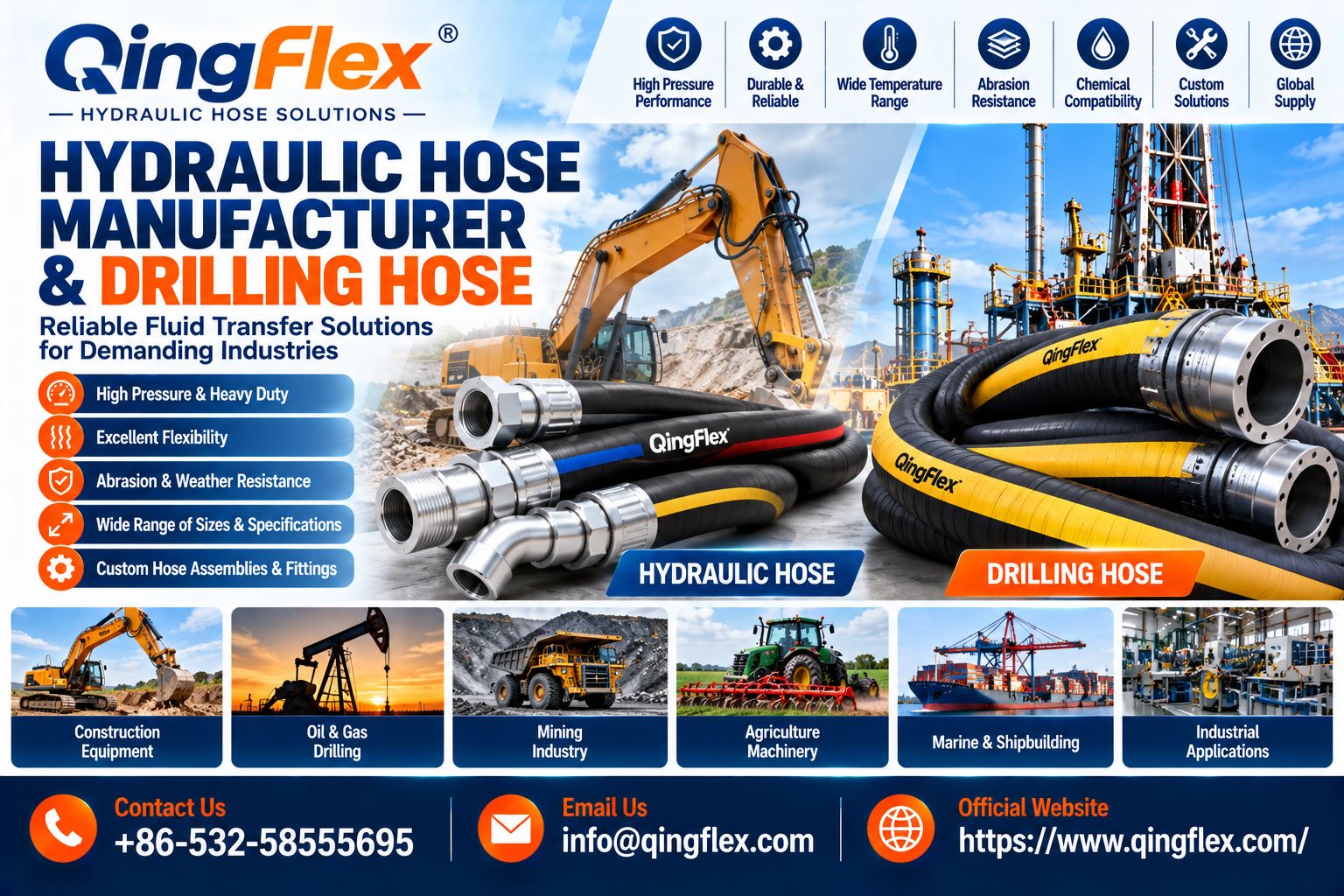
Across industrial operations, hydraulic systems are expected to perform reliably under demanding conditions. From heavy construction equipment to drilling machinery, hoses play a critical role in transferring fluids, maintaining hydraulic power, and supporting uninterrupted equipment operation.
This has increased attention on the selection of a qualified Hydraulic Hose Manufacturer capable of understanding the technical requirements of specialized industrial applications.
One product receiving particular attention is the drilling hose, which is used in certain drilling operations to transfer drilling fluids under demanding pressure and movement conditions.
Unlike conventional hydraulic hoses, drilling hoses designed for high-pressure drilling-fluid service must accommodate application-specific challenges, including vibration, pressure fluctuations, mechanical movement, and exposure to harsh operating environments.
The discussion is gradually moving beyond basic product availability toward engineering suitability, inspection practices, and long-term reliability.
Why Drilling Hose Performance Matters in Industrial Operations
Drilling activities often involve equipment operating under substantial mechanical and hydraulic stress. Hoses used in these environments must support fluid transfer while maintaining structural integrity throughout their intended operating conditions.
A poorly selected hose may lead to leakage, unexpected equipment stoppages, maintenance complications, or safety concerns.
Important performance considerations include:
- Pressure resistance: The hose must be suitable for the specified working pressure and expected operating conditions.
- Flexibility: Appropriate flexibility helps accommodate equipment movement without exceeding the manufacturer’s bend-radius limits.
- Abrasion resistance: External protection can help reduce damage caused by contact with surrounding equipment.
- Temperature compatibility: Materials must remain suitable for the operating temperature range.
- Connection reliability: Properly matched end fittings help maintain secure system connections.
These factors make hose selection an engineering decision rather than a simple purchasing activity.
As one practical industry principle explains:
The Changing Role of a Hydraulic Hose Manufacturer
Industrial buyers increasingly need more than a product catalogue when selecting hose assemblies for specialized operations.
A professional Hydraulic Hose Manufacturer should be able to communicate the technical characteristics of its products and explain their intended operating applications.
This includes identifying suitable hose constructions, reinforcement materials, fitting configurations, and performance limitations.
For demanding drilling environments, clear product specifications can support purchasing teams in selecting hoses suited to particular equipment requirements.
Manufacturing consistency is another important consideration.
A well-defined production process generally involves careful material selection, controlled assembly procedures, dimensional verification, and appropriate quality testing.
Depending on the hose type and applicable requirements, testing may address pressure performance, dimensional conformity, or other relevant characteristics.
However, buyers should distinguish between manufacturer testing, documented conformity, and independent certification. These are not interchangeable.
Material Engineering and Hose Construction
The performance of a drilling hose depends significantly on its construction.
Many industrial hose assemblies combine multiple functional layers, each contributing to overall performance.
Inner Tube Compatibility
The inner tube comes into direct contact with the transferred fluid.
Its material must be compatible with the intended medium, which may contain additives, chemicals, or abrasive particles.
Incorrect material selection can contribute to premature deterioration and reduced service reliability.
Reinforcement Structure
Reinforcement provides strength and helps the hose withstand internal pressure.
Depending on the application, reinforcement may involve high-strength steel or other engineered materials arranged to achieve the required pressure and flexibility characteristics.
Outer Cover Protection
The outer cover provides protection against environmental exposure, surface abrasion, and certain mechanical influences.
Appropriate cover selection is particularly important where equipment movement creates frequent contact with nearby surfaces.
End Fittings and Connections
Even a properly designed hose can experience problems if its end fittings are unsuitable or incorrectly installed.
Connection compatibility, assembly procedures, and fitting quality should therefore form part of the purchasing assessment.
Why Technical Documentation Is Becoming a Purchasing Priority
One important development in industrial hose procurement is the increased value placed on technical documentation.
Purchasing decisions become more reliable when manufacturers provide clear information about the limitations and intended uses of their products.
Useful documentation may include working pressure ratings, temperature limits, dimensional specifications, minimum bend radius, compatible fittings, and relevant testing information.
For specialized drilling operations, buyers should also confirm whether the proposed hose is designed for the specific service involved.
A hose intended for a general hydraulic circuit should not automatically be treated as interchangeable with a high-pressure rotary or vibrator drilling hose.
These products can have significantly different construction requirements and performance expectations.
The key purchasing question is not simply whether a hose can transfer fluid, but whether it is suitable for the complete operating environment.
Maintenance Practices Influence Long-Term Hose Reliability
Product quality remains essential, but correct installation and maintenance also influence hose service life.
Operators should inspect hose assemblies for visible deterioration, leakage, excessive abrasion, damaged fittings, and abnormal deformation.
Installation practices deserve equal attention. Excessive twisting, improper routing, tight bends, and repeated contact with sharp surfaces can accelerate wear.
Maintenance teams should also consider the operating conditions experienced by each hose assembly.
A hose exposed to frequent pressure fluctuations or substantial mechanical movement may require a different inspection approach from one installed in a relatively stable system.
A useful maintenance principle states:
Inspection alone cannot guarantee safety, but it remains an important part of responsible equipment management. Suspected damaged assemblies should be assessed and replaced according to applicable manufacturer instructions and site procedures.
A Practical Approach to Choosing the Right Supplier
When comparing industrial hose suppliers, businesses should evaluate product suitability alongside delivery capability and purchasing cost.
A dependable selection process should consider:
- Application understanding: Can the supplier identify the correct hose type for the equipment and transferred fluid?
- Technical specifications: Are the operating limits and material details clearly documented?
- Quality verification: Is appropriate testing information available for the intended product?
- Assembly compatibility: Are the recommended fittings and connection methods suitable?
- Technical support: Can the supplier provide guidance on installation, inspection, and product limitations?
This structured approach helps businesses make more informed purchasing decisions without relying solely on promotional claims.
Industry Outlook: Reliability Beyond Initial Purchase Cost
Industrial hose purchasing is increasingly viewed through the wider perspective of equipment reliability and total operating cost.
While initial pricing remains important, buyers must also account for installation requirements, inspection effort, possible replacements, and the consequences of unexpected downtime.
A properly selected drilling hose can contribute to more dependable operations when it is correctly installed, operated within its specified limits, and maintained according to appropriate procedures.
For manufacturers, this creates an opportunity to differentiate through accurate engineering information, consistent production practices, and transparent technical communication.
The central message is clear: informed hose selection supports safer and more efficient industrial operations.
Frequently Asked Questions (FAQs)
1. What does a Hydraulic Hose Manufacturer produce?
A Hydraulic Hose Manufacturer produces hoses designed to transport hydraulic fluids under specified operating conditions. Depending on the manufacturer, its product range may include general industrial hoses, high-pressure assemblies, and application-specific solutions.
2. What is a drilling hose used for?
A drilling hose is used in certain drilling systems to transfer drilling fluids between connected equipment. Its construction and performance requirements depend on the specific drilling application, operating pressure, and movement conditions.
3. How is a drilling hose different from a standard hydraulic hose?
A drilling hose intended for specialized high-pressure drilling-fluid service may require different reinforcement, connection systems, and resistance to movement or vibration. The two types should not be considered interchangeable without technical verification.
4. What factors affect industrial hose service life?
Fluid compatibility, pressure, temperature, installation quality, abrasion, bending, vibration, and maintenance practices can all influence hose service life. Operating beyond specified limits may increase the risk of premature failure.
5. How can buyers identify a suitable hose manufacturer?
Buyers should review technical documentation, relevant quality procedures, product compatibility, available testing information, and the supplier’s ability to explain application-specific requirements before purchasing.
Media Contact
Department: Media Relations & Industrial Product Enquiries
Industry: Industrial Hose Manufacturing and Fluid Transfer Solutions
Contact: +86-532-58555695
Email: info@qingflex.com
Official Website: https://www.qingflex.com/