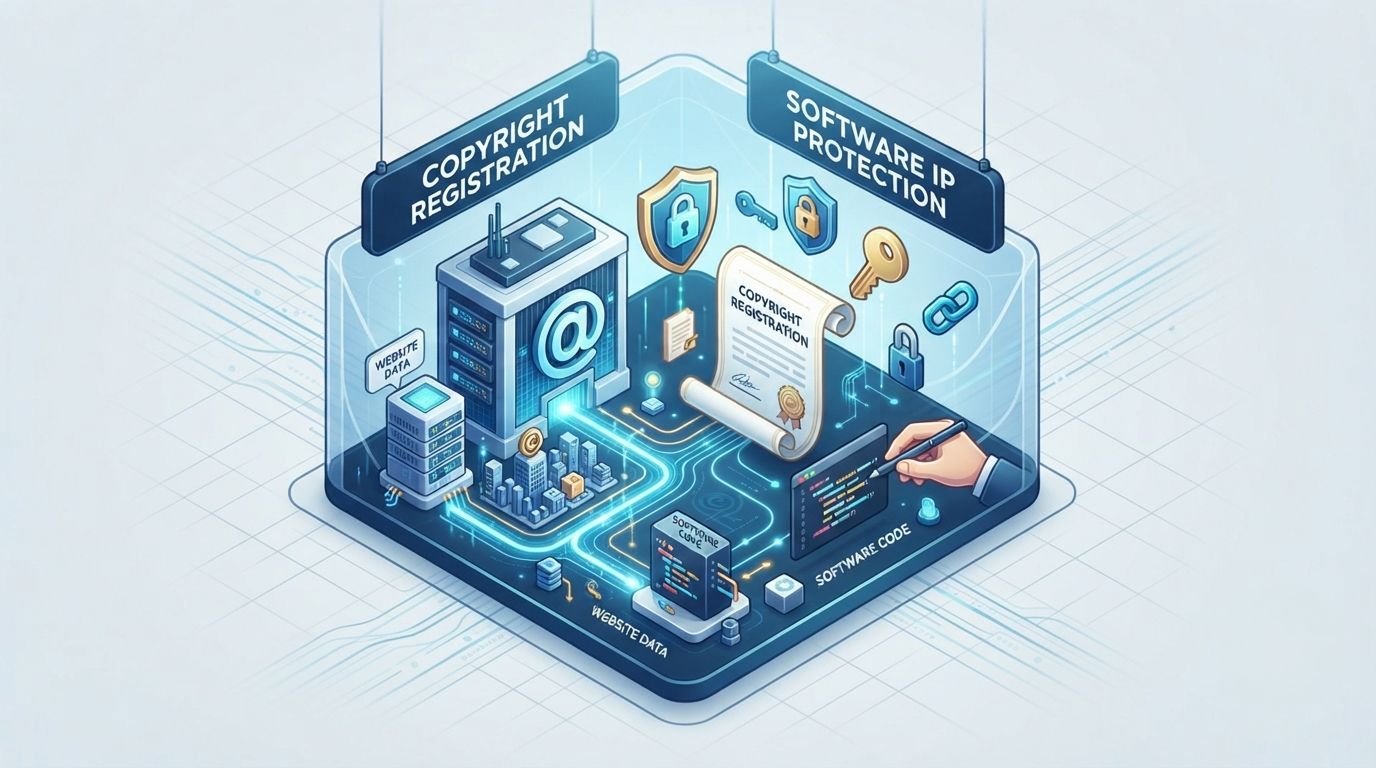
A website or software product is often the result of serious time, money, and creative effort. From source code and interface design to written content and digital visuals, each part reflects intellectual work that deserves protection. That is why Copyright Registration for Website and Software Intellectual Property Protection matter so much in today’s online-first business world.
For companies, freelancers, startups, and software developers, copyright is more than a legal formality. It helps establish ownership, reduce infringement risks, and create a stronger foundation for growth. When your digital assets are protected, it becomes easier to license them, defend them, and use them as part of your long-term business strategy.
What Copyright Registration Means for a Website
A website is not just a collection of pages. It is a creative and technical asset made up of several original elements. Copyright law can protect many of these parts when they are created in an original form.
Common website elements that may qualify for protection include:
- Website text and articles
- Source code and scripts
- Graphic design and layout
- Original images and illustrations
- Videos and animations
- Custom icons and interface elements
- Downloadable materials
- Database content in some cases
Registering the website copyright gives the owner stronger proof of authorship. This can be useful if another business copies the content, duplicates the design, or reuses the code without permission.
Why Software Intellectual Property Protection Is Essential
Software is one of the most valuable business assets in the modern economy. It powers platforms, automates workflows, supports users, and often gives a company its competitive edge. Because software is so valuable, it is also highly vulnerable to copying and misuse.
Software Intellectual Property Protection helps safeguard:
- Source code
- Object code
- Documentation
- User manuals
- Screen displays
- Custom workflows
- Technical architecture
- Original features and layouts
Protection does not stop with copyright alone. A strong strategy may also include trademarks, contracts, trade secret policies, and where applicable, patents. Together, these tools create a more complete shield for innovation.
What Copyright Can Protect and What It Cannot
Copyright is powerful, but it does not protect everything. It covers the expression of an idea, not the idea itself.
What it can protect
Original creative expression, including:
- Code written in a specific way
- Unique website copy
- Custom design elements
- Original documentation
- Visual artwork and media
What it cannot protect
General concepts, such as:
- A business idea
- A software function in the abstract
- A basic website layout used everywhere
- Standard programming methods
- Common user workflows
In simple terms
Copyright protects how something is expressed, not the general concept behind it.
How Copyright Registration Supports Business Growth
Many businesses think of copyright only as a defense tool. In reality, it also supports expansion.
A registered copyright can help a business:
- Prove ownership in disputes
- Increase credibility with clients and investors
- Support licensing and commercial partnerships
- Improve the value of digital assets
- Make acquisition or fundraising due diligence easier
- Create a more professional brand image
This is especially important for software companies, SaaS platforms, content-driven businesses, and digital agencies that rely on original online material.
Key Steps in the Registration Process
The process for registering website or software copyright may differ by country, but the general approach is similar.
Step 1: Identify the Original Work
First, decide what needs protection. This may include the website’s content, the software’s source code, design files, or user documentation.
Step 2: Gather Supporting Records
Keep records that show originality and ownership, such as:
- Development files
- Drafts and versions
- Screenshots
- Published pages
- Code repositories
- Contributor agreements
Step 3: File the Application
Submit the application to the relevant copyright authority. Be accurate and complete, since errors can delay the process.
Step 4: Respond to Queries
If the authority requests clarification or supporting documents, provide them promptly.
Step 5: Receive the Certificate
Once approved, the registration certificate becomes a valuable legal record of ownership.
Strong Ways to Protect Software Beyond Copyright
Copyright is important, but smart businesses use multiple layers of protection.
Legal protection tools
- NDA agreements with staff and contractors
- IP assignment clauses in employment contracts
- Software license agreements
- Trademark registration for the product name
- Confidentiality rules for internal teams
Technical protection tools
- Restricted access to code repositories
- Secure passwords and authentication
- Encrypted storage
- Code review systems
- Watermarking for digital assets
- Regular security testing
A good protection plan combines law, process, and technology.
Common Mistakes That Weaken Protection
Even strong businesses make avoidable mistakes.
Some of the most common ones include:
- Launching without documenting ownership
- Using third-party content without permission
- Forgetting contractor agreements
- Delaying registration until after a dispute
- Failing to separate ideas from protected expression
- Not keeping backups of development records
These mistakes can become expensive later, especially if the website or software becomes successful.
Copyright Registration Versus Patent Protection
Many people confuse copyright with patents, but they serve different purposes.
| Feature | Copyright Registration | Patent Protection |
| Protects | Original expression | New technical invention |
| Common use | Code, text, design, media | Functional innovation |
| Process | Usually simpler | Usually more complex |
| Cost | Typically lower | Typically higher |
| Purpose | Prevent copying | Protect invention rights |
In many cases, software businesses may use copyright for code and content, and patents for eligible innovations.
Why Businesses Should Act Early
Waiting too long can create problems. If your website or software is already public, proving originality may become harder. Early registration is often the smarter move because it creates a clear legal record before disputes arise.
It also helps when:
- Seeking funding
- Selling the business
- Expanding into new markets
- Entering joint ventures
- Licensing the product
The earlier your protection begins, the stronger your position becomes.
Frequently Asked Questions
1. What is Copyright Registration for Website?
It is the legal registration of original website content, code, graphics, and design elements to confirm ownership.
2. Why is Software Intellectual Property Protection important?
It protects software from copying, piracy, misuse, and unauthorized commercial use.
3. Does copyright automatically protect software?
Original software may be protected when created, but registration often makes enforcement much easier.
4. Can website design be copyrighted?
Yes, if the design contains original creative expression rather than a standard layout.
5. Does copyright protect software ideas?
No. It protects the expression of the idea, not the idea itself.
6. What parts of a website can be protected?
Text, code, graphics, videos, layouts, and other original materials may qualify.
7. Should startups register software copyrights?
Yes, especially before scaling, fundraising, or working with external developers.
8. Do contractors own the code they create?
Usually this depends on the contract. Ownership should be clearly assigned in writing.
9. Can copyrighted software be licensed?
Yes. The owner can grant usage rights through licensing agreements.
10. Is copyright enough to protect a software business?
Not always. A strong strategy often includes copyright, trademark, contracts, and technical safeguards.