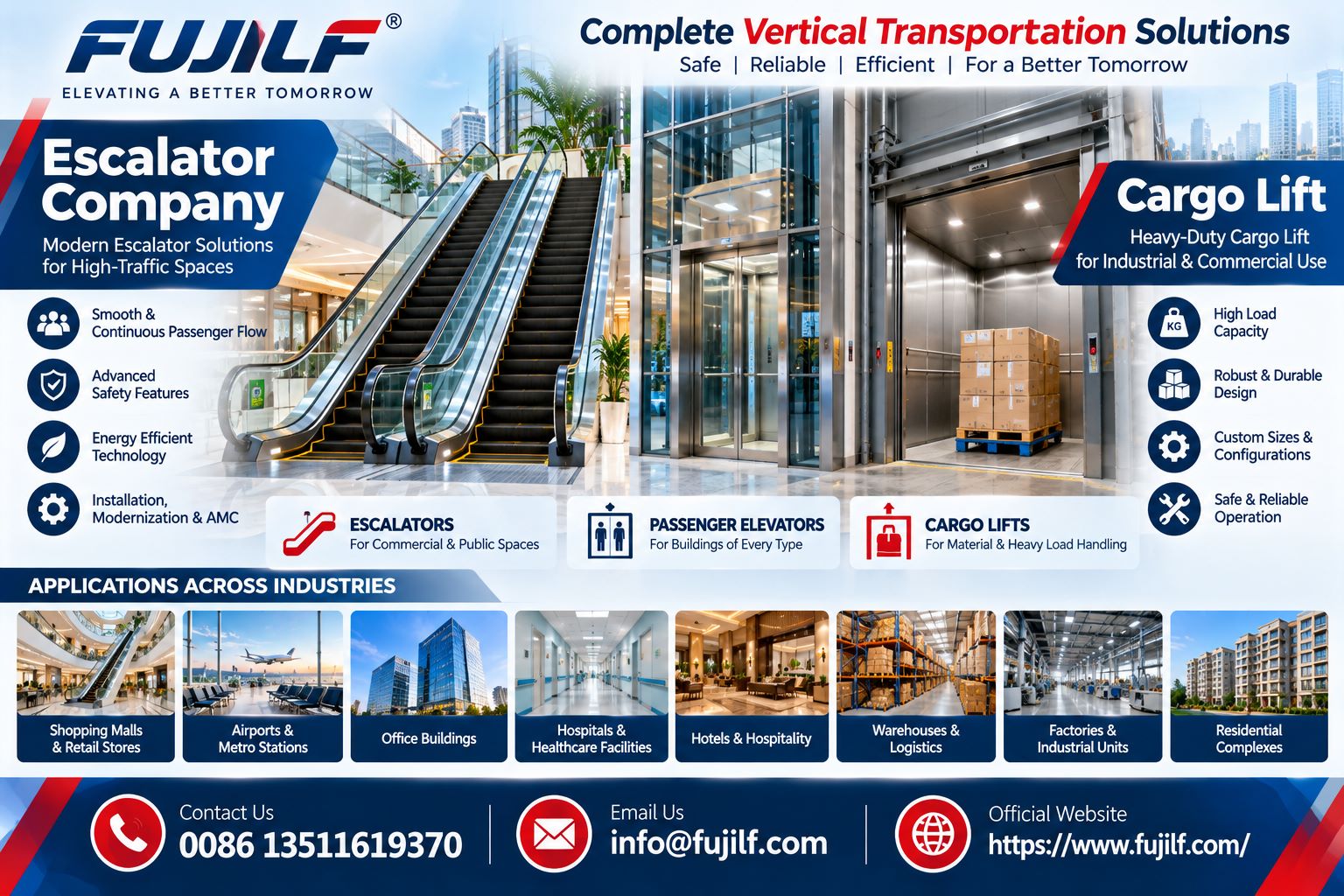
An experienced escalator company can contribute to commercial infrastructure planning by helping property developers evaluate passenger circulation, equipment capacity, and suitable escalator placement.
At the same time, a cargo lift provides an important goods-handling function by transporting merchandise, supplies, and other permitted materials between building levels.
Although the equipment serves different purposes, coordinated planning can help reduce unnecessary congestion and improve the organization of commercial spaces.
The important consideration is understanding how customer traffic and inventory movement affect building operations.
For retail developers, effective vertical transportation involves more than moving people and products. It is about creating an environment where commercial activities can function without unnecessary interruptions.
Why Passenger Traffic Analysis Matters in Shopping Centres
Retail environments experience changing patterns of visitor movement.
Some entrances attract more customers than others, while entertainment areas, food courts, and popular retail stores may generate concentrated passenger demand.
Escalator placement can influence how visitors circulate between different commercial levels.
A professional escalator company should evaluate these movement patterns when recommending equipment configurations.
Important considerations include:
- Visitor distribution: Understanding how customers move between retail areas.
- Passenger capacity: Selecting systems appropriate for expected traffic demand.
- Escalator positioning: Connecting important destinations through logical routes.
- Entry and exit space: Providing adequate room for passengers approaching and leaving equipment.
- Accessibility: Maintaining appropriate alternative routes for individuals who cannot use escalators.
These elements contribute to effective circulation planning and a more convenient shopping experience.
Cargo Lift Systems Support Retail Inventory Movement
Retail operations depend on regular movement of merchandise from storage facilities to sales areas.
When goods must be transported between different building levels, suitable lifting equipment can support internal logistics.
A cargo lift is designed to transport specified goods according to its approved load capacity and equipment classification.
In commercial properties, cargo lifts may support movement between loading areas, storage levels, and designated retail service locations.
For example, a department store may need to transfer packaged inventory from a warehouse floor to an upper-level stockroom.
Using equipment designed for material handling can help separate these activities from customer transportation routes.
However, goods lifts should never be used for passenger travel unless the particular equipment is specifically approved for accompanied goods transportation.
Coordinating Passenger Movement with Back-of-House Logistics
One challenge in commercial property design is avoiding unnecessary interaction between customers and material-handling operations.
Delivery activities may involve large packages, equipment, and merchandise that are unsuitable for public circulation areas.
Separate service corridors and properly positioned goods lifts can help organize these movements.
Meanwhile, escalators support customer access to shopping and entertainment areas.
An important building-planning principle explains:
This approach requires coordination between architects, retailers, facility managers, and equipment specialists.
Effective planning considers loading access, storage locations, passenger routes, and the physical limitations of the building.
Understanding Peak Demand and Transportation Capacity
Commercial facilities may experience significant variations in visitor numbers during promotional events, holidays, and special activities.
These changes can affect escalator usage and create congestion near popular destinations.
Transportation planning should therefore consider expected demand rather than relying only on normal occupancy assumptions.
Depending on the project, developers may evaluate passenger-flow estimates, circulation layouts, and equipment capacity.
For cargo lifting systems, the relevant considerations are different.
Freight demand depends on shipment quantities, loading requirements, equipment capacity, and the relationship between storage and retail floors.
A properly specified cargo lift should accommodate intended goods without exceeding approved loading limits.
Evaluating passenger and goods movement separately helps establish suitable transportation arrangements.
How Smart Building Planning Supports Operational Efficiency
Commercial infrastructure increasingly benefits from clear information about building usage.
Facility managers may review occupancy patterns, equipment operating records, and maintenance information to identify areas requiring attention.
For escalators, this information can support decisions about servicing arrangements and passenger circulation.
For goods lifts, inventory movement requirements can influence equipment selection and operational coordination.
However, operational information must be interpreted carefully.
High passenger numbers do not automatically justify additional escalators, just as heavy merchandise movement does not always require larger lifting equipment.
A useful engineering observation states:
Professional technical assessment remains essential.
Safety and Accessibility Remain Core Requirements
Retail transportation systems must be designed and maintained according to applicable safety regulations.
Escalators require suitable protective devices, appropriately arranged entrances and exits, and professional inspection.
Cargo lifting equipment requires safety systems appropriate to its design, intended loads, and permitted operating functions.
Clearly defined equipment usage helps prevent unsafe practices.
Customers should have access to appropriate alternatives when escalators cannot accommodate their mobility requirements.
Similarly, goods-handling activities should follow approved loading procedures and relevant equipment instructions.
Operational efficiency should never come at the expense of passenger or employee safety.
Selecting a Suitable Escalator and Cargo Lift Provider
Choosing transportation equipment requires evaluating both technical specifications and ongoing service requirements.
Commercial developers should consider:
- Building requirements: Determine passenger demand and goods-handling needs.
- Equipment suitability: Review escalator configurations and cargo lift specifications.
- Installation compatibility: Confirm available space and structural requirements.
- Safety compliance: Verify applicable design, inspection, and regulatory obligations.
- Maintenance support: Evaluate servicing arrangements and spare-parts availability.
A qualified escalator company should provide accurate product information and explain relevant operating limitations.
Cargo lift selection should similarly be based on the intended loads, platform dimensions, and authorized equipment functions.
Industry Outlook: Better Retail Operations Through Coordinated Planning
Commercial buildings function most effectively when transportation systems support the activities taking place within them.
Escalators help visitors navigate public shopping environments, while cargo lifts serve designated material-handling operations.
Appropriate equipment placement, capacity evaluation, and maintenance planning can contribute to smoother operations.
For retail property developers, the broader opportunity lies in coordinating passenger circulation and internal logistics from the earliest stages of infrastructure planning.
Frequently Asked Questions (FAQs)
1. What does an escalator company provide for shopping malls?
An escalator company may provide equipment selection, technical planning, installation coordination, and maintenance services. Its role depends on the provider’s capabilities and project requirements.
2. What is a cargo lift used for in commercial buildings?
A cargo lift transports specified merchandise, equipment, and supplies between different building levels. It is commonly used in warehouses, retail properties, and industrial facilities.
3. Why should retail buildings separate passenger and goods transportation?
Separating transportation functions can reduce interference between customer movement and inventory handling while supporting more organized building operations.
4. How is escalator capacity determined?
Escalator capacity depends on equipment specifications, passenger-flow requirements, operating conditions, and applicable design standards. Qualified specialists should evaluate the intended installation.
5. What should businesses consider before installing a cargo lift?
Businesses should assess load capacity, platform dimensions, structural compatibility, connection to loading areas, safety requirements, and maintenance arrangements.
Media Contact
Department: Business Enquiries & Vertical Transportation Solutions
Industry: Escalators, Elevators, Cargo Lifts & Commercial Lifting Equipment
Contact: 008613511619370
Email: info@fujilf.com
Official Website: https://www.fujilf.com/