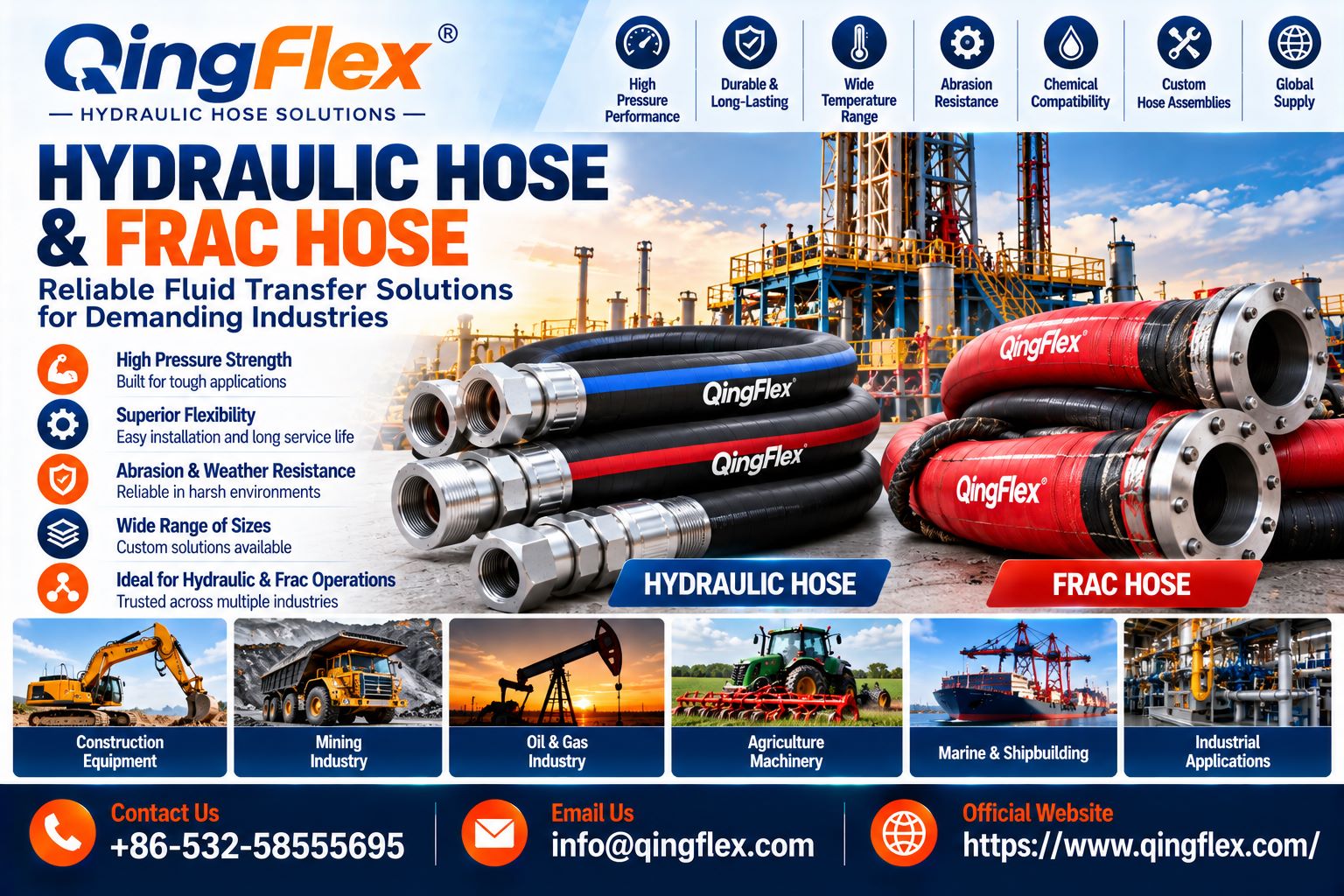
As businesses examine equipment reliability and environmental risks, the performance of flexible fluid-transfer components deserves particular attention.
A Hydraulic Hose supports machinery operation by transferring pressurised hydraulic fluid between connected system components.
Meanwhile, a frac hose serves specified fluid-transfer applications associated with hydraulic fracturing activities, including compatible water-handling and fluid-management arrangements.
Although these hoses perform different functions, both require appropriate material selection, installation, inspection, and maintenance.
For industrial operators, the broader objective is to prevent avoidable leaks, protect surrounding environments, and establish responsible fluid-handling practices.
Why Fluid Containment Matters in Industrial Operations
Fluid leakage can create operational, environmental, and workplace safety concerns.
In hydraulic machinery, escaping fluid may affect equipment performance and expose personnel to hazardous conditions.
In oilfield fluid-transfer operations, unintended releases can affect surrounding surfaces, equipment, and potentially sensitive environmental areas.
The consequences depend on the fluid involved, the amount released, and site conditions.
Appropriate hose selection and maintenance can contribute to broader fluid-containment strategies.
Understanding the Role of a Hydraulic Hose
A Hydraulic Hose is a flexible assembly component designed to transfer hydraulic fluid under specified operating conditions.
Its construction commonly includes an internal tube, reinforcement layers, and a protective outer covering.
The inner tube must be compatible with the operating fluid.
Reinforcement provides the pressure resistance required by the hose specification, while the outer covering offers protection against relevant environmental and mechanical exposure.
Hydraulic hoses are widely used in industrial machinery, construction equipment, agricultural systems, and mobile equipment.
Their suitability depends on correct specifications and compatible assembly components.
What Is a Frac Hose?
A frac hose is a flexible fluid-transfer hose designed for particular applications within hydraulic fracturing operations.
Depending on its construction and rating, it may support water transfer or other specified fluid-handling duties.
Some assemblies are designed for relatively lower-pressure transfer applications, while other specialised equipment requires significantly different pressure capabilities.
These differences must be understood before selecting a product.
A hose described as suitable for fracturing operations should never be assumed appropriate for every part of a fracturing system.
Actual pressure ratings, fluid compatibility, connections, and manufacturer instructions determine suitability.
How Incorrect Hose Selection Can Increase Environmental Risks
Selecting an unsuitable hose can contribute to premature deterioration and leakage.
For example, an incompatible fluid may affect the internal tube material.
Excessive pressure or unsuitable mechanical conditions can damage the hose assembly.
Incorrect fittings may also introduce connection-related risks.
These problems demonstrate why hose selection should involve qualified technical personnel.
Verified specifications help organisations make more responsible purchasing and installation decisions.
Comparing Fluid-Handling Requirements
| Evaluation Factor | Hydraulic Hose | Frac Hose |
| Main Function | Hydraulic power transmission | Specified fracturing fluid-transfer duties |
| Typical Fluids | Compatible hydraulic fluids | Water or other approved fluids |
| Pressure Requirements | According to hydraulic equipment specifications | According to the specific fracturing application |
| Environmental Consideration | Hydraulic fluid leakage | Unintended transfer-fluid release |
| Installation Priority | Correct routing and assembly compatibility | Suitable layout and connection integrity |
| Maintenance Focus | Wear, leakage, and assembly condition | Surface damage, connections, and fluid compatibility |
These differences make application-specific engineering assessment essential.
Why Site Layout Influences Fluid-Transfer Safety
Industrial hose installations must account for equipment movement, surrounding structures, and potential mechanical damage.
A hose positioned against sharp surfaces may experience abrasion.
Improper routing can also introduce twisting, excessive bending, or unwanted tension.
On temporary fluid-transfer sites, suitable layout planning can help reduce exposure to vehicle movement and other hazards.
However, protective arrangements must match the specific operating environment.
Operators should follow equipment instructions and manufacturer-approved installation practices.
A well-planned layout supports safer access, inspection, and maintenance activities.
The Importance of Containment and Spill Preparedness
Preventing leaks is a priority, but industrial facilities should also prepare for unintended fluid releases.
Suitable containment arrangements may reduce the risk of fluids reaching sensitive areas.
The appropriate measures depend on the fluid’s properties, equipment configuration, environmental conditions, and applicable requirements.
Facilities should establish clear procedures for identifying and reporting suspected leaks.
Only trained and authorised personnel should undertake corrective work involving pressurised systems.
Personnel must never attempt to locate hydraulic leaks with bare hands because high-pressure fluid injection can cause severe injury.
Spill response arrangements should follow established site safety procedures.
How Inspection Supports Responsible Equipment Use
Visual inspection can help identify deterioration before a hose assembly experiences significant failure.
Relevant concerns include damaged outer coverings, unusual deformation, leakage, corrosion, and deteriorated fittings.
However, some internal damage may not be visible.
Inspection methods and replacement decisions should follow manufacturer guidance and relevant technical requirements.
Personnel should avoid assuming that an apparently intact hose is suitable for continued service without considering its operating history.
Appropriate records can help maintenance teams identify recurring problems and evaluate equipment condition more effectively.
Quality Documentation and Product Traceability
Technical documentation supports responsible hose purchasing and equipment management.
Industrial operators should understand the specifications of the components installed in their systems.
Relevant records may identify product type, pressure classification, fluid compatibility, connection requirements, and applicable manufacturing standards.
Traceability can also help distinguish similar-looking hoses intended for different applications.
A reliable supplier should communicate technical limitations clearly.
Documentation does not eliminate operational risk, but it provides a foundation for informed selection, installation, and maintenance decisions.
Responsible Replacement and Disposal Practices
Industrial hose management continues after an assembly is removed from service.
Used hoses may contain fluid residues or materials requiring specific handling.
Businesses should establish suitable procedures for isolating, handling, and disposing of removed components according to applicable requirements.
Where appropriate, qualified personnel should assess whether components require special waste management.
Reuse of damaged or unverified high-pressure hose assemblies can create serious hazards.
Responsible disposal practices can complement broader environmental management programmes while reducing the risk of unsuitable components returning to service.
Frequently Asked Questions (FAQs)
1. What is a Hydraulic Hose used for?
A hydraulic hose transfers pressurised hydraulic fluid between system components to support mechanical equipment operation.
2. What is a frac hose used for?
A frac hose is used in specified hydraulic fracturing fluid-transfer applications, including certain water-handling arrangements.
3. Can damaged industrial hoses cause environmental problems?
Yes. Hose failures can release fluids that may create environmental, equipment, and workplace safety concerns.
4. How can businesses reduce hose leakage risks?
Businesses should use correctly specified assemblies, follow approved installation practices, maintain appropriate inspection procedures, and address identified defects.
5. Are hydraulic hoses and frac hoses interchangeable?
Not automatically. Their materials, construction, pressure ratings, and intended applications may differ, requiring proper technical verification.
Media Contact
Department: Industrial Hose Manufacturing and Technical Product Enquiries
Enquiry Categories: Hydraulic Hose, Frac Hose, Industrial Fluid Transfer, Oilfield Equipment, Hose Safety, and Specialised Hose Solutions.
Contact: +86-532-58555695
Email: info@qingflex.com
Official Website: https://www.qingflex.com/