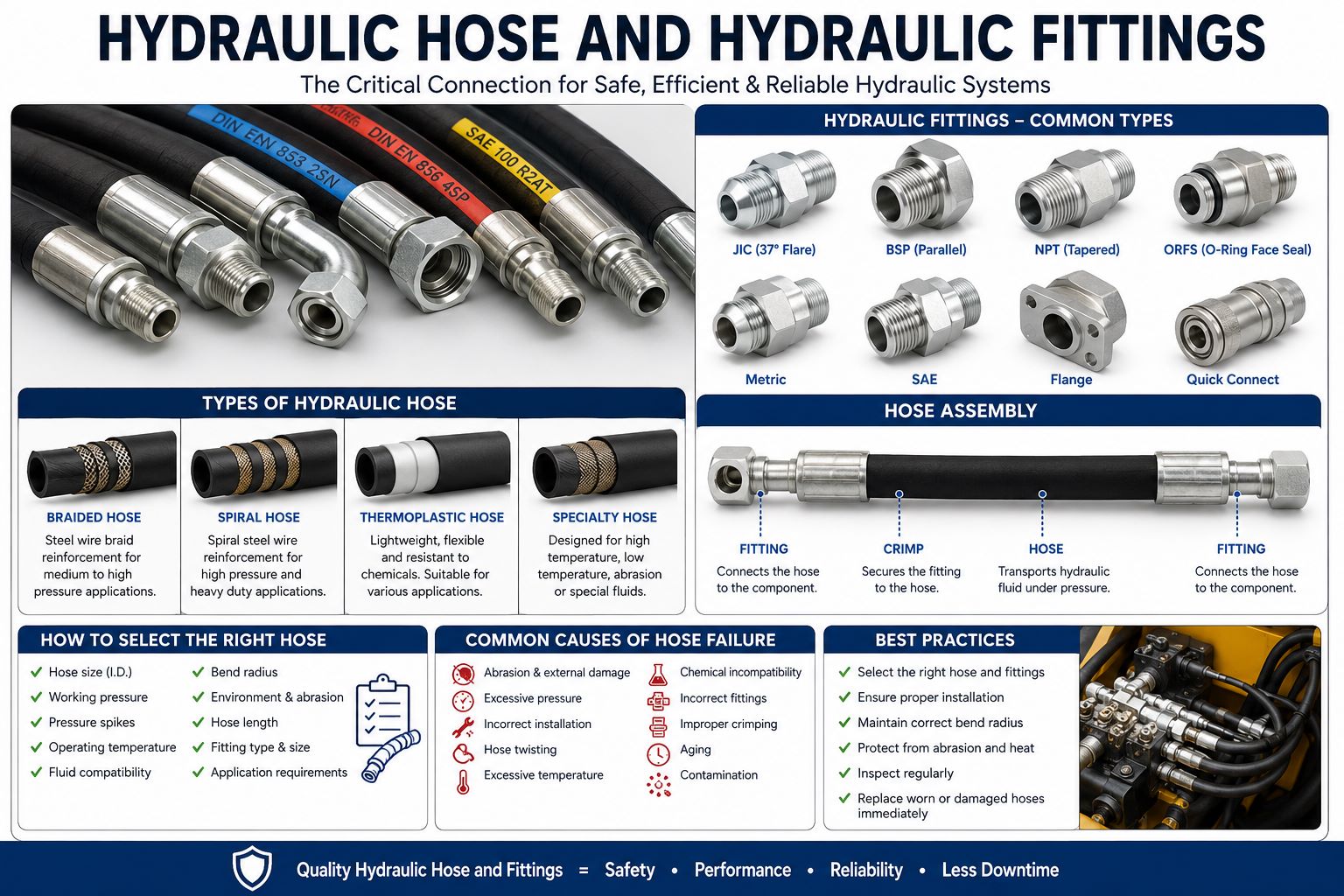
Industrial machinery, drilling equipment, construction systems, and oilfield operations depend heavily on reliable fluid-transfer components. Among the most important are Hydraulic Hose and drilling hose systems. These flexible connections are engineered to transport hydraulic fluids, drilling mud, water, oil, and other media under demanding operating conditions.
Choosing the correct hose is not simply about matching diameter and pressure. Temperature, fluid compatibility, bend radius, abrasion resistance, working environment, fittings, reinforcement, and safety requirements all influence hose performance. Understanding these factors helps businesses reduce unexpected downtime, improve operational safety, and extend equipment service life.
What Is a Hydraulic Hose?
A Hydraulic Hose is a flexible reinforced tube designed to carry hydraulic fluid between components such as pumps, cylinders, motors, control valves, and reservoirs. It allows power to be transmitted through pressurised fluid while accommodating equipment movement and vibration.
Most hydraulic hoses contain several engineered layers.
Inner Tube
The inner tube directly contacts the hydraulic medium. Its material should be compatible with petroleum-based oils, synthetic hydraulic fluids, water-based fluids, or other chemicals used within the system.
Reinforcement Layer
Reinforcement provides pressure resistance. Depending on the application, manufacturers may use braided steel wire, spiral steel wire, textile reinforcement, or multiple reinforcement layers.
Outer Cover
The external cover protects the hose against abrasion, weather, oil exposure, ozone, impact, and environmental damage.
This multilayer construction enables hydraulic hoses to operate effectively in demanding industrial applications.
What Is a Drilling Hose?
A drilling hose is a specialised high-pressure flexible hose commonly used within oil, gas, geothermal, mining, and drilling operations. It may transport drilling mud, cement slurry, oil, water, and other fluids between drilling equipment.
Unlike general industrial hoses, drilling hoses often operate in environments involving high pressure, continuous vibration, considerable mechanical movement, harsh weather, and abrasive materials.
Typical applications include:
- Oil and gas drilling rigs
- Offshore drilling platforms
- Mud circulation systems
- Rotary drilling equipment
- Cementing operations
- Exploration projects
- High-pressure fluid transfer
- Mining and geothermal drilling
Selecting a suitable drilling hose is particularly important because failure during high-pressure operations can create serious operational and safety risks.
Hydraulic Hose and Drilling Hose Comparison
| Feature | Hydraulic Hose | Drilling Hose |
| Primary purpose | Hydraulic power transmission | Drilling-fluid transfer |
| Common media | Hydraulic oil and fluids | Mud, oil, water and slurry |
| Pressure requirement | Low to extremely high | Typically high to very high |
| Flexibility | High | High with heavy-duty construction |
| Reinforcement | Textile, wire braid or spiral wire | Heavy-duty multi-layer reinforcement |
| Common industries | Construction, manufacturing, agriculture | Oilfield, mining and drilling |
| Operating conditions | Industrial equipment environments | Severe drilling environments |
Both products require careful specification to ensure dependable performance.
Important Factors When Selecting a Hydraulic Hose
Purchasing a Hydraulic Hose based solely on dimensions can lead to premature failure. Engineers and maintenance professionals should evaluate the complete operating conditions.
Working Pressure
The hose should have a rated working pressure suitable for the maximum pressure generated by the hydraulic system. Pressure surges and pulsations should also be considered.
Temperature
Both internal fluid temperature and external ambient temperature affect hose durability. Excessive heat can weaken rubber compounds and reduce service life.
Fluid Compatibility
Different hose compounds react differently to hydraulic oils, chemicals, synthetic fluids, and water-based media. Always verify compatibility before installation.
Bend Radius
Installing a hose below its recommended minimum bend radius places unnecessary stress on reinforcement layers and can accelerate failure.
How to Select the Right Drilling Hose
The correct drilling hose must withstand the specific challenges of drilling operations.
Consider the following factors:
- Determine maximum operating pressure.
- Identify the fluid or drilling medium being transferred.
- Check operating and environmental temperatures.
- Determine required hose diameter and length.
- Evaluate abrasion and external wear conditions.
- Select compatible couplings and end connections.
- Verify relevant industry specifications.
- Consider dynamic movement and installation layout.
Where safety-critical equipment is involved, professional technical evaluation is strongly recommended.
Common Hydraulic Hose Applications
Hydraulic hoses are found across numerous industries because hydraulic power delivers considerable force through relatively compact equipment.
Common applications include excavators, loaders, forklifts, cranes, tractors, injection moulding machinery, mining equipment, industrial presses, material-handling systems, agricultural machinery, and manufacturing equipment.
A properly specified Hydraulic Hose helps maintain efficient fluid flow while allowing machine components to move without rigid pipe connections.
Why Hose Quality Matters
A hose may appear to be a relatively simple component, but its quality can influence an entire hydraulic or drilling system.
High-quality hose construction can provide:
- Better pressure resistance
- Improved abrasion protection
- Greater flexibility
- Reliable fluid compatibility
- Longer operating life
- Reduced leakage risk
- Better resistance to environmental exposure
Cost should therefore not be the only consideration when purchasing hydraulic or drilling hoses.
Hose Installation and Maintenance Best Practices
Correct installation can significantly influence hose performance.
Avoid twisting hoses during assembly because twisting creates internal stress. Provide enough length for movement but avoid unnecessary excess. Keep hoses away from sharp edges and extreme heat sources whenever possible.
Inspect hose assemblies regularly for cracking, abrasion, exposed reinforcement, leakage, damaged fittings, blistering, unusual deformation, or corrosion.
Replacement should occur when significant deterioration is identified rather than waiting for complete failure.
Frequently Asked Questions
1. What is a Hydraulic Hose used for?
A Hydraulic Hose transfers pressurised hydraulic fluid between pumps, valves, cylinders, motors, and other hydraulic components.
2. What is a drilling hose used for?
A drilling hose transfers drilling fluids such as mud, water, oil, and other media in drilling and oilfield operations.
3. Are hydraulic and drilling hoses the same?
No. Although both handle pressurised fluids, their construction, pressure ratings, applications, reinforcement, and industry requirements can differ considerably.
4. How do I choose hydraulic hose size?
Consider inner diameter, flow requirements, working pressure, hose length, fittings, temperature, and the recommendations of the equipment manufacturer.
5. What causes hydraulic hose failure?
Common causes include abrasion, excessive pressure, incorrect routing, overheating, chemical incompatibility, twisting, ageing, and unsuitable fittings.
6. Can drilling hoses handle abrasive materials?
Certain drilling hoses are specifically designed for abrasive drilling fluids. The exact hose construction should always match the transferred medium.
7. How often should hoses be inspected?
Inspection frequency depends on operating conditions. High-pressure or severe-duty systems should normally receive frequent visual and preventive maintenance inspections.
8. Why is minimum bend radius important?
Exceeding the recommended bend limit can damage reinforcement, restrict fluid flow, create stress concentrations, and shorten hose life.
9. Can any fitting be installed on a hydraulic hose?
No. Fittings must be compatible with the hose type, dimensions, pressure requirements, and manufacturer’s assembly specifications.
10. When should a hydraulic hose be replaced?
Replace it when significant cracking, leakage, reinforcement exposure, fitting damage, blistering, severe abrasion, or other deterioration appears.