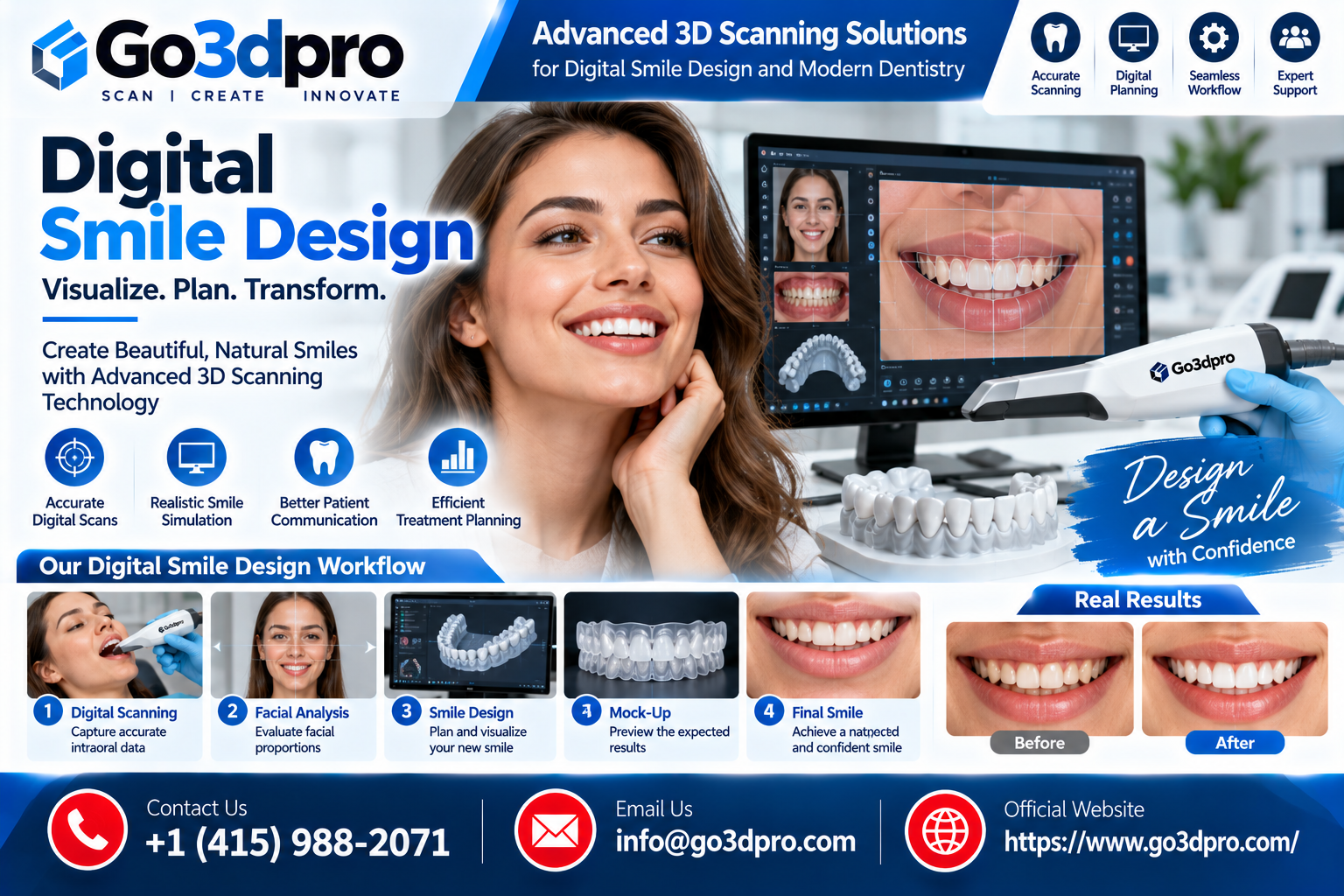
The rise of digital smile design is changing how dentists, laboratories, and patients approach cosmetic and restorative treatment planning. By combining digital imaging, facial analysis, intraoral scanning, photography, and treatment simulation, modern dental teams can visualize possible outcomes before treatment begins and communicate plans more clearly.
Instead of relying only on conventional impressions, hand-drawn plans, or verbal explanations, digital workflows allow clinicians to create a more visual and structured treatment process. This can be especially useful for veneers, crowns, implants, orthodontics, full-mouth rehabilitation, and other smile-focused procedures.
What Is Digital Smile Design?
Digital smile design is a technology-assisted approach to planning aesthetic dental treatment.
It uses digital records of the patient’s face, teeth, smile, and oral structures to help the dental team evaluate proportions, symmetry, tooth position, gum display, and overall appearance.
Depending on the clinic and workflow, the process may include:
- Digital photography
- Intraoral scanning
- Facial scanning
- 3D dental models
- CAD software
- Digital mock-ups
- Treatment simulations
- Laboratory collaboration
The goal is to create a treatment plan that considers both dental function and facial aesthetics.
Why Digital Smile Design Is Growing
Patients increasingly want to understand what a treatment may involve before committing to it.
Traditional treatment discussions may rely on verbal explanations or photographs of other cases. A digital approach can provide a more personalized visual reference.
A digital smile design workflow may help clinicians explain:
- Tooth shape
- Tooth length
- Smile symmetry
- Gum proportions
- Alignment
- Restorative options
- Expected treatment stages
This can make consultations easier to understand and may improve communication between patient and dental team.
Facial Analysis Plays an Important Role
A smile should not be evaluated in isolation.
Digital planning may consider how teeth relate to:
- Lips
- Facial midline
- Smile line
- Chin
- Facial proportions
- Gum visibility
This broader approach can help create a result that looks more balanced with the patient’s overall facial features.
Intraoral Scanning Supports Digital Smile Design
An intraoral scanner can capture detailed three-dimensional information about the teeth and surrounding oral structures.
The digital model may then be used to:
- Analyze tooth position
- Design restorations
- Plan orthodontic movement
- Create mock-ups
- Support laboratory communication
Digital scans can also reduce dependence on conventional impression materials in suitable cases.
This makes the workflow more connected from initial consultation through final restoration.
Digital Photography Improves Communication
High-quality photographs are often an important part of digital smile design.
Common images may include:
- Full-face photographs
- Natural smile
- Retracted intraoral views
- Side profile
- Close-up smile images
These records help clinicians analyze facial relationships and communicate more effectively with dental laboratories.
Standardized photography can also support before-and-after documentation.
3D Scanning Adds Another Layer of Detail
Some advanced workflows combine intraoral data with facial scans or other three-dimensional records.
This can help create a more complete digital representation of the patient.
Three-dimensional planning may be particularly valuable for:
- Complex restorative cases
- Implant dentistry
- Full-mouth rehabilitation
- Orthodontic planning
- Prosthetic design
Combining multiple digital datasets can help the dental team understand how different treatment elements interact.
Digital Mock-Ups Help Patients Visualize Treatment
One of the most attractive features of digital smile design is the ability to create a visual mock-up.
A mock-up may show possible changes in:
- Tooth width
- Tooth length
- Alignment
- Smile curvature
- Symmetry
Some workflows can also transfer the planned design into a physical temporary mock-up.
This allows patients to see or experience a proposed change before final treatment is completed.
Applications in Cosmetic Dentistry
Digital smile planning can support a variety of cosmetic procedures.
Veneers
The design can help determine tooth shape, length, and proportions.
Crowns
Restorations can be planned to fit the broader smile and facial appearance.
Teeth Alignment
Digital planning may support orthodontic or aligner treatment discussions.
Gingival Treatment
Smile analysis can help evaluate whether gum contour contributes to the overall aesthetic result.
Whitening
Although whitening itself is not digitally designed in the same way, it may form part of a larger smile treatment plan.
Applications in Implant Dentistry
Implant treatment can involve both functional and aesthetic considerations.
A digital planning workflow may help coordinate:
- Implant position
- Prosthetic design
- Tooth proportions
- Soft-tissue appearance
- Final restoration
When implant planning and restorative planning are considered together, the dental team can work toward a more coordinated final result.
Full-Mouth Rehabilitation
Complex cases involving multiple teeth may benefit from a structured digital workflow.
A digital smile design process can help organize:
- Occlusion
- Tooth position
- Vertical dimensions
- Restorative sequence
- Aesthetic proportions
These cases often involve collaboration among general dentists, prosthodontists, orthodontists, implant specialists, and dental laboratories.
Digital communication can help reduce misunderstandings between teams.
Better Collaboration With Dental Laboratories
Dental laboratories play a key role in many restorative cases.
Digital files can be shared more efficiently than physical models in many workflows.
Laboratories may receive:
- Intraoral scans
- Photographs
- Design files
- Facial information
- Treatment notes
This helps technicians understand both the technical and aesthetic goals of the case.
Digital Smile Design Does Not Replace Clinical Judgment
Digital tools can support planning, but they do not replace professional examination.
A dentist must still assess factors such as:
- Oral health
- Gum condition
- Tooth structure
- Bite
- Bone support
- Functional requirements
A visually attractive design may not be clinically appropriate if underlying dental conditions are not considered.
Technology should therefore support clinical judgment rather than substitute for it.
Patient Communication Is a Major Benefit
Many patients find dental terminology difficult to understand.
Visual planning can make consultations clearer by showing proposed changes directly.
This may help patients ask better questions about:
- Treatment options
- Expected results
- Number of procedures
- Restorative choices
- Treatment limitations
Clear communication can support more informed decision-making.
Digital Workflow and Treatment Efficiency
A connected digital workflow can reduce repeated manual steps.
A typical process may include:
- Patient consultation
- Photography and digital scanning
- Smile analysis
- Digital design
- Patient review
- Mock-up or provisional stage
- Final treatment planning
- Laboratory or manufacturing workflow
The exact sequence varies according to the treatment.
Choosing the Right Digital Smile Design Technology
Dental professionals should evaluate the full workflow rather than one piece of software or hardware.
Important factors include:
- Scan accuracy
- Software compatibility
- Ease of use
- CAD integration
- File export
- Laboratory compatibility
- Training
- Technical support
A system that integrates smoothly with existing dental equipment may offer greater practical value than a standalone solution.
Frequently Asked Questions
What is digital smile design?
Digital smile design is a digital planning approach used to analyze and visualize potential cosmetic and restorative dental changes.
Does digital smile design show the final result exactly?
It can provide a useful simulation or planning reference, but actual clinical outcomes can vary based on anatomy, treatment response, and other factors.
Is digital smile design only for veneers?
No. It can also support crowns, implants, orthodontics, full-mouth rehabilitation, and other aesthetic procedures.
Does digital smile design use an intraoral scanner?
Many modern workflows use intraoral scanning to create detailed digital models of the teeth.
Can facial scanning be included?
Yes. Some systems combine dental scans with facial scanning or photography for more comprehensive planning.
Is the process uncomfortable?
Digital scanning is generally designed to reduce the need for traditional impression materials in suitable cases.
Can patients review the proposed design?
Yes. One of the main advantages is the ability to review a digital visualization or mock-up before treatment.
Does digital smile design replace a dentist?
No. It is a planning and communication tool that supports professional diagnosis and clinical decision-making.
Can dental laboratories use digital smile design files?
Yes. Digital data can often be shared with laboratories for restorative design and manufacturing workflows.
What should a dental practice consider before adopting the technology?
Practices should evaluate scanner compatibility, software integration, training, workflow needs, technical support, and laboratory connectivity.
Media Contact
Digital Dentistry & 3D Scanning Enquiries
Contact: +1 (415) 988-2071
Email: info@go3dpro.com
Official Website: https://www.go3dpro.com/