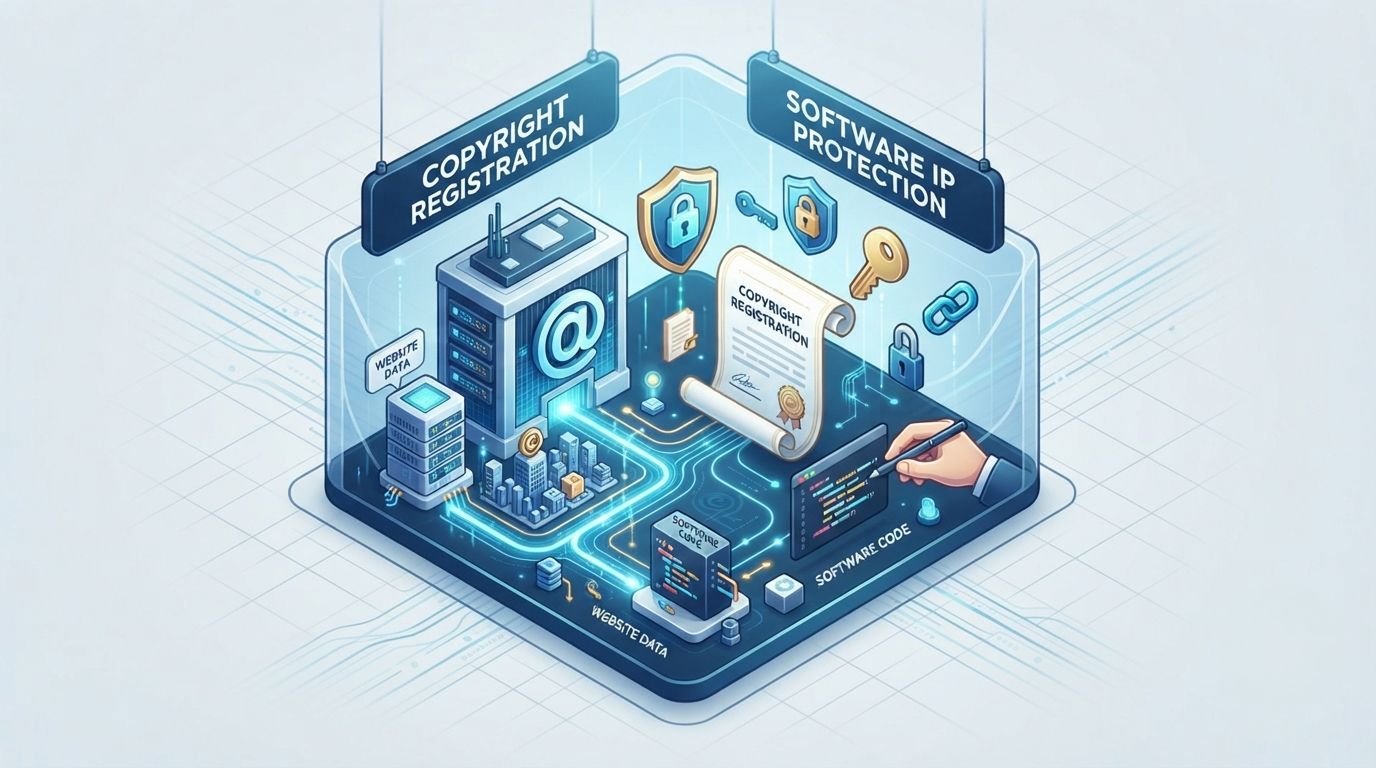
Software has become a valuable intellectual property asset for startups, developers, SaaS companies, technology businesses, and enterprises. Whether it is a mobile application, web platform, desktop program, or customized business solution, considerable time and resources go into creating software. Protecting that investment is therefore an important part of modern business strategy.
One effective way to protect the original expression contained in software is Software Copyright Registration. Copyright protection can help establish a formal record of ownership and strengthen the legal position of developers and businesses when dealing with unauthorized copying, licensing, commercialization, or intellectual property disputes.
Understanding Software Copyright Registration
Software Copyright Registration is the process of recording an eligible computer programme with the appropriate copyright authority. In India, computer programmes are protected under the Copyright Act, 1957, and are treated as literary works for copyright purposes.
Copyright protection primarily covers the original expression of the software, particularly its source code. It does not generally protect an abstract idea, business concept, algorithm, mathematical principle, or functionality simply because it has been implemented through software.
For businesses, understanding this distinction is important because effective intellectual property protection often requires a combination of copyright, contractual safeguards, confidentiality measures, trademarks, and, where applicable, patent protection.
Why Should Businesses Register Their Software?
Developing software can involve extensive research, programming, testing, debugging, interface development, and investment. If ownership and authorship are not properly documented, proving rights can become more complicated when a dispute occurs.
Software copyright registration can offer several practical advantages:
- Creates an official record relating to the copyrighted work
- Supports claims concerning ownership and authorship
- Helps strengthen an IP portfolio
- Can support licensing and commercialization activities
- Provides useful documentation during intellectual property disputes
- Helps businesses demonstrate that their software rights are being actively managed
- Can increase confidence during investment, acquisition, or partnership discussions
Registration should not be viewed as a replacement for proper contracts. Employment agreements, freelancer agreements, development contracts, assignments, and confidentiality provisions can be equally important in establishing who owns the software.
What Types of Software Can Be Protected?
A variety of computer programmes may qualify for copyright protection when they contain original expression. Depending on the circumstances, examples can include:
Mobile and Web Applications
Mobile apps, web applications, and cloud-based software can contain substantial original source code that may qualify for copyright protection.
SaaS Platforms
Software-as-a-Service businesses often depend heavily on proprietary code. Protecting and documenting this intellectual property can be an important part of SaaS business planning.
Enterprise Software
Customized enterprise systems, accounting applications, business management platforms, and internal software solutions can also represent valuable intellectual property assets.
Computer Games
The underlying computer programme of a game may be protected through copyright, while other elements may require separate forms of intellectual property protection.
How Does Software Copyright Registration Work?
The registration process generally involves preparing the application, identifying the applicant and author, providing the required software material, paying the prescribed fee, and addressing any objections or procedural requirements.
A simplified process includes:
1. Identify the Work: Determine the software title, nature of the programme, authors, and current rights holder.
2. Verify Ownership: Review employment contracts, development agreements, assignments, or other documents establishing ownership.
3. Prepare the Application: The prescribed copyright application form and relevant particulars must be completed accurately.
4. Submit Source-Code Material: Computer-program applications require source-code material according to the applicable filing requirements.
5. Pay the Prescribed Fee: The applicable government fee must be submitted with the application.
6. Monitor the Application: Applicants should monitor the filing and respond appropriately to any objections, discrepancies, or requests raised during the process.
Documents Commonly Considered for Registration
The documentation required can vary according to the nature of the software and ownership structure. Generally, applicants may need:
- Copyright application details
- Applicant information
- Author or developer information
- Software title and description
- Required source-code extracts
- Ownership or assignment documentation
- Authorization or power of attorney, where applicable
- Prescribed government fee
- Additional supporting documents where required
A careful review of ownership documentation before filing can prevent inconsistencies between the application and the underlying development arrangements.
Copyright vs Patent Protection for Software
Copyright and patents provide different types of intellectual property protection. Copyright generally focuses on the original expression of software, while patent protection concerns eligible inventions that satisfy applicable patentability requirements.
| Feature | Copyright | Patent |
|---|---|---|
| Main protection | Original expression | Eligible invention |
| Software relevance | Source code and qualifying expression | Certain software-related inventions may qualify |
| Registration process | Copyright registration | Patent filing and examination |
| Key considerations | Originality and ownership | Novelty, inventive step and industrial applicability |
| Protection approach | Protects expression | Protects claimed invention |
For technology businesses, choosing the right IP strategy requires an assessment of what exactly needs protection rather than relying on a single form of intellectual property.
Common Mistakes Businesses Should Avoid
Software owners can face unnecessary complications when applications are prepared without adequate attention to ownership and documentation.
Some common mistakes include:
- Failing to identify the correct copyright owner
- Ignoring agreements with freelance developers
- Providing inconsistent author information
- Treating screenshots as a substitute for software source code
- Assuming copyright protects an abstract software idea
- Failing to maintain development records
- Using incomplete or incorrect application information
- Neglecting contractual IP assignment provisions
A structured IP management process can help technology businesses address these issues before they become costly legal problems.
Frequently Asked Questions
1. Is software protected by copyright in India?
Yes. Computer programmes are covered under India’s copyright framework, subject to the requirements of the applicable law.
2. What does software copyright protect?
It primarily protects the original expression embodied in the software, such as qualifying source-code expression.
3. Does copyright protect an algorithm?
Copyright generally does not protect an abstract algorithm, idea, method, or system merely because it is implemented in software.
4. Can a mobile app be registered?
Yes. A mobile application may be registered as a computer programme, subject to applicable requirements.
5. Is source code required?
Source-code material is required for computer-program applications according to the applicable Copyright Rules and filing requirements.
6. Can a startup register its software?
Yes. Startups can consider copyright registration as part of their broader intellectual property management strategy.
7. Can software developed by freelancers be registered?
Potentially, but ownership should first be established through appropriate contractual arrangements, assignments, and applicable legal provisions.
8. Does registration prevent software piracy automatically?
Registration does not physically prevent copying. However, it can provide important documentation and support the enforcement of applicable rights.
9. Can software have both copyright and patent protection?
In some circumstances, different aspects of a technology may qualify for different forms of IP protection. Copyright and patent requirements are distinct.
10. Why should businesses document software ownership?
Clear ownership documentation can reduce uncertainty when software is developed by employees, contractors, agencies, or multiple contributors.
Final Thoughts
As businesses increasingly depend on digital products, software intellectual property has become an important commercial asset. Software Copyright Registration can help establish a formal record of a software work and support a broader strategy for managing ownership, licensing, commercialization, and enforcement.
Businesses should approach registration as part of a complete IP strategy that also considers contracts, confidentiality, trademarks, patents where applicable, and proper documentation. Taking these steps early can help reduce ownership disputes and provide greater confidence as a software product moves from development to commercialization.
For professional assistance with software copyright registration, intellectual property documentation, and related IP services in India, ANSIPMS can help businesses take a structured approach to protecting their digital assets and strengthening their intellectual property position.