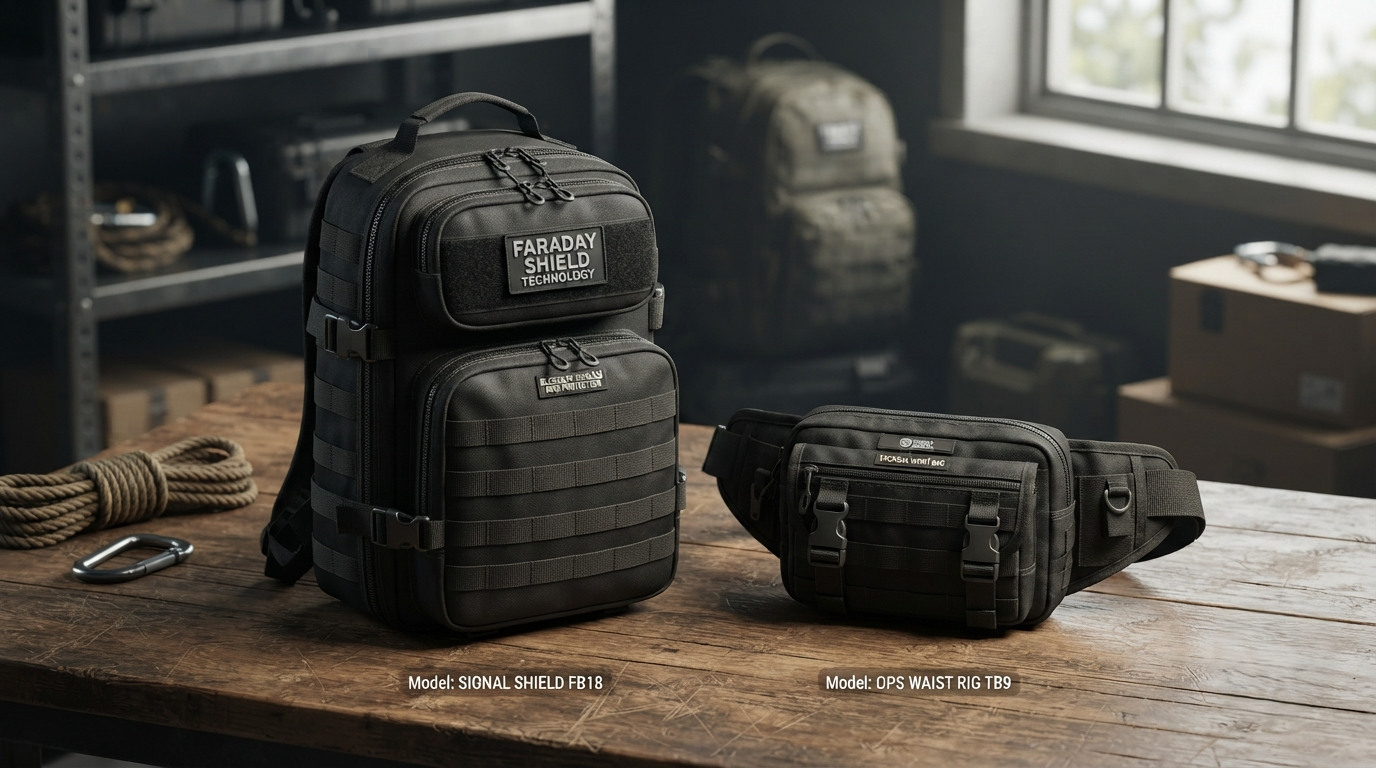
Modern travel, outdoor exploration, professional fieldwork, and everyday commuting increasingly require bags that do more than simply carry personal belongings. People now expect practical storage, durable construction, comfortable carrying systems, and better protection for electronic devices. This growing demand has made faraday backpacks and the tactical waist bag popular among travellers, security-conscious professionals, outdoor enthusiasts, photographers, emergency personnel, and technology users.
Although both products are designed around security and convenience, they serve different purposes. Faraday backpacks focus heavily on electronic signal protection and organized storage, while tactical waist bags offer quick access, compact portability, and rugged functionality.
Understanding their differences, applications, materials, and features can help users choose equipment suited to their lifestyle and security requirements.
What Are Faraday Backpacks?
Faraday backpacks are specially designed bags that may contain signal-blocking compartments made with conductive materials. These compartments are intended to reduce or block certain electromagnetic signals from reaching electronic devices stored inside them.
Depending on the construction and shielding material, a Faraday compartment may limit communication through signals such as:
- Wi-Fi
- Bluetooth
- GPS
- Cellular networks
- RFID
- NFC
A typical Faraday backpack combines these protective compartments with conventional backpack storage, allowing users to carry laptops, smartphones, tablets, documents, power banks, cables, and other accessories.
Their combination of electronic protection and everyday usability makes them useful for travel, business activities, cybersecurity work, and secure device storage.
How Faraday Technology Works Inside a Backpack
The basic concept behind faraday backpacks comes from the Faraday cage principle. Conductive material surrounding an object can reduce electromagnetic energy entering or leaving the enclosed area.
Instead of using a rigid metal enclosure, modern backpacks often use flexible shielding fabrics containing conductive layers. When an electronic device is completely enclosed within the protected compartment, wireless communication can be significantly reduced.
The effectiveness depends on several factors, including:
- Shielding material quality
- Closure design
- Frequency range
- Construction of the compartment
- Condition of the shielding fabric
A high-quality product should provide consistent coverage around the entire protected section rather than relying on a small shielding panel.
Why People Use Faraday Backpacks
Electronic devices continuously exchange information through wireless networks. For professionals handling confidential information or travellers carrying valuable electronics, controlling this connectivity can sometimes be important.
Common uses for faraday backpacks include protecting stored devices from unwanted wireless communication, transporting sensitive electronics, organizing technology equipment, and adding another physical layer of privacy.
Cybersecurity professionals, investigators, corporate teams, journalists, photographers, researchers, and frequent travellers may find this type of storage especially useful.
However, users should remember that signal-blocking performance can vary between products. A backpack should therefore be selected based on tested specifications rather than appearance alone.
What Is a Tactical Waist Bag?
A tactical waist bag is a compact storage bag designed for convenient access to frequently used equipment. It is typically worn around the waist, across the chest, or over the shoulder using an adjustable strap.
Unlike ordinary fashion waist packs, tactical models generally emphasize durability, compartment organization, reinforced stitching, and outdoor functionality.
A typical tactical waist bag may include:
- Multiple zippered compartments
- Internal organizers
- Adjustable straps
- MOLLE-compatible webbing
- Reinforced buckles
- Water-resistant materials
- Quick-access pockets
- Heavy-duty zippers
Because of their compact size, these bags are commonly used during hiking, cycling, camping, fishing, travel, photography, and everyday commuting.
Benefits of Using a Tactical Waist Bag
One major advantage of a tactical waist bag is accessibility. Users can reach essential items quickly without removing a backpack.
It can conveniently store items such as smartphones, wallets, keys, flashlights, charging cables, small cameras, notebooks, first-aid supplies, or compact tools.
Another benefit is weight distribution. Carrying small essential items around the waist can reduce the need to repeatedly open a larger backpack.
For outdoor enthusiasts, the compact design also allows greater freedom of movement while keeping important equipment within reach.
Faraday Backpacks vs Tactical Waist Bags
| Feature | Faraday Backpacks | Tactical Waist Bag |
| Primary Purpose | Device storage and signal protection | Quick-access compact storage |
| Carrying Capacity | Medium to large | Small to medium |
| Electronic Protection | Available in shielded compartments | Usually not included |
| Portability | Backpack-style carrying | Waist, shoulder, or crossbody |
| Best For | Electronics, travel, professional equipment | Outdoor gear and daily essentials |
| Organization | Multiple large compartments | Compact organized pockets |
| Typical Material | Nylon, polyester, shielding fabric | Nylon, polyester, reinforced fabric |
| Accessibility | Moderate | Very fast |
The correct choice depends primarily on how much equipment needs to be carried and whether electronic signal protection is important.
Important Materials and Construction Features
Material quality plays a major role in the durability of both faraday backpacks and tactical bags.
Common outer materials include high-density polyester, reinforced nylon, Oxford fabric, and other abrasion-resistant textiles. Some models include water-resistant coatings that help protect belongings during light rain.
Faraday compartments require additional conductive layers capable of reducing electromagnetic transmission.
For tactical products, buyers should examine reinforced seams, zipper quality, buckle strength, webbing construction, and strap adjustment.
Strong stitching around high-stress areas is particularly important because these sections experience repeated movement during daily use.
Choosing the Right Faraday Backpack
Before purchasing a Faraday backpack, buyers should consider practical requirements rather than choosing based solely on size or design.
First, determine what electronic devices will be stored. A laptop requires significantly more protected space than a smartphone.
Second, check whether the shielded compartment is suitable for the frequencies relevant to your devices.
Third, consider organization. Dedicated sections for laptops, chargers, documents, power banks, and accessories make everyday use more convenient.
Comfort is equally important. Look for padded shoulder straps, breathable back panels, adjustable straps, and balanced weight distribution.
Finally, verify whether the manufacturer provides meaningful information regarding shielding construction and testing.
Choosing the Right Tactical Waist Bag
A tactical waist bag should provide enough storage without becoming bulky.
Users should first identify what they intend to carry. Someone using the bag for hiking may need space for navigation accessories, a flashlight, snacks, and first-aid equipment. A traveller may prioritize passport storage, chargers, a wallet, and a smartphone.
Important features to consider include:
- Adjustable carrying straps
- Durable zipper systems
- Internal compartment organization
- Water-resistant construction
- Reinforced stitching
- Comfortable contact areas
- Secure quick-access pockets
MOLLE-style webbing can also be useful for users who want to attach compatible pouches or accessories.
Travel Applications
Both products can serve valuable roles during travel.
Faraday backpacks are useful for carrying laptops, mobile devices, travel documents, cameras, and electronic accessories in one organized location. Their shielded sections can provide additional control over wireless connectivity when necessary.
A tactical waist bag works well for items that travellers need frequently, including passports, boarding passes, currency, charging cables, phones, and identification documents.
Some travellers use both simultaneously: a backpack for larger electronics and clothing, and a waist bag for frequently accessed essentials.
Outdoor and Professional Applications
Outdoor users often value tactical waist bags because they provide convenient access without restricting movement. Hikers, cyclists, photographers, and campers can organize small equipment efficiently.
Faraday backpacks may be more relevant for professionals working with sensitive electronic equipment or transporting communication devices.
Field engineers, IT professionals, cybersecurity specialists, researchers, photographers, and technical teams may appreciate backpacks that combine device organization with rugged construction.
The ideal product therefore depends on the environment, equipment type, storage capacity, and desired level of protection.
Care and Maintenance
Proper maintenance can help extend the life of both products.
Avoid overloading compartments beyond their intended capacity, since excessive pressure can damage seams, zippers, and internal protective layers.
Clean exterior surfaces using methods recommended by the manufacturer. Harsh chemicals or aggressive machine washing may damage coatings or conductive materials.
Faraday compartments should be checked periodically if reliable signal isolation is important. Damage, worn closures, or torn shielding material may reduce effectiveness.
Tactical bags should also be inspected for damaged webbing, loose stitching, broken buckles, and zipper wear.
Frequently Asked Questions
Are Faraday Backpacks Completely Signal Proof?
Performance varies by product, shielding construction, frequency, closure design, and condition. Buyers should look for reliable testing information before depending on any backpack for signal isolation.
Can a Phone Receive Calls Inside a Faraday Backpack?
If the phone is properly enclosed inside an effective shielded compartment, cellular signals may be significantly reduced or blocked.
Do Faraday Backpacks Block GPS?
Many designs are intended to reduce GPS signals along with cellular, Wi-Fi, RFID, NFC, and Bluetooth frequencies, but capability depends on the product.
Are Faraday Backpacks Useful for Everyday Travel?
Yes. They can function as conventional backpacks while providing specialized protected compartments for electronics.
What Can I Carry in a Tactical Waist Bag?
Common items include phones, wallets, keys, flashlights, small tools, chargers, passports, notebooks, first-aid items, and compact cameras.
Is a Tactical Waist Bag Suitable for Hiking?
Yes. Its quick-access design makes it practical for hiking, camping, cycling, fishing, and similar outdoor activities.
Can Tactical Waist Bags Be Worn Crossbody?
Many models include adjustable straps allowing waist, shoulder, or crossbody carrying.
Are Tactical Waist Bags Waterproof?
Some are water-resistant rather than completely waterproof. Buyers should check the manufacturer’s specific material and protection rating.
Which Is Better for Carrying Electronics?
Faraday backpacks generally provide more capacity and specialized compartments for electronic devices.
Can I Use Both Bags Together?
Yes. A Faraday backpack can hold larger equipment while a tactical waist bag keeps frequently used essentials easily accessible.