When service activities and visitor movement share limited transportation space, buildings can experience unnecessary congestion and operational challenges.
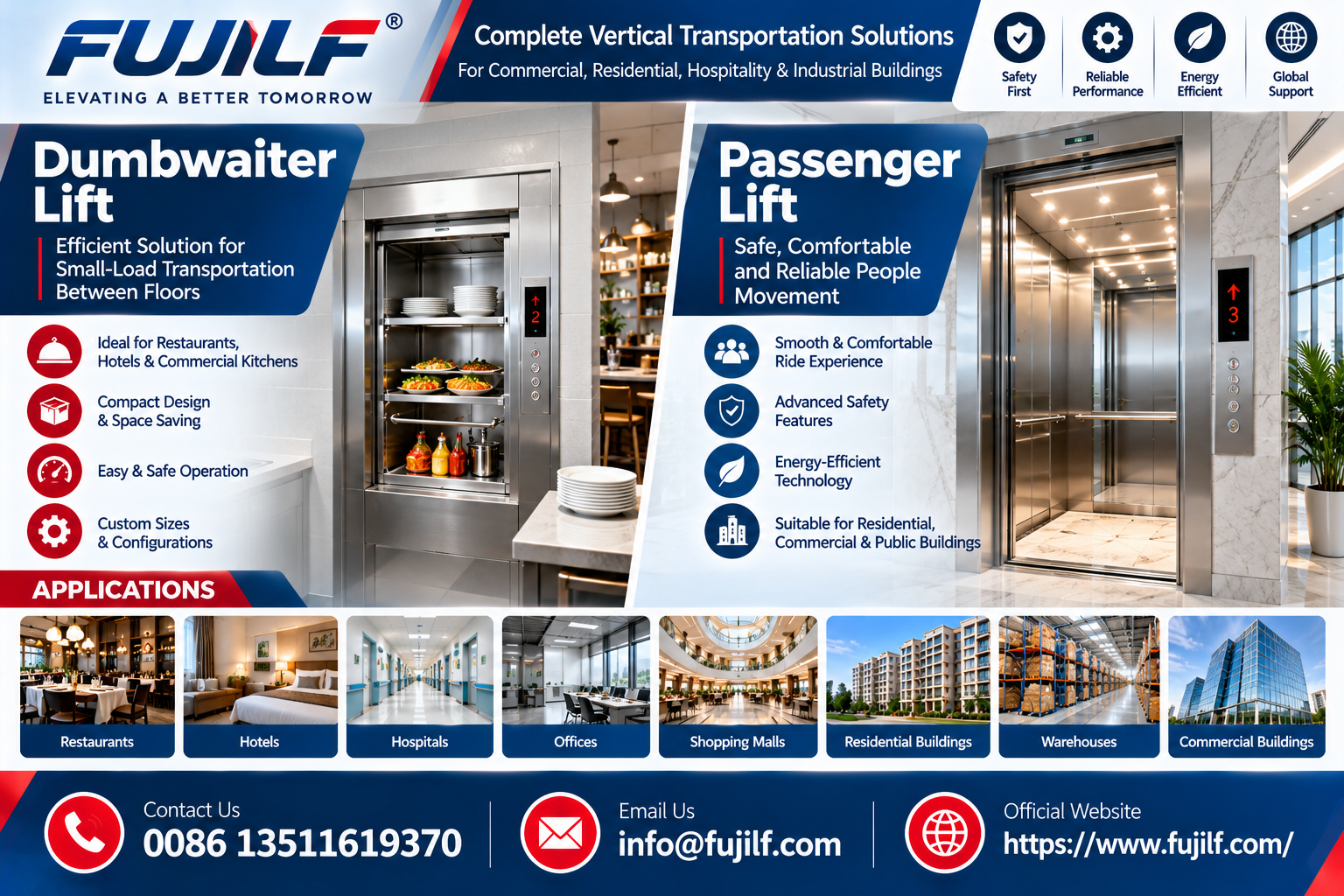
A dumbwaiter lift offers a specialized solution for transporting small goods between floors without requiring employees to carry materials through stairways or public corridors.
Meanwhile, a passenger lift provides essential vertical access for guests, employees, residents, and visitors.
Although these systems serve different purposes, their coordinated use can contribute to better building organization and service efficiency.
The growing importance of operational planning highlights a practical consideration for property developers: transportation equipment should be selected according to the type of movement required, not simply the number of floors in a building.
Understanding the Role of a Dumbwaiter Lift
A dumbwaiter is a compact lifting system designed specifically for transporting goods rather than people.
It is commonly associated with restaurants, hotels, hospitals, residential properties, and commercial facilities where relatively small items must move between floors.
Unlike conventional passenger elevators, a dumbwaiter typically has a smaller compartment and a load capacity suited to its designated application.
Common uses include:
- Restaurant operations: Moving prepared food, utensils, and approved kitchen supplies.
- Hotel services: Transporting suitable housekeeping materials and other small service items.
- Hospital facilities: Moving permitted supplies between designated departments.
- Commercial buildings: Transferring documents, packages, and lightweight materials.
- Residential properties: Supporting the movement of suitable household items between floors.
The actual application must match the equipment’s approved load capacity, dimensions, and safety requirements.
A dumbwaiter must never be used to transport passengers.
Why Separating Guest and Service Movement Matters
In hotels and hospitality facilities, guest experience depends partly on how efficiently services operate behind the scenes.
When staff repeatedly use public elevators to transport supplies, movement can become less convenient for guests.
Dedicated goods-handling equipment may help reduce this overlap.
For example, a restaurant operating across multiple floors may benefit from a dumbwaiter lift connecting preparation and service areas.
Staff can transfer suitable items through a designated system rather than relying entirely on passenger transportation routes.
A practical building management principle explains:
This approach helps building designers consider operational requirements alongside customer accessibility.
However, a dumbwaiter is not a replacement for a properly specified service elevator when large carts, substantial loads, or accompanied goods must be transported.
Passenger Lift Systems Remain Essential for Accessibility
While goods-handling equipment supports operational requirements, passenger elevators remain necessary for convenient movement between floors.
A passenger lift is designed to transport people within its rated capacity and approved operating conditions.
Its selection requires consideration of building occupancy, expected traffic, accessibility, and available installation space.
For hotels and commercial properties, important features may include suitable cabin dimensions, accessible controls, appropriate door operation, and required safety systems.
Passenger elevators also play an important role in providing step-free access for individuals with mobility limitations.
A well-designed building should ensure that service transportation arrangements do not interfere with accessible passenger routes.
Dumbwaiter Lift Design for Restaurants and Food Service Areas
Restaurants with kitchens and dining areas on separate floors often require effective arrangements for transferring prepared food and related supplies.
A properly specified dumbwaiter can support these movements when integrated into the facility’s operational layout.
However, food-service applications introduce additional considerations.
Suitable Compartment Materials
Surfaces should be appropriate for the intended goods and applicable hygiene requirements.
Easy Cleaning
Accessible surfaces and suitable finishes can support routine cleaning and sanitation procedures.
Practical Loading Height
The installation should allow authorized personnel to load and unload goods without unnecessary handling difficulties.
Appropriate Door Protection
Doors and interlocking arrangements should comply with applicable equipment safety requirements.
Correct Load Capacity
The system must accommodate the intended loads without exceeding its rated capacity.
These considerations help connect mechanical equipment selection with everyday food-service requirements.
Installation Planning Influences Building Efficiency
Vertical transportation equipment should be considered during the building design process wherever practical.
A dumbwaiter requires suitable space for its lifting mechanism, enclosure, landing openings, and other specified components.
Its location should support the intended movement of goods without creating unnecessary obstacles.
For example, positioning the system near relevant preparation and service areas may simplify internal material flow.
A passenger lift requires separate consideration of accessibility, passenger circulation, structural requirements, and applicable building regulations.
An engineering planning principle states:
Careful design coordination can reduce the need for unsuitable alterations after construction.
Safety Requirements for Goods and Passenger Lifts
Safety is an essential consideration for every vertical lifting system.
Dumbwaiters and passenger elevators must be installed and operated according to their specific classifications and applicable regulations.
A dumbwaiter should include the protective features required for its design, such as appropriate landing-door interlocks and controls.
Personnel must not enter its compartment or use it for any unauthorized purpose.
Passenger elevators require suitable safety equipment, operating controls, and inspection arrangements appropriate to their intended service.
Qualified professionals should evaluate installation requirements and maintain equipment according to manufacturer guidance.
Maintenance Supports Dependable Building Operations
Regular maintenance helps identify deterioration and supports reliable lifting equipment performance.
Dumbwaiter maintenance may involve checking door mechanisms, lifting components, controls, and protective devices.
Passenger elevator servicing can include inspection of door systems, drive equipment, controls, and other applicable components.
Building managers should maintain appropriate service records and address reported defects.
Equipment showing unsafe conditions should be removed from operation until assessed by qualified personnel.
Maintenance arrangements should follow the equipment manufacturer’s instructions and relevant local requirements.
Choosing Suitable Lifting Equipment for Different Properties
The correct lifting solution depends on the building’s purpose and operational needs.
Before choosing equipment, facility planners should evaluate:
- The type, dimensions, and weight of goods requiring transportation.
- Whether the equipment must carry people or goods only.
- Available installation space and landing arrangements.
- Applicable safety, accessibility, and inspection requirements.
- Maintenance access and support arrangements.
These considerations help distinguish between compact goods lifts, larger service elevators, and dedicated passenger systems.
Frequently Asked Questions (FAQs)
1. What is a dumbwaiter lift?
A dumbwaiter lift is a compact lifting system designed to move suitable goods between floors. It is commonly used in restaurants, hotels, commercial facilities, and some residential buildings.
2. What is the difference between a dumbwaiter and a passenger lift?
A dumbwaiter transports goods only, while a passenger lift is designed and certified to carry people. Their capacities, construction requirements, and safety arrangements differ.
3. Can a dumbwaiter lift be installed in a restaurant?
Yes. A properly specified dumbwaiter may be installed in a restaurant to transfer suitable food-service items between designated floors, subject to building and safety requirements.
4. Can people travel inside a dumbwaiter lift?
No. Dumbwaiters are intended exclusively for permitted goods. Passenger transportation requires equipment specifically designed and approved for carrying people.
5. How should building owners choose between different lift systems?
Building owners should assess intended loads, transportation functions, available space, accessibility requirements, safety regulations, and maintenance needs before selecting equipment.
Media Contact
Department: Business Enquiries & Vertical Transportation Solutions
Industry: Elevators, Dumbwaiter Lifts, Passenger Lifts & Lifting Equipment
Contact: 008613511619370
Email: info@fujilf.com
Official Website: https://www.fujilf.com/