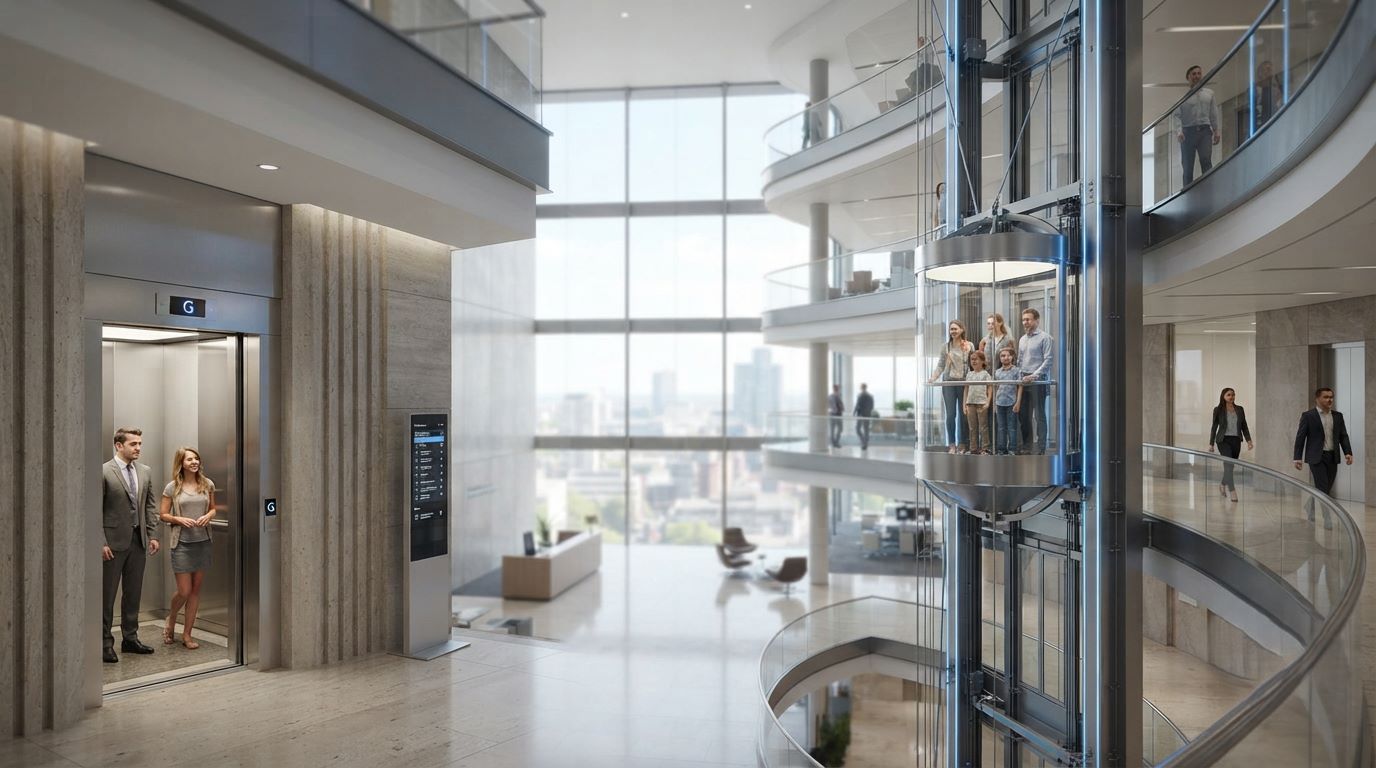
The story of the passenger elevator is closely connected with the growth of modern cities. As buildings became taller, elevators changed from basic lifting mechanisms into sophisticated transportation systems. Today, the glass lift is taking this development a step further by combining vertical mobility with architecture, transparency, and visual experience.
The Early History of Passenger Elevators
Before modern elevators, people relied heavily on stairs, ramps, and simple lifting platforms. Early lifting devices were primarily used for materials rather than everyday passenger transportation. The development of dependable safety mechanisms changed this situation.
During the nineteenth century, improvements in elevator braking systems, ropes, hoisting mechanisms, and steam and hydraulic technologies created safer vertical transportation. The development of practical electric elevators later made tall commercial and residential buildings considerably more convenient.
How Elevators Became Essential
The development of the elevator supported the expansion of high-rise architecture. Buildings no longer needed to depend entirely on low-rise layouts because people could travel efficiently between multiple floors.
Important developments included:
- Improved mechanical safety systems.
- Electric traction technology.
- Automatic elevator doors.
- Push-button controls.
- Better braking and leveling systems.
- Computerized elevator operation.
These innovations established the foundation for today’s passenger elevator industry.
The Development of Glass Lift Technology
The glass lift emerged as architects began treating elevators as visible components of a building rather than equipment hidden behind walls. Transparent cabins and glazed shafts created opportunities for panoramic views and distinctive interior spaces.
Shopping centers, hotels, corporate offices, luxury residences, museums, and public buildings increasingly use panoramic elevators to create memorable movement through architectural spaces.
Unlike a conventional enclosed elevator, a glass lift can visually connect different floors and allow passengers to experience the surrounding building or exterior environment.
Passenger Elevator and Glass Lift: A Modern Comparison
| Factor | Passenger Elevator | Glass Lift |
| Primary function | Moving people | Moving people with visual appeal |
| Cabin design | Enclosed or partially glazed | Panoramic/glazed |
| Typical application | Offices, apartments, hospitals | Hotels, malls, villas, atriums |
| Design emphasis | Performance and practicality | Performance and architectural appearance |
| Visibility | Limited | High |
| Customization | Moderate to high | Often highly customizable |
The two categories are not necessarily competitors. A glass lift is essentially a type of passenger elevator designed with transparency and architectural presentation as important considerations.
Safety Has Always Driven Elevator Innovation
The most important principle in elevator development is safety. Attractive design cannot replace engineering standards, appropriate installation, inspection, and maintenance.
Modern elevator systems incorporate multiple protective technologies, including:
- Door locking and interlocking mechanisms.
- Emergency communication systems.
- Overspeed protection.
- Controlled stopping and floor leveling.
- Load monitoring.
- Emergency lighting.
- Backup and rescue functions.
- Continuous or scheduled equipment monitoring.
For a glass lift, additional consideration is needed for glazing selection, structural attachment, impact resistance, visibility, cleaning, and maintenance access.
Today’s Passenger Elevator Technology
Modern elevators are becoming increasingly intelligent. Building owners now look beyond basic transportation and consider energy use, passenger flow, accessibility, ride quality, and maintenance.
Destination-control systems can group passengers traveling to similar floors, potentially reducing unnecessary stops. Sensors and digital monitoring can provide operational information to maintenance teams.
Key Modern Features
- Energy-efficient traction systems.
- Variable-frequency drives.
- Destination dispatch technology.
- Remote monitoring.
- Touchless control options.
- Automatic rescue functions.
- Accessible cabin layouts.
- Predictive maintenance capabilities.
These technologies make the contemporary passenger elevator faster, more comfortable, and better integrated with building operations.
Why Glass Lifts Are Growing in Popularity
A glass lift can contribute significantly to a building’s visual identity. Instead of concealing vertical transportation, architects can make the elevator a focal point.
The benefits may include:
- Panoramic views.
- Greater visual openness.
- Strong architectural appeal.
- Better integration with atriums.
- Premium appearance.
- Enhanced visitor experience.
However, appearance should be balanced against heat gain, privacy, cleaning requirements, glare, material durability, and project-specific safety requirements.
The Future of Passenger Elevator Systems
The next stage of elevator development will likely focus on intelligence, sustainability, connectivity, and personalization. Sensors can collect information about usage and equipment behavior, while analytical systems can help identify unusual operating patterns.
Smart Elevators and Predictive Maintenance
Future systems may increasingly communicate with building-management platforms. Instead of waiting for a component to fail, maintenance teams can use operational data to schedule inspections or servicing based on equipment condition.
This approach can potentially reduce unexpected downtime and improve asset management.
Sustainability Will Become More Important
Future elevator projects are also expected to consider complete lifecycle performance rather than only initial purchase price.
Important considerations include:
- Lower electricity consumption.
- Efficient standby operation.
- Regenerative energy systems.
- Durable cabin materials.
- Longer component life.
- Responsible modernization.
The Future of Glass Lift Design
The future glass lift is likely to become more technologically integrated. Designers may combine advanced glazing, efficient lighting, digital information displays, smart controls, and customized interiors.
Panoramic elevators may increasingly become part of building storytelling. In hotels, for example, the lift can become part of the guest experience; in shopping centers, it can improve visual connectivity between levels.
How to Select the Right Elevator
Choosing between conventional and panoramic designs should begin with the building’s actual requirements.
- Assess expected passenger traffic.
- Determine required capacity and speed.
- Review available shaft space.
- Consider accessibility.
- Check applicable safety standards.
- Compare energy performance.
- Evaluate maintenance requirements.
- Examine supplier service capability.
- Calculate lifecycle costs.
- Select finishes according to the building environment.
A professional elevator consultant or qualified manufacturer should assess the project before final specifications are approved.
Frequently Asked Questions
What is a passenger elevator?
A passenger elevator is a powered vertical transportation system primarily designed to carry people between different floors.
What makes a glass lift different?
Its cabin or shaft incorporates substantial glazing, creating transparency and a panoramic visual experience.
Is a glass lift suitable for residential buildings?
Yes. Properly designed residential panoramic elevators can be used in houses, villas, and apartment developments.
Are passenger elevators suitable for offices?
Yes. They are widely used in offices and commercial buildings because they can efficiently handle regular passenger traffic.
Does a glass lift require more maintenance?
Its mechanical maintenance is comparable to other elevators, but visible glazing may require additional cleaning and aesthetic upkeep.
Are modern elevators energy efficient?
Many contemporary systems use efficient drives, motors, controls, and standby functions to reduce energy consumption.
Can elevators be customized?
Yes. Cabin dimensions, finishes, doors, lighting, controls, and other design elements can often be customized according to the project.
What determines elevator capacity?
Building usage, passenger traffic, cabin dimensions, regulations, and the selected elevator technology all influence capacity requirements.
Can smart technology reduce elevator downtime?
Monitoring and predictive analytics can help identify unusual operating conditions and support proactive maintenance.
Will glass lifts replace conventional elevators?
No. Different buildings have different requirements. Conventional elevators remain practical for many applications, while glass lifts provide additional architectural value where appropriate.
https://newsgrow.blogspot.com/2026/08/dumbwaiter-lift-vs-passenger-lift-which.html