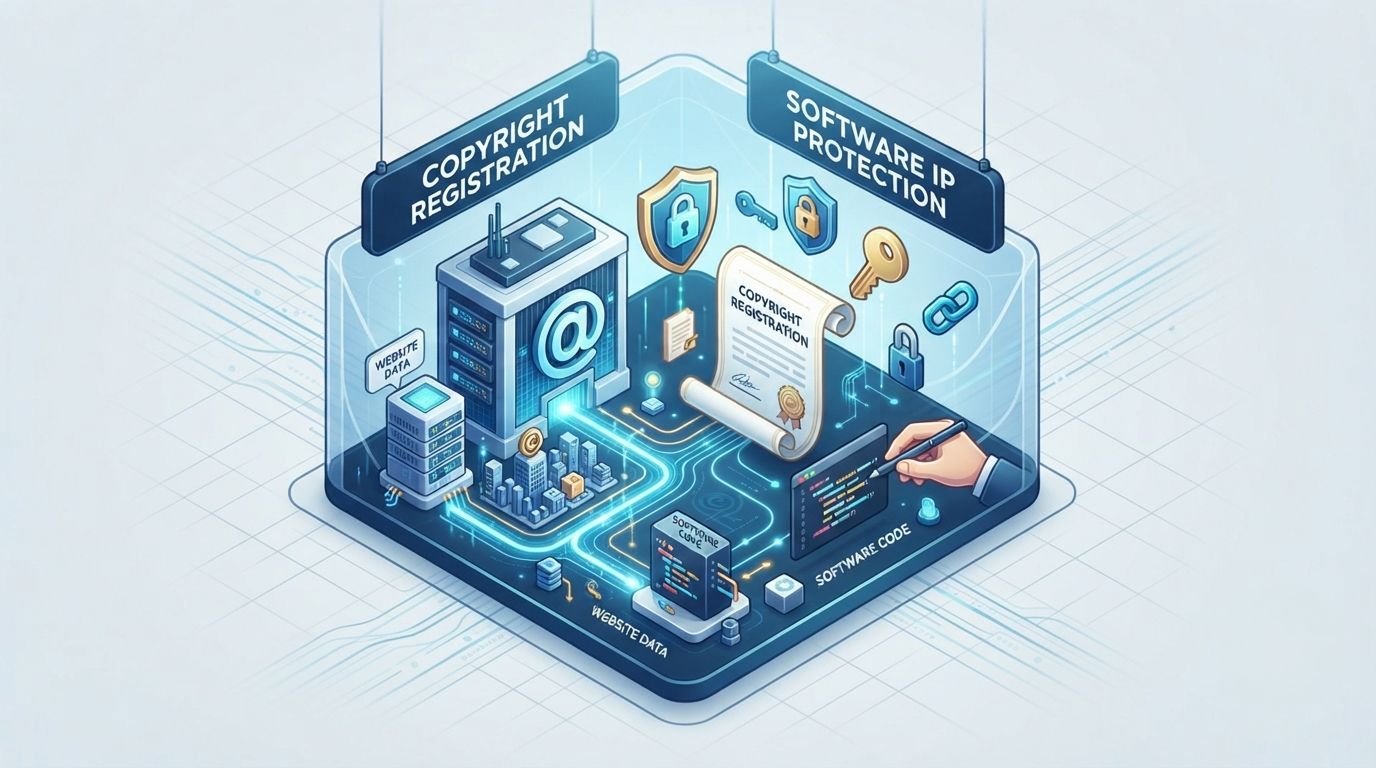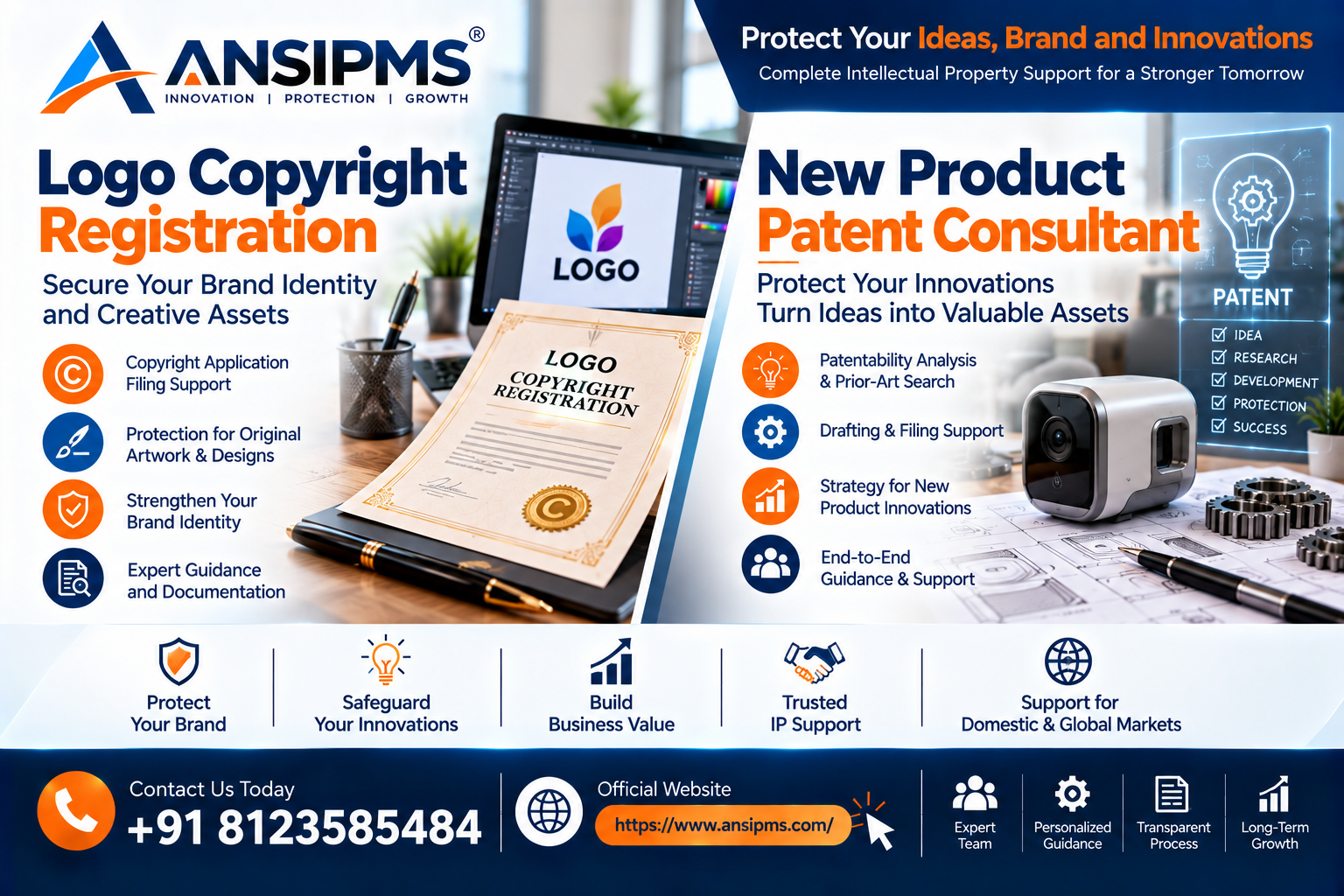
As startups, manufacturers, product designers, technology companies, and consumer brands invest more heavily in original products and visual identities, intellectual property protection is becoming a core business priority. Two areas attracting increasing attention are Logo Copyright Registration and working with a New Product Patent Consultant.
These services protect different types of intellectual property. Copyright may help protect the original artistic expression contained in a logo, while patent strategy focuses on qualifying technical inventions behind new products, devices, processes, or systems. For growing businesses, understanding the difference can prevent costly mistakes and help create a more complete IP portfolio.
What Is Logo Copyright Registration?
Logo Copyright Registration refers to formally registering copyright in original artistic elements of a logo where those elements qualify for protection under applicable copyright law.
A logo may contain:
- Original artwork
- Graphic symbols
- Illustrations
- Customized lettering
- Unique visual arrangements
- Creative design elements
Copyright generally protects original expression rather than the underlying business concept or idea.
For example, copyright may protect an original artistic logo design, but it does not necessarily give the same commercial brand protection as a trademark.
Why Logo Copyright Registration Matters
A business logo is often one of the first assets customers recognize.
As brands expand across websites, packaging, social media, apps, advertisements, and marketplaces, unauthorized copying can become a concern.
Logo Copyright Registration may help businesses document ownership of qualifying creative artwork and support enforcement when copying occurs.
It can also become useful during:
- Licensing
- Brand partnerships
- Franchise arrangements
- Company acquisitions
- Investor due diligence
- Disputes over design ownership
Copyright and Trademark Are Not the Same
Businesses often confuse copyright protection with trademark protection.
Copyright primarily protects original creative expression.
Trademark law, meanwhile, generally protects names, logos, symbols, or other identifiers used to distinguish the commercial source of goods or services.
For many companies, both may be relevant.
A logo can potentially function as:
Creative artwork + Commercial brand identifier
This is why businesses should avoid assuming that one form of registration automatically replaces the other.
Who Owns a Company Logo?
Ownership should be reviewed carefully when the logo was created by:
- Freelance designers
- Graphic agencies
- Contractors
- Employees
- Branding studios
- External consultants
Simply paying someone to design a logo does not always answer every copyright ownership question.
Businesses should maintain clear written agreements addressing:
- Copyright ownership
- Assignment of rights
- Commercial usage
- Modification rights
- Source files
- Licensing terms
This can reduce disputes later.
Originality Is Important
For Logo Copyright Registration, originality is an important consideration.
Generic icons, common symbols, ordinary geometric shapes, or standard text may receive limited protection by themselves.
A more distinctive design may include original artistic choices involving:
- Shape
- Illustration
- Composition
- Custom lettering
- Colour arrangement
- Graphic treatment
Businesses should also conduct appropriate checks to avoid adopting a logo that closely resembles another company’s protected artwork or brand identity.
What Is a New Product Patent Consultant?
A New Product Patent Consultant assists inventors, startups, and businesses in evaluating whether a newly developed product or technology may qualify for patent protection.
New products may include:
- Mechanical devices
- Electronic products
- Industrial equipment
- Medical devices
- Consumer products
- Manufacturing systems
- Technical processes
- Energy technologies
- Smart devices
The consultant’s role may involve helping identify the technically inventive features and organizing information for a patent strategy.
Why Patent Advice Should Begin Early
Patent protection is often most effective when considered before a new product is publicly launched.
Businesses may unintentionally disclose important technical details through:
- Trade exhibitions
- Product demonstrations
- Websites
- Marketing brochures
- Videos
- Investor presentations
- Supplier discussions
A New Product Patent Consultant can help evaluate filing options before disclosure becomes a concern.
Patentability Assessment for a New Product
Not every newly developed product is automatically patentable.
Patentability generally requires consideration of issues such as:
Novelty
The invention should generally contain features that have not already been publicly disclosed.
Inventive Step
The development should normally involve more than an obvious modification of known technology.
Industrial Applicability
The invention should be capable of practical or industrial use.
There may also be subject-matter restrictions under applicable patent law.
A patent consultant can help identify which technical features deserve closer assessment.
Prior-Art Search Before Patent Filing
One of the first strategic steps may be a prior-art search.
The search can help identify:
- Existing patents
- Published patent applications
- Similar products
- Technical papers
- Earlier technologies
Prior art can influence both whether filing is worthwhile and how an application should be drafted.
A search does not guarantee that every relevant reference will be found, but it can significantly improve decision-making.
Role of a New Product Patent Consultant in Drafting Strategy
Product-development teams often explain inventions from an engineering perspective.
Patent drafting requires the invention to be described in a way that supports potential legal protection.
A New Product Patent Consultant may help organize information around:
- Technical problem
- Existing limitations
- New solution
- Key components
- Functional relationships
- Alternative embodiments
- Technical advantages
This information can support patent professionals responsible for preparing the application and claims.
Patent Claims and Product Protection
Patent claims define the scope of protection being requested.
For a new product, claims might focus on:
- Component arrangements
- Mechanical relationships
- Functional systems
- Manufacturing methods
- Technical processes
Claims that are too broad may face objections based on existing technology.
Claims that are too narrow may provide limited competitive value.
The drafting strategy should therefore reflect both the technical invention and its commercial importance.
Protecting Both Product and Brand
Many businesses need more than one form of intellectual property protection.
Imagine a company launching a newly designed smart consumer device.
Its IP portfolio might potentially include:
- Patent protection for technical innovation
- Copyright protection for original software or artwork
- Trademark protection for the product name and logo
- Design protection where relevant
- Confidentiality for proprietary know-how
This illustrates why Logo Copyright Registration and patent strategy should be viewed as complementary rather than competing services.
Product Development and Confidentiality
Before patent filing, sensitive information may need to be shared with:
- Manufacturers
- Prototype suppliers
- Engineers
- Consultants
- Investors
- Testing laboratories
Businesses should consider appropriate confidentiality measures when sharing unpublished technical information.
Documentation is also important.
Engineering drawings, prototypes, testing records, design revisions, and development notes can help explain how the invention evolved.
Common IP Mistakes Businesses Should Avoid
Companies often create risk by delaying intellectual property planning.
Common mistakes include:
- Publicly disclosing inventions too early
- Assuming every new product is patentable
- Filing without conducting prior-art research
- Failing to document logo ownership
- Confusing copyright with trademark protection
- Using designs created by contractors without clear assignment terms
- Protecting a brand while ignoring the underlying technology
An integrated IP review can identify these issues before they become expensive.
Frequently Asked Questions
What is Logo Copyright Registration?
Logo Copyright Registration is the formal registration of copyright in qualifying original artistic elements contained in a logo.
Does copyright protect my business name?
Copyright is generally not the main legal mechanism for protecting business names. Trademark protection may be more relevant.
Can a logo have both copyright and trademark protection?
Potentially, yes. Copyright and trademark rights protect different aspects of a logo.
Who owns a logo created by a freelancer?
Ownership depends on the circumstances and contractual arrangements, making written assignment terms important.
What does a New Product Patent Consultant do?
A New Product Patent Consultant helps assess new inventions, identify potentially patentable features, review prior art, and support patent strategy.
Can every new product be patented?
No. The invention must satisfy applicable patentability requirements.
When should I consider patent protection?
Patent strategy should ideally be considered before important technical details are publicly disclosed.
Why is a prior-art search important?
It can help identify similar technologies and determine how the new product differs from existing solutions.
Is a patent the only protection needed for a product?
Not necessarily. Products may involve patents, trademarks, copyright, designs, contracts, and confidential information.
Can startups protect both their logo and product technology?
Yes. A layered intellectual property strategy may protect both creative branding and qualifying technical innovation.
Building a Complete IP Portfolio
The strongest businesses treat intellectual property as a portfolio rather than a collection of unrelated registrations.
An effective strategy may protect:
- Technical innovations
- Product designs
- Software
- Brand names
- Logos
- Marketing artwork
- Confidential know-how
For Logo Copyright Registration, the focus should be on originality and ownership of the creative work.
For companies working with a New Product Patent Consultant, the focus should be on identifying meaningful technical innovation before commercialization.
Media Contact
Intellectual Property Enquiries
Contact: +91 8123585484
Email : info@ansipms.com
Official Website: https://www.ansipms.com/