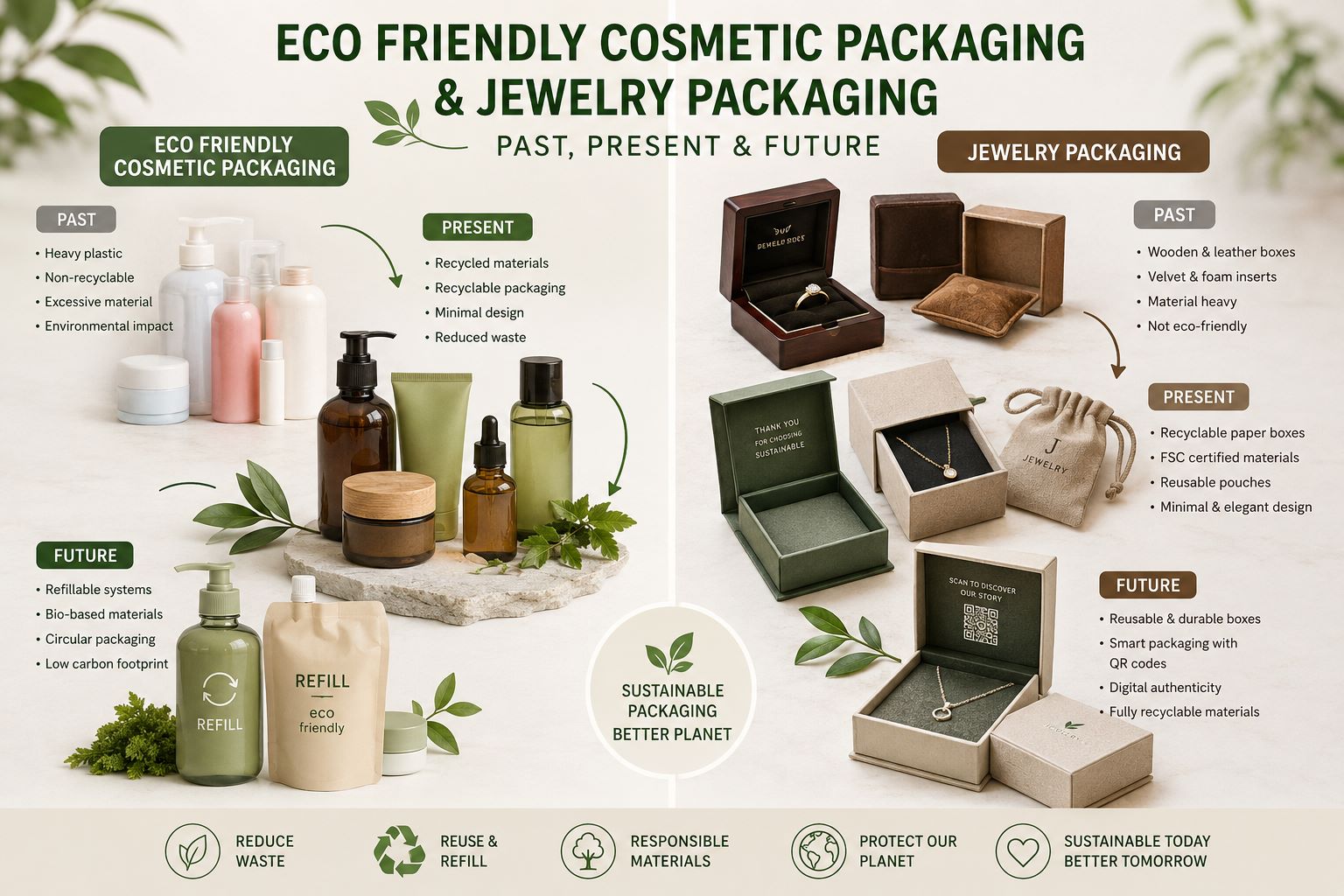
Packaging has always done more than protect a product. It communicates quality, shapes first impressions, supports brand identity, and influences purchasing decisions. In beauty and luxury retail, packaging has become particularly important because customers often judge the experience before they even use the product.
Over the years, both eco friendly cosmetic packaging and jewelry packaging have evolved from simple protective containers into carefully designed brand assets. Today, sustainability, personalization, recyclability, premium presentation, and responsible sourcing are reshaping the industry.
Looking at the past helps explain how packaging reached its current stage, while emerging technologies and changing consumer expectations offer a clear picture of where it may go next.
The Early History of Cosmetic Packaging
Cosmetic packaging has existed for thousands of years. Ancient civilizations stored perfumes, oils, powders, and beauty preparations in clay pots, carved stone containers, metal vessels, and glass bottles.
For centuries, the main purpose was preservation rather than environmental responsibility. As industrial manufacturing developed, glass, metal, paperboard, and eventually plastic became widely available.
During the twentieth century, plastic transformed cosmetic packaging because it was:
- Lightweight and inexpensive
- Easy to manufacture
- Resistant to breakage
- Suitable for different shapes
- Convenient for transportation
However, growing plastic consumption eventually created concerns about waste, pollution, and limited recycling. These environmental challenges helped accelerate interest in eco friendly cosmetic packaging.
How Sustainable Cosmetic Packaging Emerged
Environmental awareness changed the way beauty companies approached packaging. Instead of focusing exclusively on appearance and convenience, businesses began considering packaging throughout its entire lifecycle.
Modern sustainable packaging strategies increasingly emphasize reduced material consumption, recyclable structures, renewable resources, reusable containers, and refill systems.
Common materials now include:
- Recycled paper and cardboard
- Recycled plastics
- Aluminum
- Glass
- Bamboo
- Bioplastics
- Compostable materials
- FSC-certified paper
The rise of clean beauty and conscious consumerism has also encouraged brands to communicate environmental responsibility through minimalist packaging and transparent material information.
The Past of Jewelry Packaging
Historically, jewelry packaging was strongly associated with craftsmanship, protection, and luxury presentation.
Precious jewelry was often stored in wooden boxes, velvet-lined cases, leather pouches, silk bags, and handcrafted containers. Packaging served two important functions: protecting delicate pieces and making them feel more valuable.
Luxury jewelers frequently used elaborate boxes with decorative finishes, embossed logos, satin interiors, and heavy materials. The weight and complexity of packaging were often considered indicators of prestige.
Over time, however, consumer attitudes began changing. Modern buyers increasingly appreciate elegant packaging that delivers a premium experience without unnecessary material consumption.
How Modern Jewelry Packaging Has Changed
Contemporary jewelry packaging balances luxury with practicality. Brands are experimenting with lighter structures, recyclable paperboard, reusable fabric pouches, responsibly sourced materials, and compact shipping formats.
Minimalism has become particularly popular.
Instead of oversized boxes containing multiple layers of plastic and foam, many jewelry companies now use precisely sized packaging with carefully designed inserts.
This approach can provide several benefits:
- Reduced material consumption
- Lower transportation weight
- Improved storage efficiency
- Easier recycling
- A cleaner brand appearance
The result demonstrates that premium presentation does not necessarily require excessive packaging.
Comparing Past and Future Packaging
| Packaging Element | Past Approach | Future Direction |
| Materials | Virgin plastics, leather, foam | Recycled and renewable materials |
| Design | Decorative and material-heavy | Minimal and functional |
| Product Protection | Multiple packaging layers | Engineered lightweight structures |
| Branding | Printed logos and elaborate finishes | Smart, subtle personalization |
| Lifecycle | Mostly single-use | Refillable, reusable or recyclable |
| Customer Experience | Visual luxury | Sustainable luxury |
| Technology | Traditional printing | QR codes and connected packaging |
Both eco friendly cosmetic packaging and jewelry packaging are moving toward systems where environmental impact becomes part of the overall customer experience.
The Future of Eco Friendly Cosmetic Packaging
The next generation of eco friendly cosmetic packaging is likely to focus heavily on circular design.
Instead of producing a package that becomes waste immediately after use, manufacturers are developing systems that keep materials in circulation for longer periods.
Refillable beauty packaging is one promising example. A durable outer container can be retained while consumers replace only the internal product cartridge.
Future innovations may also include mono-material pumps, biodegradable components, lightweight glass, paper-based cosmetic tubes, concentrated beauty products, and packaging designed specifically for easier recycling.
Digital tools may further improve transparency by allowing shoppers to scan a QR code and discover information about materials, recycling instructions, manufacturing locations, or environmental initiatives.
The Future of Jewelry Packaging
Future jewelry packaging will likely combine sustainability, personalization, and digital engagement.
A jewelry box may eventually become more than a container. Through QR codes or NFC technology, customers could access product authentication, jewelry-care instructions, certificates, manufacturing stories, or personalized messages.
Brands may also invest more heavily in reusable packaging.
For example, a jewelry case could be designed to function as permanent storage rather than disposable retail packaging. This increases perceived value while extending the useful life of the material.
Compact packaging will also become increasingly important as online jewelry sales continue influencing design requirements.
Why Sustainable Packaging Matters to Modern Brands
Sustainable packaging is no longer simply an environmental discussion. It can influence brand reputation, customer loyalty, logistics, product positioning, and purchasing decisions.
Companies adopting eco friendly cosmetic packaging can demonstrate that sustainability considerations extend beyond product formulation.
Likewise, responsible jewelry packaging allows premium brands to communicate craftsmanship and environmental awareness simultaneously.
Effective sustainable packaging should provide:
- Reliable product protection
- Attractive visual presentation
- Efficient material usage
- Clear disposal instructions
- Responsible sourcing
- Convenient transportation
- Consistent branding
Sustainability works best when it improves packaging performance rather than becoming only a marketing statement.
Major Packaging Trends to Watch
Several developments are expected to shape packaging strategies over the coming years.
Refill systems: Cosmetics may increasingly use durable primary containers with replaceable refills.
Recycled content: Brands will continue exploring higher percentages of post-consumer recycled materials.
Minimal packaging: Unnecessary layers, oversized boxes, and decorative components may gradually disappear.
Reusable designs: Premium boxes and containers will increasingly be created for long-term use.
Smart packaging: QR codes, NFC tags, and digital identification may connect physical packaging with online information.
Material transparency: Customers will expect clearer explanations about recyclability, sourcing, and disposal.
These trends apply to both eco friendly cosmetic packaging and jewelry packaging, although implementation will vary according to product requirements.
Frequently Asked Questions
1. What is eco friendly cosmetic packaging?
It refers to cosmetic packaging designed to reduce environmental impact through recyclable, reusable, renewable, or responsibly sourced materials.
2. Why are cosmetic brands adopting sustainable packaging?
Brands want to reduce waste, respond to consumer expectations, improve efficiency, and support broader environmental goals.
3. Which materials are commonly used in sustainable cosmetic packaging?
Glass, aluminum, recycled plastics, paperboard, bamboo, bioplastics, and certified paper are increasingly common.
4. Can luxury packaging also be sustainable?
Yes. Premium presentation can be achieved through intelligent design, quality materials, minimalism, and reusable structures.
5. What makes jewelry packaging environmentally responsible?
Responsible sourcing, recyclable materials, reduced packaging volume, reusable boxes, and limited plastic components improve sustainability.
6. Is paper packaging always more sustainable than plastic?
Not necessarily. Environmental performance depends on sourcing, manufacturing, weight, recycling infrastructure, and the complete product lifecycle.
7. What is refillable cosmetic packaging?
It uses a durable primary container that customers keep while replacing only the internal product refill.
8. Why is minimal packaging becoming popular?
Minimal packaging reduces unnecessary materials while creating a clean, modern visual identity.
9. How will technology affect jewelry packaging?
QR codes and NFC technology may provide authentication, care information, certificates, product stories, and digital brand experiences.
10. What should brands consider when redesigning packaging?
They should evaluate material impact, product protection, recyclability, manufacturing cost, transportation, usability, and customer expectations.
https://newsgrow.blogspot.com/2026/08/cosmetic-packaging-boxes-deep-guide-to.html
https://newsgrow.blogspot.com/2026/08/luxury-cosmetic-packaging-and-perfume.html
https://tandtlawassociates.com/wine-packaging-and-chocolate-boxes-packaging-past-present-and-future/
https://shopnets.com/the-past-and-future-of-wine-packaging-and-chocolate-boxes-packaging/
https://newsgrow.blogspot.com/2026/08/how-wine-packaging-and-chocolate-boxes.html