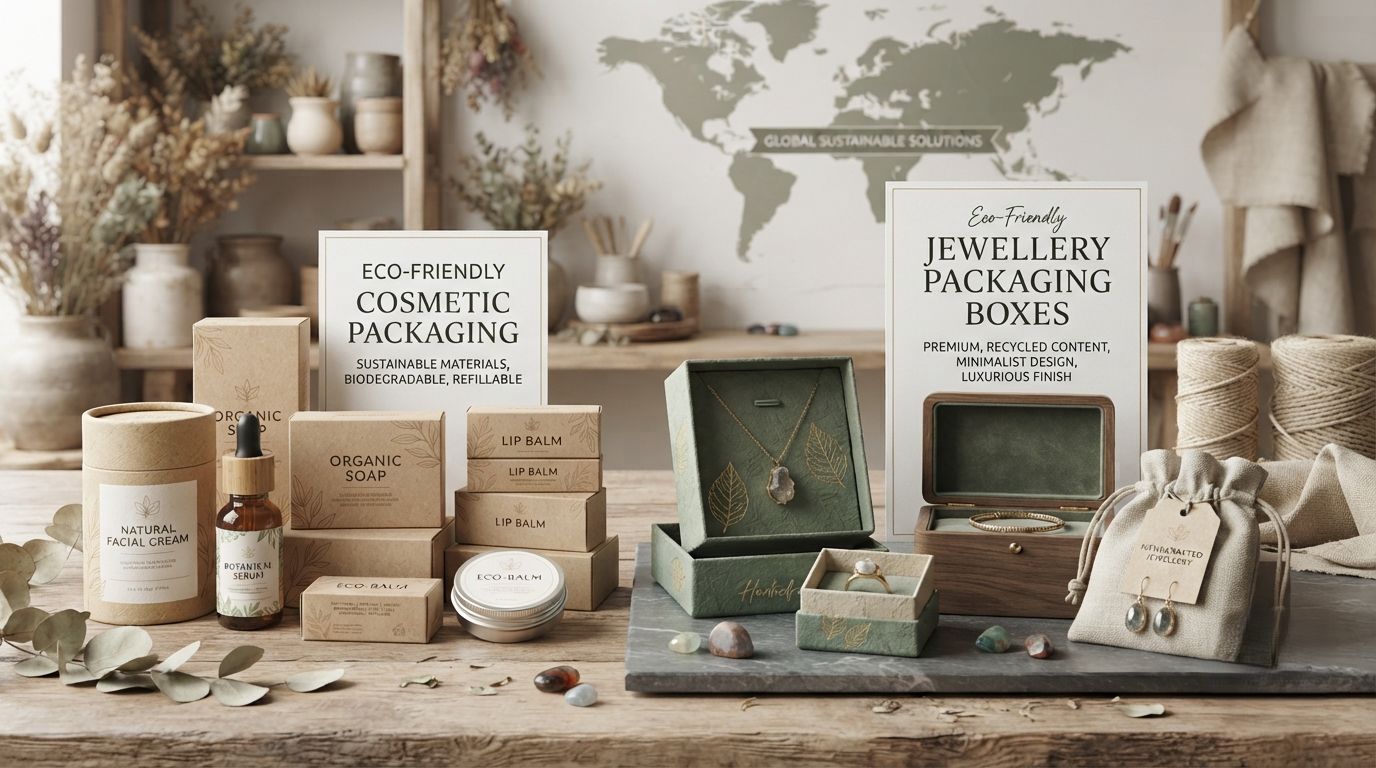
Packaging is no longer just a protective layer around a product. It has become an important part of branding, customer experience, product safety, and environmental responsibility. This change is particularly visible in the cosmetics and jewellery industries, where presentation has always been important.
The story of eco friendly cosmetic packaging and jewellery packaging boxes is one of continuous development. Earlier packaging focused mainly on durability and appearance, while modern solutions increasingly consider recyclability, material efficiency, reuse, and the complete product lifecycle.
How Packaging Looked in the Past
Historically, cosmetic products were packaged in simple containers made from glass, metal, paper, ceramic, and natural materials. Packaging was generally designed to preserve the product and make it convenient to store.
As cosmetics became commercially popular, manufacturers introduced more sophisticated bottles, jars, tubes, cartons, and decorative boxes. Plastic later became one of the most widely used materials because it was affordable, lightweight, and adaptable to different shapes.
Jewellery packaging followed a somewhat different path. Jewellery was traditionally associated with craftsmanship and luxury, so its boxes were often made using wood, leather, velvet, metal, or decorated paper. The objective was not only protection but also creating a memorable presentation when the box was opened.
During this period, environmental considerations were relatively limited. Packaging could contain multiple materials, excessive decorative elements, synthetic cushioning, or components that were difficult to recycle.
The Beginning of the Sustainable Movement
Growing awareness of plastic pollution and resource consumption gradually changed the packaging industry. Customers began asking where packaging materials came from and what happened to them after disposal.
This encouraged manufacturers to investigate alternatives such as recycled paper, kraft board, molded fiber, bamboo, glass, aluminum, and other renewable or recyclable materials.
The sustainable packaging movement also introduced a new design philosophy: less can be more.
Instead of using several layers of unnecessary packaging, brands began looking for ways to achieve the same protection with fewer materials.
Evolution of Cosmetic Packaging
The cosmetic industry has experienced rapid packaging innovation. Traditional plastic-heavy designs are increasingly being complemented or replaced by solutions that focus on reuse, recycling, and material reduction.
Modern eco friendly cosmetic packaging can include:
- Recycled cardboard cartons
- Kraft paper packaging
- Glass bottles and jars
- Aluminum containers
- Bamboo accessories
- Refillable cosmetic containers
- Recycled-content plastics
- Water-based or lower-impact printing solutions
The important point is that sustainability does not necessarily mean sacrificing product quality. Packaging still needs to protect cosmetics against contamination, moisture, light, impact, and other factors that can affect product performance.
Transformation of Jewellery Packaging Boxes
The jewellery sector is also redefining how luxury packaging is designed. Today’s consumers increasingly appreciate packaging that feels premium without appearing unnecessarily wasteful.
Modern jewellery packaging boxes can combine rigid construction, elegant printing, recyclable paperboard, natural fabrics, and carefully designed inserts.
Instead of producing a box that is used once and discarded, manufacturers can create reusable packaging that customers keep for storing jewellery at home.
This approach provides two benefits: the customer receives additional value, while the packaging remains useful for a longer period.
Traditional vs Sustainable Packaging
| Feature | Traditional Packaging | Sustainable Packaging |
| Primary Focus | Appearance and protection | Protection, appearance and environmental impact |
| Materials | Plastic, mixed materials, virgin resources | Recycled, recyclable or renewable materials |
| Design | Often material-intensive | More efficient and minimal |
| Customer Use | Frequently disposable | Often reusable or refillable |
| End of Life | May be difficult to process | Designed with recovery in mind |
What Consumers Expect Today
Modern customers often look beyond the product itself. Packaging can influence their perception of a company’s values.
A cosmetic brand using excessive plastic may receive criticism even when the product itself is high quality. Similarly, a jewellery company using attractive but unnecessarily complicated packaging may appear less environmentally conscious.
Today’s buyers increasingly value:
- Minimal unnecessary packaging
- Recyclable materials
- Reusable designs
- Responsible sourcing
- Clear disposal information
- Attractive but practical presentation
This means sustainable packaging has become both an environmental and branding consideration.
The Future of Eco Friendly Cosmetic Packaging
The next stage of packaging development is expected to move beyond simply replacing conventional materials. The industry is increasingly exploring circular packaging systems in which materials remain useful for as long as possible.
Refillable containers are one promising example. Instead of purchasing an entirely new container whenever a cosmetic product runs out, customers can purchase a refill and continue using the original package.
Other potential developments include:
- Compostable packaging for suitable applications
- Mono-material structures for easier recycling
- Higher recycled content
- Refillable cosmetic systems
- Lightweight packaging designs
- Smart labels and digital product information
- Reusable shipping packaging
Future packaging will likely be judged by its complete lifecycle rather than its appearance alone.
The Future of Jewellery Packaging
The future of jewellery packaging boxes will likely combine sustainability with personalization and technology.
Brands may increasingly use digitally printed packaging for smaller production runs, reducing the need for large inventories. Reusable boxes may become more common, especially for premium jewellery collections.
Technology can also become part of the packaging experience. QR codes, NFC technology, and digital product information could connect physical packaging with online certificates, product details, care instructions, and brand stories.
Luxury Without Excess
Luxury packaging does not have to depend on excessive material use. Premium paper textures, precise construction, embossing, subtle printing, and innovative inserts can create an impressive experience without unnecessary waste.
This represents an important change in the definition of luxury: customers may increasingly associate quality with thoughtful design rather than excessive packaging.
Key Benefits for Businesses
Moving toward sustainable packaging can provide several commercial advantages when implemented correctly.
- Strengthens environmentally responsible brand positioning
- Creates opportunities for distinctive packaging designs
- Can reduce unnecessary material consumption
- Supports customer expectations
- Encourages packaging reuse
- Helps create a more consistent brand identity
However, companies should avoid making environmental claims that cannot be supported. Genuine sustainability requires transparency about materials, sourcing, recycling, and disposal.
Frequently Asked Questions
What is eco friendly cosmetic packaging?
It is packaging developed to reduce environmental impact through approaches such as recycling, reuse, material reduction, renewable resources, or responsible material selection.
How has cosmetic packaging changed?
It has moved from primarily conventional plastic and decorative packaging toward designs that increasingly consider recyclability, refill systems, lightweight structures, and material efficiency.
What are sustainable jewellery packaging boxes?
They are jewellery boxes manufactured using materials and designs intended to reduce environmental impact while maintaining product protection and premium presentation.
Can jewellery boxes be both sustainable and luxurious?
Yes. High-quality paperboard, sophisticated construction, embossing, custom printing, and reusable designs can provide a premium experience.
What materials can be used for sustainable cosmetic boxes?
Paperboard, kraft paper, recycled board, bamboo, glass, aluminum, and selected recycled or biodegradable materials can be used depending on the application.
Why are reusable jewellery boxes useful?
Reusable boxes can provide long-term storage for jewellery, extending the useful life of the packaging instead of treating it as single-use material.
Does sustainable packaging cost more?
The cost depends on material, manufacturing volume, construction, printing, and customization. Some sustainable designs can cost more, while material reduction and simpler structures can help control costs.
Is paper packaging environmentally friendly?
Paper can be a responsible choice when sourced appropriately and designed for efficient recycling, but its environmental impact still depends on production, transportation, coatings, inks, and disposal.
What is refillable cosmetic packaging?
It allows customers to replace the product inside a durable container instead of replacing the complete package each time.
What will packaging look like in the future?
Future packaging is likely to become more circular, reusable, lightweight, recyclable, personalized, and digitally connected.