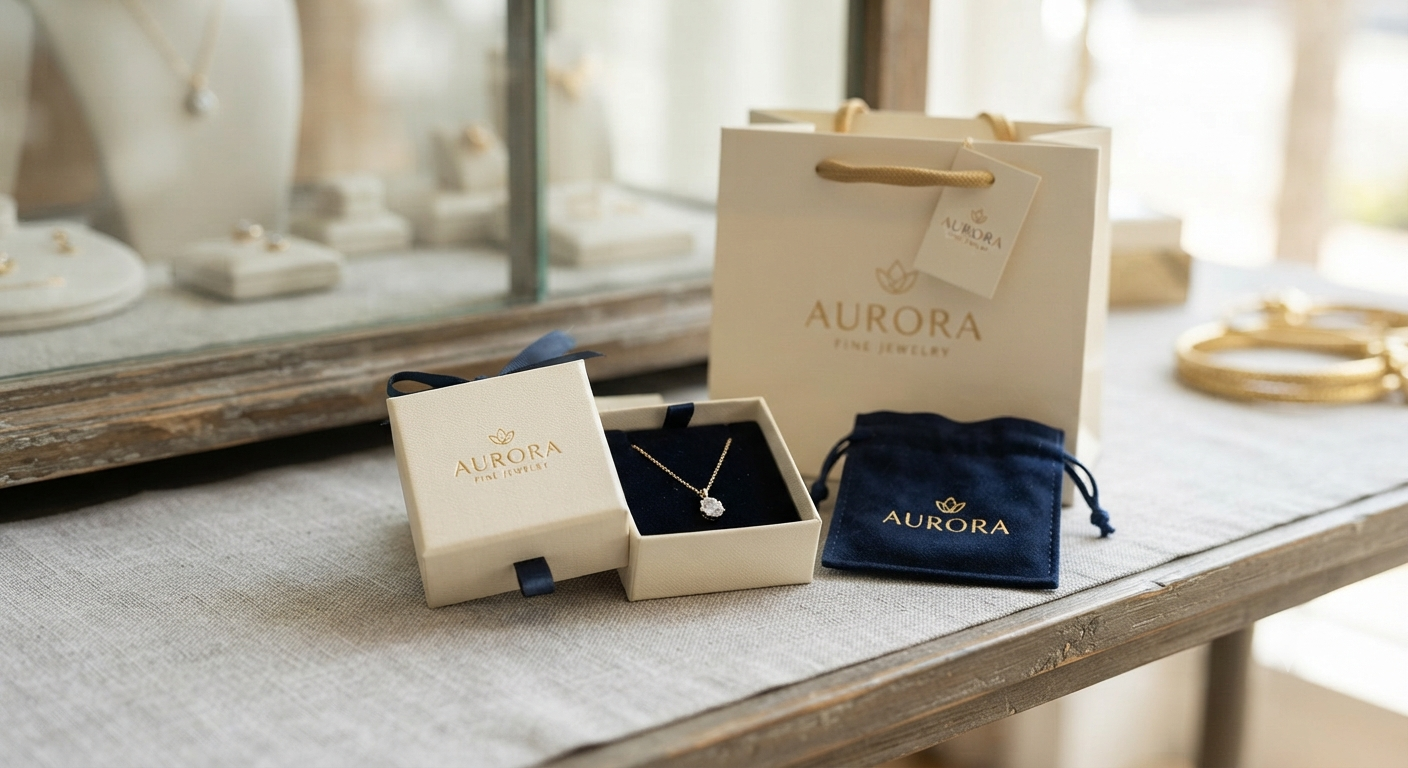
Jewelry is more than a product. It represents emotion, celebration, personal style, and often a meaningful investment. Because of this, presentation plays an important role in how customers perceive a jewelry brand. High-quality custom jewelry packaging can transform a simple purchase into a memorable experience, while luxury jewelry packaging communicates exclusivity, craftsmanship, and attention to detail.
Modern jewelry businesses are no longer treating packaging as a basic protective container. From elegant rigid boxes and velvet pouches to sustainable paper packaging and personalized inserts, packaging has become part of the overall brand experience.
Why Jewelry Packaging Matters for Modern Brands
The first physical interaction a customer has with a jewelry product is often its packaging. Before the necklace, bracelet, ring, or earrings are revealed, customers notice the box, texture, colors, logo, and presentation.
Effective custom jewelry packaging can help businesses:
- Build stronger brand recognition
- Create a premium unboxing experience
- Protect delicate jewelry during transportation
- Increase perceived product value
- Encourage social media sharing
- Improve customer loyalty
- Differentiate products from competitors
Customers buying premium jewelry expect every detail to reflect quality. Poor packaging can reduce the perceived value of even an expensive product.
Understanding Custom Jewelry Packaging
Custom jewelry packaging refers to packaging specifically designed around a jewelry brand’s identity, product dimensions, audience, and positioning.
Instead of using standard boxes available to multiple businesses, brands can personalize various packaging elements.
Important Customization Options
Common customization possibilities include:
- Brand logo printing
- Foil stamping
- Embossing and debossing
- Custom box dimensions
- Personalized colors
- Magnetic closures
- Ribbon handles
- Printed interior messages
- Product-specific inserts
- Custom sleeves and wrapping paper
Customization allows businesses to maintain consistent branding from their website and retail store to the customer’s final unboxing experience.
Small Details Create Strong Brand Recall
Details such as a printed thank-you message, branded tissue paper, custom ribbon, or carefully designed jewelry insert may appear minor, but together they create a polished presentation.
When these elements use consistent fonts, colors, and brand imagery, customers can recognize the business more easily.
What Defines Luxury Jewelry Packaging?
Luxury jewelry packaging focuses on creating a sophisticated presentation using premium materials, refined construction, and carefully considered design.
Luxury does not simply mean adding expensive decorations. A successful premium package often uses simplicity, precise finishing, and high-quality materials.
Popular materials include:
- Premium rigid paperboard
- Velvet and suede
- Satin fabrics
- Leatherette
- Specialty textured papers
- Wood
- Recyclable premium paper
- Microfiber interior lining
A luxury box should feel substantial when held while opening smoothly and presenting the jewelry securely.
Custom Packaging vs Luxury Packaging
Although the two concepts frequently overlap, they serve slightly different purposes.
| Feature | Custom Jewelry Packaging | Luxury Jewelry Packaging |
| Primary Goal | Brand personalization | Premium customer experience |
| Design | Flexible and brand-focused | Elegant and sophisticated |
| Materials | Paper, cardboard, fabric, kraft | Rigid board, velvet, wood, premium paper |
| Branding | Highly customizable | Usually subtle and refined |
| Cost | Suitable for varied budgets | Generally higher investment |
| Best For | Startups to established brands | Premium and high-end jewelry brands |
Many businesses combine both approaches by developing customized packaging using premium materials.
Packaging Solutions for Different Jewelry Products
Different jewelry categories require different packaging structures.
Ring Packaging
Ring boxes usually require compact dimensions with cushioned inserts. Engagement rings and wedding jewelry often benefit from premium hinged or magnetic boxes.
Necklace Packaging
Necklaces require enough interior space to prevent chains from tangling. Inserts should securely position pendants while maintaining an attractive presentation.
Bracelet Packaging
Bracelet boxes are generally wider and may include padded holders that maintain the shape of the bracelet.
Earring Packaging
Studs, hoops, and drop earrings can require different inserts. Carefully positioned slots keep pairs secure and visually balanced.
Choosing appropriate custom jewelry packaging improves both protection and product presentation.
Sustainable Packaging Is Becoming More Important
Sustainability has become an important consideration for brands and customers. Businesses can create attractive packaging while reducing unnecessary plastic and excessive materials.
Eco-conscious options include recycled paperboard, FSC-certified paper, reusable fabric pouches, biodegradable materials, soy-based inks, and recyclable packaging structures.
Premium sustainability can also support luxury jewelry packaging. Minimalist recycled paper combined with elegant embossing, textured finishes, and precision construction can feel sophisticated without excessive materials.
How Packaging Influences the Unboxing Experience
Unboxing has become an important part of modern shopping, particularly for products purchased online.
Customers may photograph or record beautiful packaging and share it on Instagram, TikTok, YouTube, Pinterest, or other social platforms.
A strong unboxing sequence might include:
- Branded external shipping packaging
- Protective tissue or wrapping
- Premium jewelry box
- Personalized message
- Jewelry care instructions
- Authenticity certificate
- Beautifully presented jewelry
This layered experience creates anticipation before customers see the final product.
Choosing the Right Packaging Manufacturer
Selecting an experienced packaging supplier is essential because design concepts need to translate accurately into physical production.
Before placing a large order, businesses should evaluate material quality, printing accuracy, structural strength, finishing, minimum order quantities, production capacity, customization options, and sample availability.
Requesting prototypes allows businesses to test how the packaging looks, feels, opens, and protects the jewelry.
Frequently Asked Questions
1. What is custom jewelry packaging?
Custom jewelry packaging is packaging designed specifically for a jewelry brand using personalized dimensions, colors, logos, materials, printing, and inserts.
2. Why should jewelry brands customize packaging?
Customization improves brand recognition, presentation, customer experience, and perceived product value.
3. What makes jewelry packaging luxurious?
Premium materials, strong construction, precise finishing, elegant branding, and sophisticated presentation define luxury jewelry packaging.
4. Which material is best for jewelry boxes?
Rigid paperboard is widely used because it provides durability, premium appearance, and extensive customization possibilities.
5. Can luxury packaging be sustainable?
Yes. Recycled paperboard, responsibly sourced paper, reusable pouches, and recyclable packaging can create an environmentally responsible luxury experience.
6. Can jewelry boxes include custom inserts?
Yes. Foam, velvet, cardboard, microfiber, or fabric inserts can be customized for rings, earrings, necklaces, and bracelets.
7. Is custom packaging suitable for small jewelry businesses?
Yes. Many suppliers offer flexible quantities, allowing emerging brands to introduce customized packaging gradually.
8. What printing methods are available?
Popular techniques include offset printing, digital printing, foil stamping, screen printing, embossing, and debossing.
9. How can packaging strengthen jewelry branding?
Using consistent logos, colors, typography, materials, and visual elements makes the brand easier for customers to recognize and remember.
10. Should online jewelry stores invest in premium packaging?
Yes. Since online buyers cannot experience the product before delivery, packaging becomes an important physical representation of the brand.