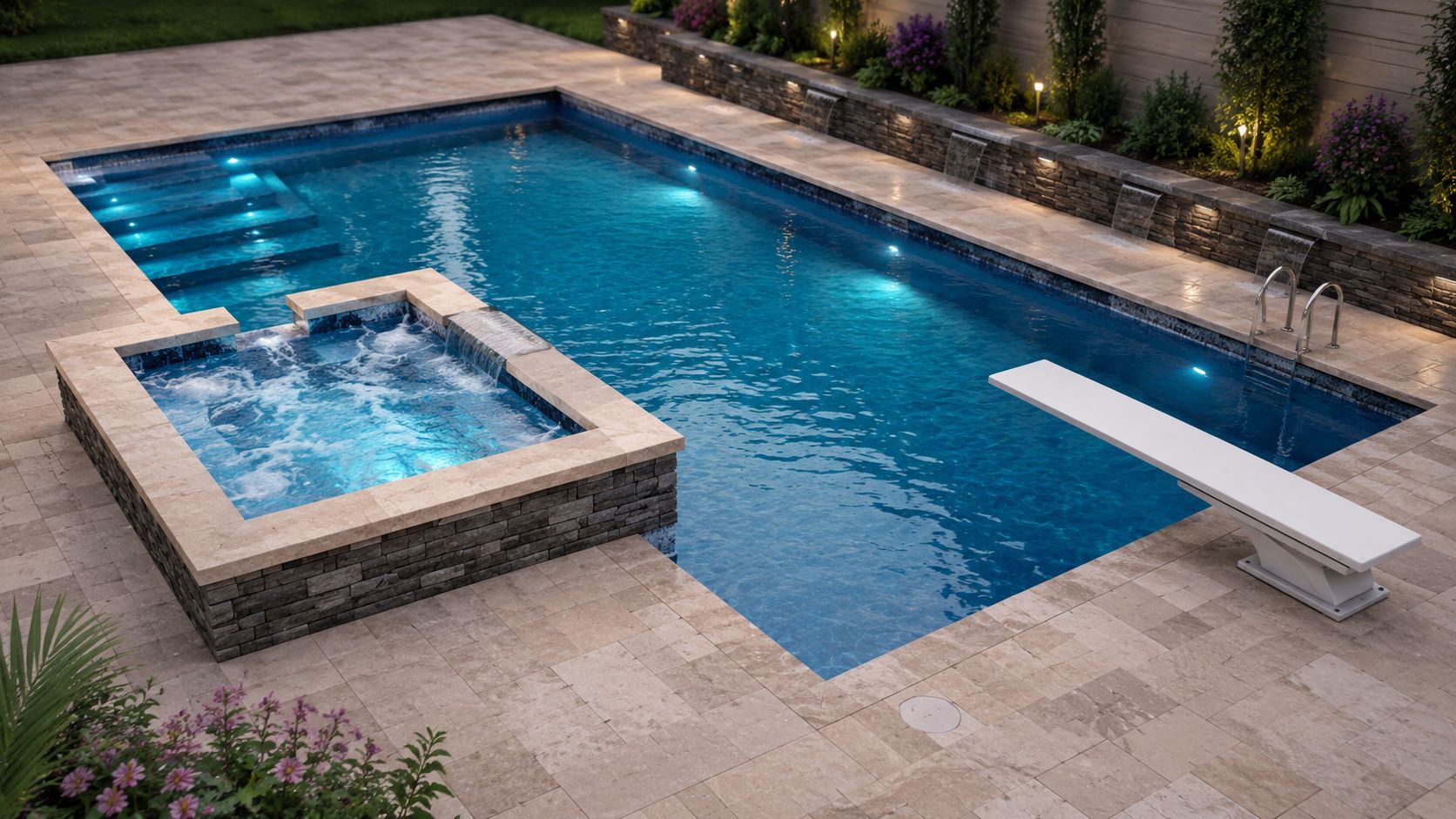
A modern swimming pool can be much more than a place for swimming. With thoughtful planning, homeowners, hotels, resorts, wellness centers, and luxury villas can transform an ordinary pool area into a complete relaxation and recreation zone. Two popular upgrades are a custom jacuzzi and a diving board for inground pool installations.
A custom-built jacuzzi provides hydrotherapy, relaxation, and personalized comfort, while a properly selected diving board adds excitement and recreational value. However, both features require careful attention to design, structural engineering, water circulation, safety, and long-term maintenance.
What Is a Custom Jacuzzi?
A custom jacuzzi is a specially designed spa or hydrotherapy pool built according to the available space, desired seating arrangement, water-jet configuration, materials, heating requirements, and architectural style.
Unlike standard prefabricated spas, custom installations offer greater freedom in dimensions, depth, seating, finishes, lighting, and integration with an existing swimming pool.
A customized jacuzzi may include:
- Ergonomic hydrotherapy seating
- Powerful massage jets
- Heated water systems
- Air bubble jets
- LED underwater lighting
- Temperature controls
- Waterfalls or spillways
- Integrated steps and handrails
- Smart filtration systems
- Custom tiles, stone, or mosaic finishes
Because every property has different dimensions and requirements, customization makes it possible to create a spa that complements the surrounding landscape and pool design.
Benefits of Installing a Custom Jacuzzi
The main attraction of a custom jacuzzi is its ability to combine wellness with luxury. Warm water and strategically positioned hydrotherapy jets can provide a comfortable environment for relaxation after exercise, work, or swimming.
Personalized Hydrotherapy Experience
Jets can be positioned around the back, shoulders, legs, and feet according to the intended experience. Different jet pressures may also be incorporated into separate seating positions.
This gives users greater control over their spa experience compared with basic standardized systems.
Better Integration With Pool Design
A jacuzzi can be constructed beside an inground swimming pool or incorporated directly into the pool structure.
Popular configurations include:
- Raised spa beside the swimming pool
- Integrated pool-and-spa combination
- Infinity-edge jacuzzi
- Circular spa attached to a rectangular pool
- Sunken jacuzzi surrounded by decking
- Overflow spa connected to the main pool
The architecture, tile finish, coping, and surrounding landscape can all be coordinated for a seamless appearance.
Important Features of a High-Quality Custom Jacuzzi
Professional planning is essential when developing a custom jacuzzi because appearance alone does not determine performance.
Water Heating System
An efficient heater should maintain comfortable water temperatures while minimizing unnecessary energy consumption.
Jet Placement
Hydrotherapy jets should be positioned according to seating height, body position, pump capacity, and intended massage intensity.
Pump and Circulation Design
The pump must provide sufficient water flow without creating excessive pressure or noise. Proper circulation also helps distribute heat and treatment chemicals evenly throughout the jacuzzi.
Filtration and Sanitation
Filters remove debris and contaminants, while suitable sanitation systems help maintain safe water quality. Depending on the installation, designers may consider chlorine, bromine, UV, ozone, or compatible automated treatment systems.
Understanding a Diving Board for Inground Pool
A diving board for inground pool is a recreational platform specifically designed for diving into a swimming pool with suitable dimensions, depth, and structural conditions.
Installing a diving board is not simply a matter of fixing a board beside the pool. The pool must have an appropriate diving envelope, sufficient water depth, safe clearance, and a properly engineered mounting system.
Before installation, owners should consult qualified pool professionals and follow applicable local building codes and manufacturer specifications.
Choosing the Right Diving Board
Several factors determine whether a particular diving board for inground pool is appropriate.
| Factor | Why It Matters |
| Pool depth | Provides adequate diving clearance |
| Pool dimensions | Ensures sufficient underwater space |
| Board length | Influences positioning and diving path |
| Weight capacity | Supports users safely |
| Mounting system | Provides structural stability |
| Deck construction | Must support anchors and loads |
| Manufacturer requirements | Determines installation conditions |
Never select a diving board based only on appearance or price.
Safety Requirements for Diving Boards
Safety should be the highest priority when planning a diving board for inground pool.
The diving section needs adequate depth and sufficient forward clearance. Shallow pools are generally inappropriate for conventional diving-board installations.
Important precautions include:
- Follow the diving-board manufacturer’s installation instructions.
- Confirm pool dimensions before installation.
- Use professional structural mounting.
- Keep the diving area clear.
- Never dive into shallow sections.
- Inspect bolts and mounting components periodically.
- Replace damaged or deteriorated components promptly.
- Establish clear pool-use rules.
Local regulations can differ, so professional verification is strongly recommended before construction.
Custom Jacuzzi vs Diving Board for Inground Pool
Although these features serve different purposes, they can complement one another effectively.
| Feature | Custom Jacuzzi | Diving Board |
| Primary purpose | Relaxation and hydrotherapy | Recreation and diving |
| Water temperature | Usually heated | Standard pool temperature |
| Space requirement | Flexible | Requires suitable diving area |
| Customization | Very high | Moderate |
| Main consideration | Jets, heating and circulation | Depth and diving clearance |
A thoughtfully designed property can include both a custom jacuzzi and diving board for inground pool, creating separate areas for relaxation and active recreation.
Planning Both Features in One Pool Project
If both features are being installed, planning them together can simplify hydraulic, electrical, structural, and landscape design.
Consider the following process:
- Evaluate the available property space.
- Determine swimming-pool dimensions.
- Establish the required diving zone.
- Select a suitable jacuzzi location.
- Design plumbing and filtration systems.
- Plan electrical and heating requirements.
- Select compatible materials and finishes.
- Add lighting, decking, and landscaping.
- Verify safety requirements.
- Schedule professional installation and testing.
Proper planning can prevent expensive structural changes later.
Frequently Asked Questions
Can a jacuzzi be connected to an existing swimming pool?
Yes. A custom jacuzzi can often be integrated with an existing pool, although plumbing, heating, structure, and available space must first be evaluated.
Can I choose the number of jacuzzi jets?
Yes. Jet number, location, type, and pressure can usually be customized according to the design.
Does a custom jacuzzi require separate heating?
It often does because jacuzzi water is normally maintained at a higher temperature than swimming-pool water.
Can a diving board be installed on any inground pool?
No. A diving board for inground pool requires appropriate depth, dimensions, structural support, and diving clearance.
How deep should a pool be for diving?
Required depth depends on the board, pool geometry, applicable standards, and manufacturer specifications. A qualified pool professional should confirm suitability.
Is professional installation necessary?
Professional installation is strongly recommended for both jacuzzi systems and diving boards because plumbing, electricity, structural loads, and safety are involved.
Can I add LED lights to a jacuzzi?
Yes. Waterproof underwater LED lighting is a popular option for creating an attractive nighttime spa environment.
Can a custom jacuzzi have multiple seating levels?
Yes. Different seat heights and configurations can be designed for adults, shorter users, or different hydrotherapy positions.
How often should a diving board be inspected?
Regular visual inspections should be performed, while mounting hardware and structural components should be checked according to manufacturer recommendations.
Can both features increase a property’s appeal?
They can enhance recreational and lifestyle appeal when professionally designed, safely installed, and well maintained.