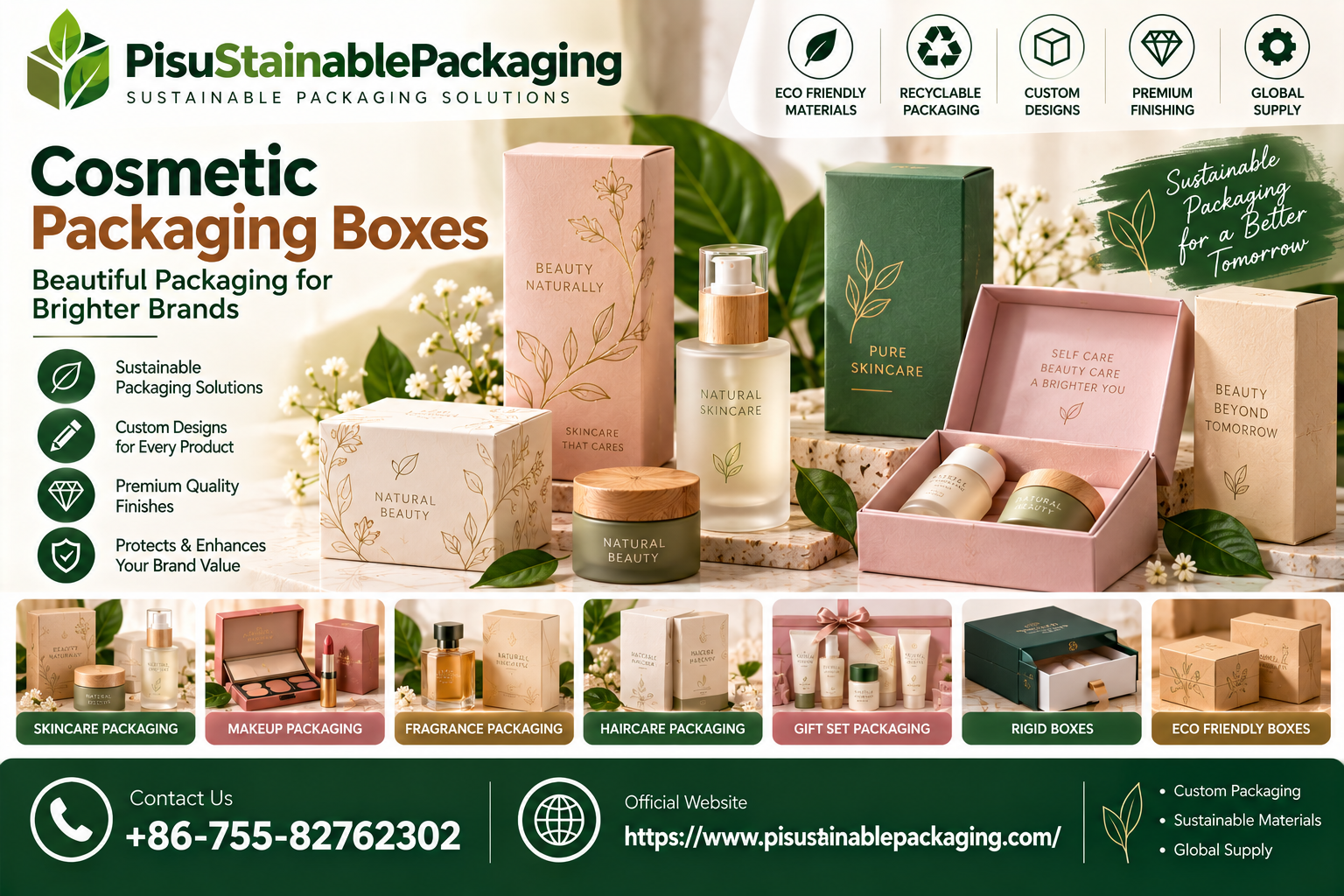
The cosmetics industry is placing greater emphasis on packaging that combines attractive design, product protection, practical functionality, and efficient distribution. As beauty brands compete for customer attention, packaging has become an essential part of product development rather than simply a finishing detail.
Well-designed cosmetic packaging boxes help skincare, makeup, and personal care companies communicate product identity while protecting products during storage and transportation. At the same time, modern cosmetic packaging solutions are evolving to address changing retail expectations, material efficiency, and customer convenience.
For emerging beauty businesses and established manufacturers, packaging decisions can influence product presentation, operational costs, customer satisfaction, and brand recognition.
Why Cosmetic Packaging Is Becoming a Business Priority
Beauty consumers encounter products across retail shelves, online marketplaces, boutiques, and social media platforms.
Packaging must communicate essential product information while maintaining a consistent visual identity across these channels.
A successful packaging strategy combines three important considerations: protection, usability, and communication.
Brands that consider these requirements during product development can avoid unnecessary redesigns and improve packaging consistency.
Understanding Cosmetic Packaging Boxes
Cosmetic packaging boxes are external containers designed to hold, protect, organize, or present beauty products.
They are commonly used for skincare creams, serums, perfumes, makeup products, soaps, and personal care gift sets.
Unlike primary packaging, which directly contains the formulation, secondary packaging generally surrounds the primary container.
Common Types of Cosmetic Boxes
- Folding Cartons: Suitable for individual skincare and makeup products.
- Rigid Boxes: Used for premium beauty collections and gift presentations.
- Sleeve Boxes: Add branding and product information around suitable containers.
- Window Boxes: Allow partial product visibility where appropriate.
- Drawer-Style Boxes: Provide distinctive presentation for selected premium items.
- Gift Set Boxes: Organize multiple products within one package.
The appropriate structure depends on product dimensions, weight, distribution conditions, and presentation requirements.
The Relationship Between Primary and Secondary Packaging
Modern cosmetic packaging involves multiple components working together.
Primary packaging includes bottles, jars, tubes, pumps, and other containers that directly contact cosmetic formulations.
Secondary packaging includes cartons, presentation boxes, and protective sleeves.
Why Both Components Matter
Formulation Compatibility: Primary containers must be suitable for their contents.
Physical Protection: Secondary boxes may reduce scratches, crushing, and handling damage.
Product Identification: Packaging provides space for branding and required information.
Retail Organization: Standardized dimensions can improve storage and merchandising.
Customer Convenience: Clear opening instructions and practical structures improve usability.
Importantly, an attractive external box cannot compensate for an unsuitable primary container.
How Structural Design Supports Product Protection
Cosmetic products face different handling conditions throughout manufacturing, warehousing, and transportation.
Glass serum bottles may require additional cushioning, while lightweight makeup products need appropriately fitted cartons.
Good structural design considers the product’s dimensions, weight distribution, and vulnerability to damage.
Essential Structural Features
- Accurate product measurements.
- Suitable paperboard thickness.
- Secure opening and closing mechanisms.
- Properly positioned internal inserts.
- Resistance to ordinary handling conditions.
- Compatibility with shipping cartons.
Testing representative packaging samples helps brands identify design weaknesses before commercial production.
Printing and Finishing: Creating Distinctive Beauty Packaging
Visual presentation remains an important consideration for cosmetic brands.
Printing techniques, textures, typography, and decorative finishes influence the appearance of cosmetic packaging boxes.
Popular Finishing Options
Matte Finishing: Creates a restrained, sophisticated appearance.
Gloss Finishing: Enhances selected colors and decorative elements.
Embossing: Adds raised decorative details.
Debossing: Creates recessed designs and tactile branding.
Foil Stamping: Highlights selected elements through metallic effects.
Spot UV: Creates contrast between coated and uncoated areas.
Brands should select finishes according to their positioning, budget, and material requirements rather than combining unnecessary decorative processes.
Packaging Compliance and Product Communication
Cosmetic packaging must communicate relevant product information according to applicable market regulations.
Depending on the jurisdiction and product category, labeling requirements may include ingredient information, net contents, manufacturer or responsible-party details, warnings, and batch identification.
Packaging designers should coordinate with regulatory and product teams before approving artwork.
Important Labeling Considerations
- Clear, readable typography.
- Accurate ingredient declarations.
- Suitable product-use instructions.
- Relevant cautionary statements.
- Appropriate product identification.
- Consistency between cartons and primary containers.
Unverified claims such as guaranteed results, universal sustainability, or unsupported product performance should be avoided.
Cosmetic Packaging for E-Commerce Distribution
Online beauty retail introduces challenges that differ from traditional store environments.
Products may experience repeated handling, vibration, compression, and movement during delivery.
For online sellers, cosmetic packaging boxes should complement protective shipping materials without introducing unnecessary weight or volume.
Compact dimensions can help improve carton utilization, while suitable inserts reduce unwanted product movement.
Brands should also evaluate the opening experience because the delivered package becomes an important customer interaction.
Material Efficiency and Responsible Packaging Decisions
Beauty companies are increasingly examining how packaging materials influence operational efficiency and environmental performance.
Suitable recycled paperboard, responsibly sourced materials, reduced material usage, and simplified structures may contribute to improvements when supported by appropriate evidence.
However, packaging sustainability should be evaluated across the complete product system.
A lighter box is not automatically a better solution if it increases the likelihood of product damage.
The most effective cosmetic packaging strategy balances material efficiency with sufficient protection and practical disposal options.
Selecting the Right Cosmetic Packaging Manufacturer
Beauty businesses should approach packaging procurement as a technical and creative partnership.
An effective supplier evaluation considers:
- Structural design and customization capabilities.
- Material specifications and quality consistency.
- Printing accuracy and finishing options.
- Prototype development and sample approval.
- Product protection requirements.
- Commercial order quantities.
- Transparent pricing and delivery arrangements.
- Communication during production.
Requesting physical prototypes allows brands to assess appearance, fit, usability, and construction quality before placing larger orders.
Frequently Asked Questions (FAQs)
1. What are cosmetic packaging boxes?
They are external packaging structures used to protect, organize, and present skincare, makeup, and personal care products.
2. Why is cosmetic packaging important?
It supports product protection, usability, labeling, brand recognition, and customer experience.
3. Which materials are commonly used for cosmetic boxes?
Paperboard, rigid board, and specialty papers are commonly used, depending on the packaging structure.
4. Can cosmetic boxes be customized?
Yes. Dimensions, structures, colors, printing, inserts, and decorative finishes can be customized.
5. What is the difference between primary and secondary packaging?
Primary packaging directly contains the product, while secondary packaging surrounds or presents the primary container.
6. Are rigid cosmetic boxes suitable for luxury products?
Yes. They can provide a premium presentation when properly designed for the product.
7. Can cosmetic packaging boxes protect glass bottles?
Suitable structures and inserts can provide additional protection, but packaging performance should be tested.
8. Is recycled paperboard suitable for cosmetic cartons?
It can be suitable when material strength, quality, and product requirements are satisfied.
9. What influences cosmetic packaging costs?
Material type, dimensions, printing, finishing, structural complexity, and order quantity affect pricing.
10. How should beauty brands choose a packaging supplier?
They should evaluate samples, customization capabilities, material quality, production consistency, and commercial reliability.
Media Contact
Department: Cosmetic Packaging and Beauty Industry Communications
Email: marketing@pisustainablepackaging.com
Contact: +852-3069 7269
Official Website: https://www.pisustainablepackaging.com/