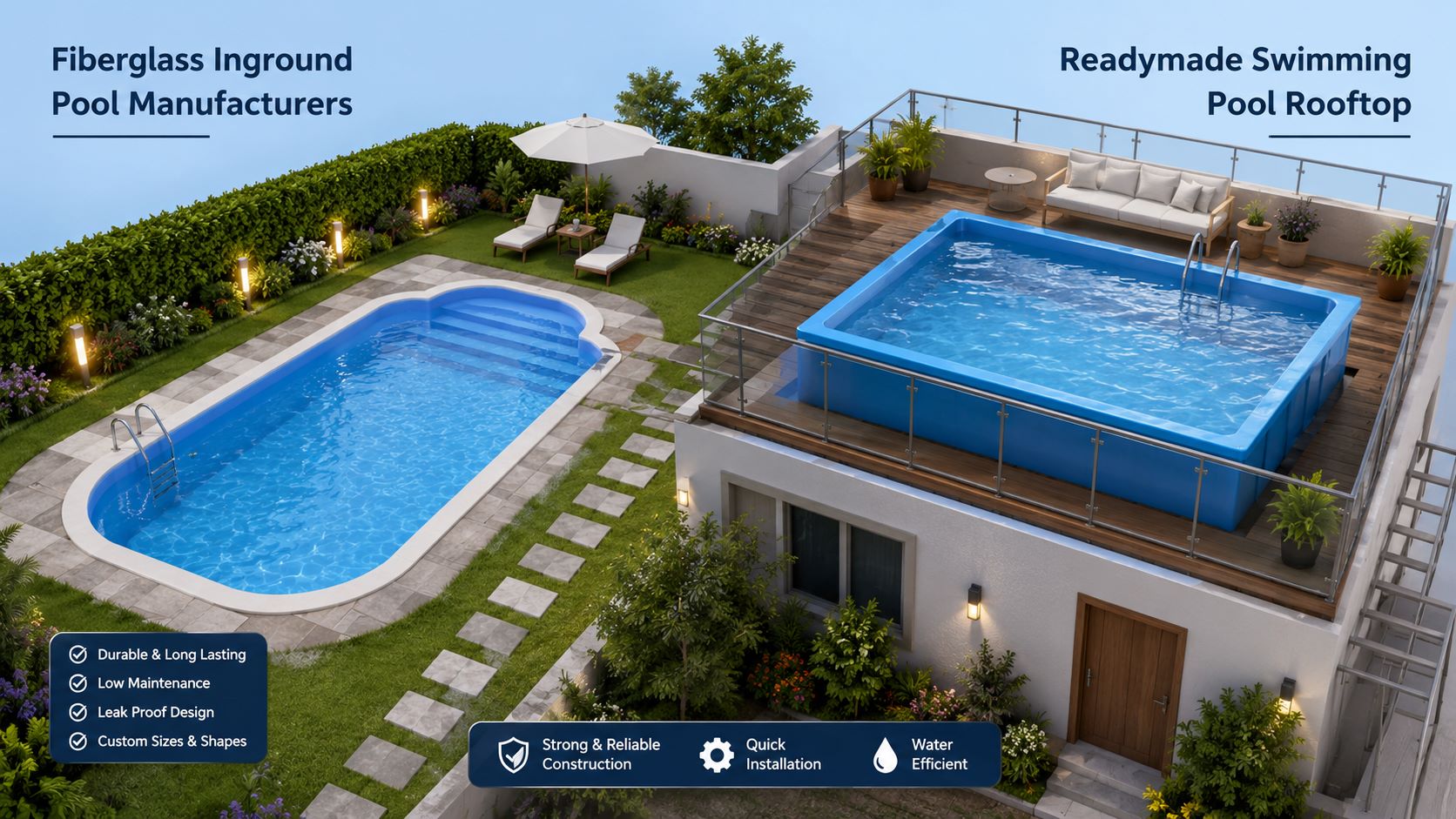
A fiberglass inground pool is manufactured as a prefabricated shell using multiple layers of engineered composite materials. The finished shell is transported to the project location and installed inside a prepared excavation.
Professional fiberglass inground pool manufacturers typically produce different shapes, depths, sizes, steps, seating areas, and design configurations.
Compared with traditional concrete construction, the prefabricated approach can simplify several stages of installation. Because the pool body is manufactured under controlled conditions, much of the structural finishing work takes place before it reaches the property.
How Fiberglass Pool Construction Works
The manufacturing process generally includes a smooth interior surface followed by fiberglass reinforcement and structural composite layers. The exact construction specification varies between manufacturers.
Good manufacturing practices focus on:
- Structural strength and dimensional stability
- Smooth, comfortable interior surfaces
- Effective waterproof construction
- Proper plumbing provisions
- Consistent factory finishing
- Compatibility with filtration equipment
Buyers should evaluate construction specifications instead of selecting a pool solely by appearance or quotation price.
Why Manufacturing Quality Matters
Poor-quality fabrication may contribute to surface deterioration, structural movement, plumbing problems or premature repairs. Established fiberglass inground pool manufacturers should therefore explain their material specifications, installation requirements, warranty conditions and after-sales support clearly.
Benefits of Choosing Fiberglass Inground Pools
Fiberglass pools offer several practical advantages for residential and commercial projects.
Their prefabricated construction can significantly reduce on-site building activity compared with conventional reinforced-concrete pools. Smooth internal surfaces are also easier to clean because they contain fewer joints than many tiled installations.
Other advantages can include predictable factory dimensions, attractive modern designs, integrated steps or benches and comparatively straightforward maintenance.
Installation still requires correct excavation, foundation preparation, backfilling, plumbing and drainage. Therefore, even a high-quality shell can perform poorly when installation standards are ignored.
What Is a Readymade Swimming Pool Rooftop System?
A readymade swimming pool rooftop system is a prefabricated or modular swimming pool designed for installation on terraces or elevated building areas, subject to structural approval.
These pools are especially attractive for properties where ground-level space is limited.
Hotels may use rooftop pools to create premium recreational areas, while homeowners may consider compact terrace pools for relaxation and exercise.
The most important consideration, however, is structural safety.
Water is extremely heavy. The pool shell, water, users, equipment and surrounding deck collectively introduce substantial loads. A qualified structural engineer should therefore evaluate the building before installation.
Fiberglass Inground Pool vs Readymade Rooftop Pool
| Feature | Fiberglass Inground Pool | Readymade Rooftop Pool |
| Installation Area | Ground excavation | Structurally approved rooftop |
| Construction | Prefabricated fiberglass shell | Prefabricated or modular system |
| Installation Complexity | Moderate | Requires detailed structural planning |
| Space Requirement | Garden or open ground | Terrace or rooftop |
| Maintenance | Generally straightforward | Depends on pool and filtration design |
| Key Concern | Ground preparation | Building load capacity |
| Suitable For | Homes, resorts, clubs | Homes, hotels and selected commercial buildings |
Neither option is universally better. The appropriate solution depends on available space, structural conditions, intended usage and budget.
How to Select Fiberglass Inground Pool Manufacturers
Selecting the right supplier requires more than comparing prices. Buyers should examine manufacturing expertise and complete project support.
First, ask about shell materials and fabrication methods. Next, understand what is included in the quoted price, because transportation, excavation, filtration, plumbing, installation, decking and electrical work may be priced separately.
Also evaluate previous projects and available designs. Reliable fiberglass inground pool manufacturers should be able to explain how installation varies according to soil conditions, groundwater, pool dimensions and site accessibility.
Finally, review warranty documentation carefully. Understand what applies to structural components, surface finishes, equipment and installation workmanship.
Planning a Rooftop Readymade Swimming Pool Safely
Installing a readymade swimming pool rooftop requires careful coordination between structural engineers, architects, pool specialists and waterproofing professionals.
Before proceeding, property owners should evaluate:
- Structural load-bearing capacity
- Pool dimensions and filled water weight
- Building access for transportation
- Waterproofing and drainage
- Plumbing routes
- Filtration equipment location
- Electrical safety
- Emergency overflow management
- Surrounding deck design
- Local building requirements
A compact pool does not automatically mean it is suitable for every terrace. Structural approval should always come before purchasing or installing the system.
Essential Swimming Pool Equipment
The pool shell is only one part of a complete installation. Efficient water circulation and sanitation are equally important.
A professionally planned system may incorporate filtration pumps, filters, skimmers, return inlets, drains, sanitation equipment, underwater lighting and control systems.
Optional features may include heating systems, waterfalls, massage jets, counter-current systems and automated treatment equipment.
Choosing correctly sized equipment helps maintain water clarity while improving operational efficiency.
Maintenance Requirements
Both fiberglass and rooftop pools require regular maintenance. Owners should monitor water chemistry, remove surface debris, clean filters, inspect pumps and check circulation.
Periodic professional inspection is also valuable because plumbing connections, filtration equipment, waterproofing and pool surfaces can be assessed before minor problems become expensive repairs.
Following the equipment manufacturer’s maintenance recommendations is particularly important for protecting warranties.
Frequently Asked Questions
1. Are fiberglass inground pools durable?
Yes. A properly manufactured and professionally installed fiberglass pool can provide long-term service, although durability depends on fabrication quality, installation conditions and maintenance.
2. Are fiberglass pools easier to install than concrete pools?
They can require less on-site construction because the shell arrives prefabricated, although excavation and correct foundation preparation remain essential.
3. Can a readymade swimming pool be installed on any rooftop?
No. A structural engineer must determine whether the building can safely support the complete pool system.
4. What sizes do fiberglass pools come in?
Manufacturers commonly offer multiple standard sizes, shapes and depths, although available options vary by company.
5. Do rooftop pools require waterproofing?
Yes. Proper waterproofing, drainage and overflow management are essential components of rooftop pool planning.
6. Can fiberglass pools include steps and seating?
Yes. Many factory-made designs incorporate steps, benches, lounging areas or other moulded features.
7. How should I compare fiberglass inground pool manufacturers?
Compare material quality, manufacturing standards, project experience, installation services, warranties, equipment and after-sales support.
8. Does a readymade rooftop pool require filtration?
Yes. Swimming water needs appropriate circulation, filtration and sanitation irrespective of where the pool is installed.
9. Can fiberglass pools be used commercially?
They may be suitable for certain hotels, resorts, clubs and similar properties when the pool specification matches the expected usage and applicable requirements.
10. Which is better: fiberglass or concrete?
The answer depends on design requirements, site conditions, desired customisation, construction timeline, maintenance expectations and budget.