As industrial customers demand reliable components, fabrication workshops must demonstrate that finished products meet specified dimensions, material requirements, and manufacturing standards.
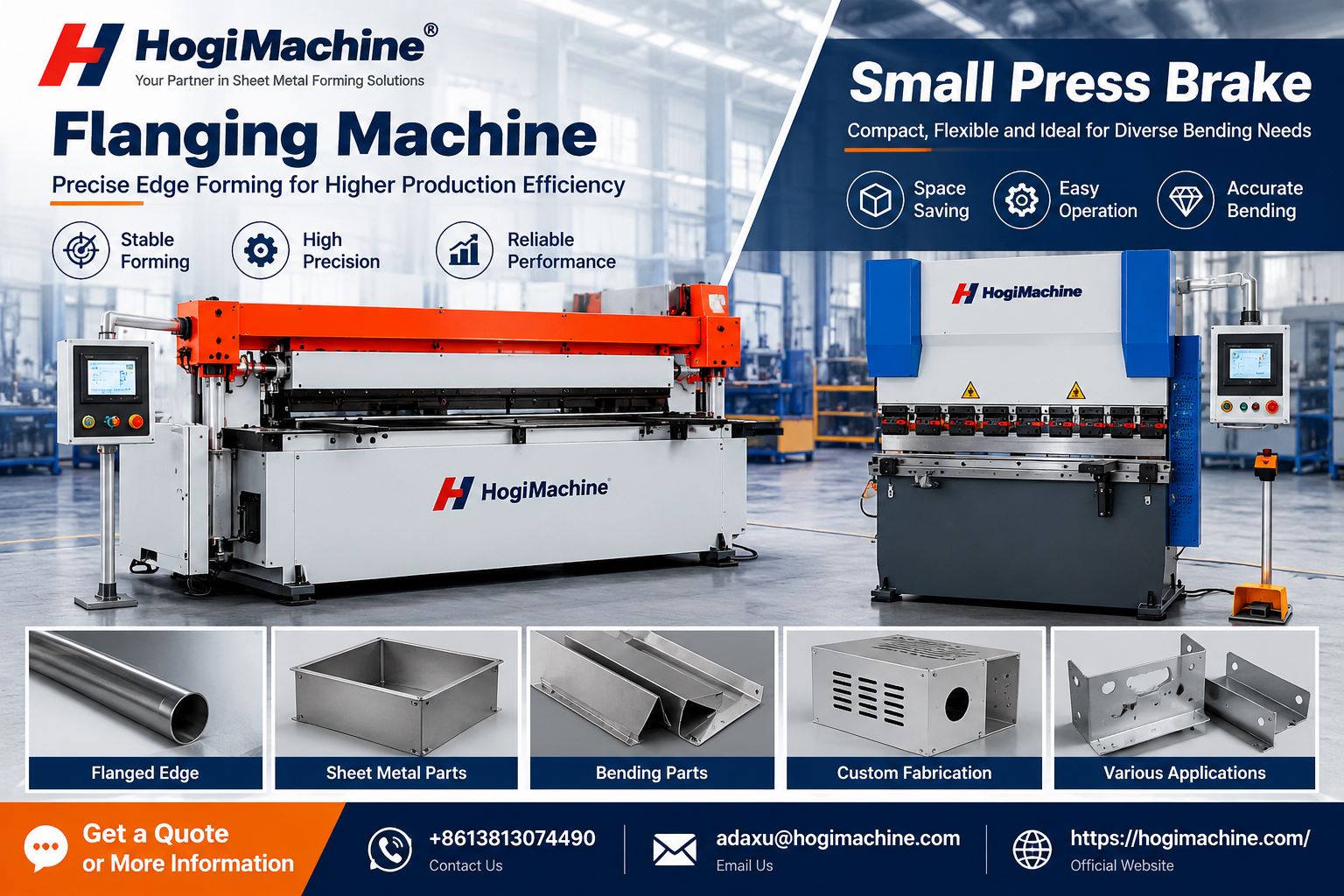
A Flanging machine supports specialised metal edge-forming operations, while a small press brake provides controlled bending capabilities for sheet metal components.
Although these machines perform different functions, both can benefit from structured production records, documented machine settings, and consistent inspection procedures.
For industrial equipment manufacturers, OEM suppliers, and fabrication businesses, traceability provides a practical framework for connecting material information with manufacturing processes and finished product quality.
Why Traceability Matters in Metal Fabrication
Production traceability involves maintaining records that identify relevant materials, processes, and inspection results associated with manufactured components.
In sheet metal fabrication, this information may include material grades, thickness specifications, tooling arrangements, and approved component drawings.
Without accurate documentation, identifying the cause of manufacturing inconsistencies can become difficult.
For example, a batch of metal brackets may show unexpected dimensional variations despite using the same nominal design.
Production records can help engineers investigate potential differences in materials, tooling, or machine settings.
This makes traceability valuable for businesses seeking consistent manufacturing outcomes.
Understanding the Role of a Flanging Machine
A Flanging machine is metal-forming equipment designed to produce specified flange profiles along compatible workpiece edges.
Depending on the machine configuration, it may process circular, cylindrical, or other suitable metal components.
Flanging operations are used in selected industrial applications involving ventilation components, metal containers, and fabricated assemblies.
Manufacturing consistency depends on suitable tooling, material preparation, and controlled forming conditions.
Recording relevant machine settings can help operators reproduce approved component profiles.
However, the necessary documentation depends on the equipment and manufacturing application.
How a Small Press Brake Supports Repeatable Production
A small press brake uses a compatible punch and die arrangement to bend sheet metal into specified angles and profiles.
It may be used to manufacture mounting brackets, equipment panels, electrical enclosures, and customised metal components.
Repeatability is important when producing multiple parts that must fit within the same assembly.
Different tooling arrangements or positioning settings can influence finished dimensions.
For suitable machines, documented backgauge positions, bending sequences, and approved tooling combinations can support consistent setup.
Nevertheless, dimensional inspection remains necessary to confirm production quality.
Why Material Identification Is Essential
Metal sheets that appear similar may have different mechanical properties.
Material grade, thickness variation, and processing history can influence bending behaviour.
For example, differences in yield strength may affect springback after forming.
If materials are mixed without appropriate identification, operators may encounter inconsistent results.
Fabrication businesses should therefore maintain suitable material identification procedures.
Depending on customer requirements, these may involve supplier documentation, batch references, or material inspection records.
Material traceability helps manufacturers investigate quality problems without making unsupported assumptions about their causes.
Creating Standardised Machine Setup Records
Machine setup documentation helps operators prepare equipment according to approved production requirements.
A suitable setup record may identify the workpiece material, tooling configuration, critical dimensions, and relevant machine parameters.
Photographs or diagrams can help explain complex arrangements.
However, written records should remain consistent with the equipment manufacturer’s operating instructions.
Clear documentation also supports communication between engineering teams, supervisors, and machine operators.
Comparing Traceability Requirements
| Production Factor | Flanging Machine | Small Press Brake |
| Main Operation | Specialised edge forming | Controlled sheet metal bending |
| Critical Record | Approved flange geometry | Approved bend dimensions |
| Tooling Information | Edge-forming tooling arrangement | Punch and die configuration |
| Material Details | Grade and thickness | Grade and thickness |
| Quality Inspection | Edge profile consistency | Bend angle and position |
| Traceability Benefit | Reproducible flange characteristics | Consistent component geometry |
Both manufacturing processes benefit from documentation matched to their specific technical requirements.
First-Article Inspection Before Batch Manufacturing
First-article inspection involves evaluating representative components against approved engineering requirements before continuing production.
For metal-forming operations, inspection may include flange dimensions, bending angles, component length, and important assembly features.
The purpose is to identify potential setup or tooling problems before additional components are produced.
However, first-article approval does not eliminate the need for subsequent quality checks.
Material variation, tooling wear, and process changes can still affect production.
A suitable inspection plan should reflect the component’s critical characteristics and customer specifications.
Using Digital Production Records
Digital documentation systems can help manufacturers organise production information.
Depending on the workshop’s needs, these systems may store drawings, job instructions, inspection reports, and approved machine configurations.
Digital records can also support revision control.
For example, when an engineering drawing changes, an organised system can help identify which instructions require updating.
However, digitalisation does not automatically guarantee accurate records.
Information must be entered correctly, reviewed appropriately, and protected from unauthorised changes.
Even smaller workshops can benefit from straightforward, consistently maintained documentation procedures.
Managing Nonconforming Metal Components
A nonconforming component does not meet one or more specified requirements.
When such a component is identified, manufacturers should evaluate the problem before deciding whether rework, rejection, or another approved disposition is appropriate.
Traceability records can help determine whether other components may be affected.
For example, repeated bending discrepancies might require examination of tooling alignment, material variation, or machine settings.
The investigation should focus on evidence rather than assumptions.
Appropriate corrective actions can help prevent similar problems from recurring.
How Documentation Supports OEM Supplier Relationships
OEM customers may require evidence that supplied metal components meet agreed technical requirements.
Clear production and inspection records support communication between fabrication businesses and their customers.
Depending on contractual obligations, documentation may include material identification, dimensional reports, or approved manufacturing revisions.
These records can simplify discussions when specifications change or manufacturing issues arise.
However, the level of documentation should match product risk, customer expectations, and applicable requirements.
Unnecessary paperwork should not replace meaningful manufacturing controls.
Selecting Metal Forming Equipment for Quality-Focused Production
Businesses should consider more than basic machine capacity when evaluating metal-forming equipment.
Important factors include:
- Process Repeatability: Ability to produce components consistently under suitable conditions.
- Tooling Compatibility: Availability of appropriate forming tools.
- Setting Control: Practical methods for recording approved machine configurations.
- Dimensional Accuracy: Suitability for the intended manufacturing tolerances.
- Operator Safety: Appropriate guarding, procedures, and training.
- Technical Support: Access to operating documentation and maintenance guidance.
Representative component trials can help evaluate equipment suitability.
Frequently Asked Questions (FAQs)
1. What is a Flanging machine?
A flanging machine forms compatible metal workpiece edges into specified profiles for industrial fabrication, joining, or structural applications.
2. What is a small press brake?
A small press brake is compact equipment that bends suitable sheet metal using compatible punches and dies.
3. Why is production traceability important in metal fabrication?
Traceability helps manufacturers connect materials, production settings, and inspection results with finished components.
4. Can digital records improve metal-forming quality?
Yes. Accurate digital records can support documentation, revision control, and investigation of manufacturing inconsistencies.
5. How can businesses achieve consistent sheet metal production?
Businesses should use approved materials, documented machine setups, suitable tooling, representative inspections, and effective corrective-action procedures.
Media Contact
Department: Industrial Metal Forming and Machinery Enquiries
Contact: +86 138 1307 4490
Email: daxu@hogimachine.com
Official Website: https://hogimachine.com/