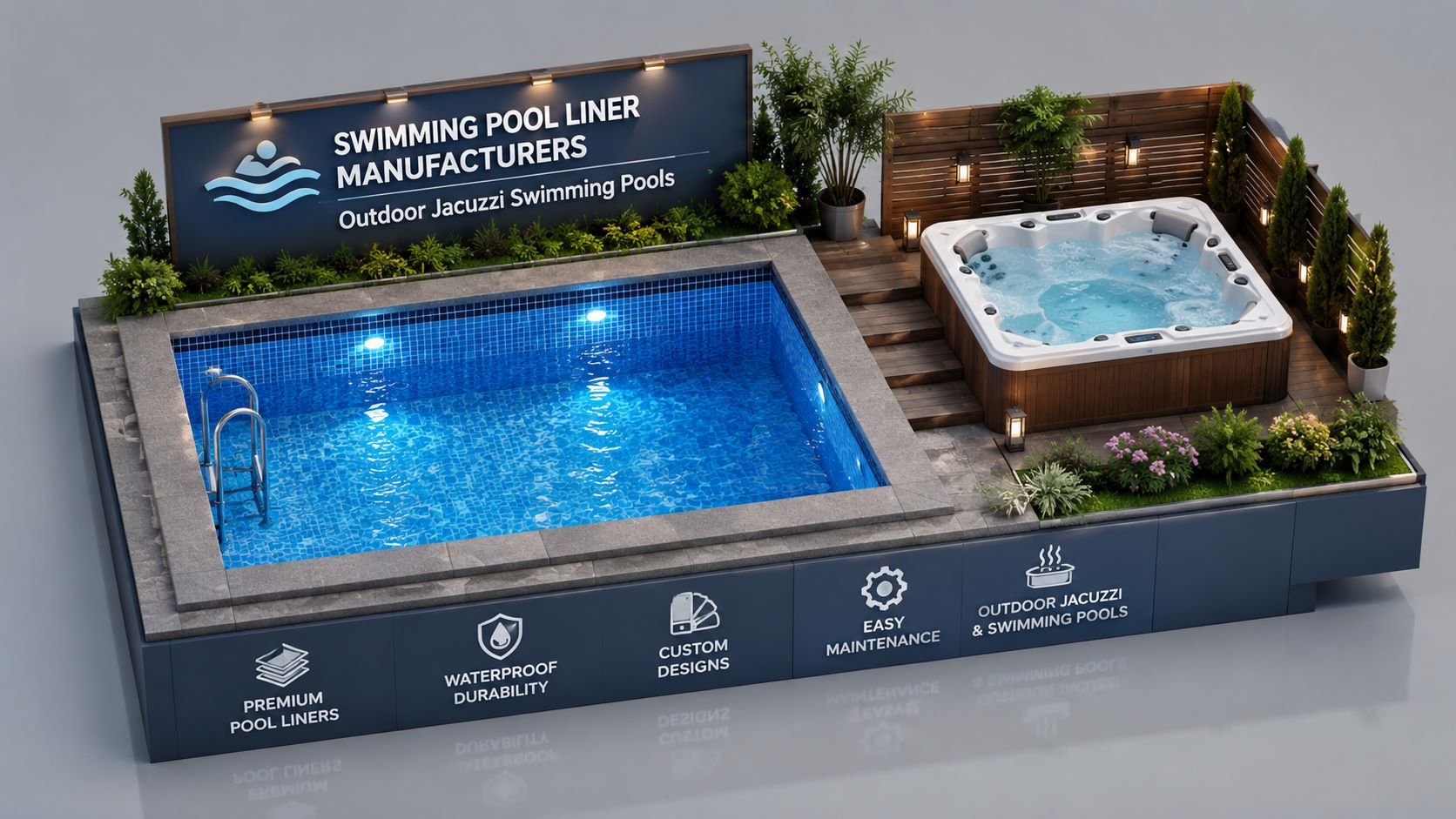
A modern swimming pool is more than a water-filled structure. It can be a place for exercise, family recreation, relaxation and even a defining architectural feature of a property. Behind an attractive pool, however, are several technical decisions that determine waterproofing, comfort, maintenance and long-term performance.
Two areas that deserve particular attention are selecting reliable swimming pool liner manufacturers and understanding the engineering behind outdoor jacuzzi swimming pools. Pool liners create a protective and decorative internal surface, while outdoor jacuzzis add warm-water relaxation and hydrotherapy to residential and commercial environments.
Understanding how these systems work makes it easier to choose materials and equipment that suit the project rather than simply selecting the most attractive or least expensive option.
Understanding the Role of Swimming Pool Liners
A swimming pool liner is a waterproof membrane installed over a properly prepared pool surface. It creates a barrier between the water and the underlying structure while providing the visible finish swimmers see and touch.
Professional swimming pool liner manufacturers develop products for different pool environments, including residential pools, hotels, resorts, leisure facilities and renovation projects.
Modern liner systems may provide several benefits:
- Waterproof pool finishing
- Smooth internal surfaces
- Multiple colours and patterns
- Flexibility around different pool shapes
- Options for renovation
- Textured surfaces for selected locations
- Easier visual transformation of older pools
A liner should therefore be considered both a functional material and a design component.
Different Types of Swimming Pool Liners
Not every pool requires the same type of membrane. Usage, pool geometry, climate and water-treatment conditions can all influence product selection.
PVC and vinyl-based materials are commonly used. Reinforced membranes incorporate additional strengthening layers to improve stability and mechanical performance.
When comparing products offered by swimming pool liner manufacturers, buyers should consider:
| Feature | What It Means for the Pool |
| Membrane thickness | Part of the overall material specification |
| Reinforcement | Helps improve stability and strength |
| UV resistance | Important for outdoor exposure |
| Chemical compatibility | Relevant to sanitised pool water |
| Flexibility | Useful for complex pool geometry |
| Surface texture | Influences comfort and grip |
| Colour stability | Important for long-term appearance |
The best choice should be based on technical suitability rather than thickness or appearance alone.
Pool Liner Design Can Influence Water Colour
An interesting feature of swimming pool liners is their ability to change the visual character of water.
Light blue surfaces can create a bright, refreshing appearance. Dark blue liners often produce a deeper visual effect, while grey and stone-inspired finishes can complement contemporary architectural projects.
Patterned membranes may recreate the appearance of mosaics, tiles or natural surfaces.
The final effect also depends on water depth, sunlight, surrounding materials and lighting.
For properties combining a pool with outdoor jacuzzi swimming pools, selecting complementary finishes can help both areas appear as one coordinated outdoor environment.
How to Evaluate Swimming Pool Liner Manufacturers
Choosing a liner manufacturer requires more than comparing prices.
Reliable swimming pool liner manufacturers should provide sufficient technical information to help contractors determine whether a particular membrane is appropriate for the project.
Before purchasing, ask for:
- Product technical datasheets
- Material construction details
- Reinforcement information
- Recommended applications
- UV-resistance information
- Chemical compatibility guidelines
- Installation instructions
- Maintenance recommendations
- Warranty conditions
- Technical support
Manufacturers or suppliers with clear documentation can make specification, installation and maintenance decisions easier.
Why Pool Liner Installation Matters
A premium liner will not automatically produce a premium result.
The pool surface needs to be inspected and prepared before installation. Significant cracks, sharp projections and irregular areas should be addressed appropriately.
Installers need to pay particular attention around:
- Steps
- Corners
- Main drains
- Skimmers
- Water-return inlets
- Underwater lights
- Overflow channels
- Other pool penetrations
Many reinforced liner systems also require specialist welding. Properly formed seams are essential to creating a continuous lining system.
For this reason, installation experience should be considered alongside the reputation of swimming pool liner manufacturers.
What Are Outdoor Jacuzzi Swimming Pools?
While a swimming pool is primarily associated with recreation and exercise, a jacuzzi focuses more on relaxation and hydrotherapy.
Outdoor jacuzzi swimming pools bring these experiences together. A spa can be incorporated into the main swimming pool, constructed beside it or designed as an independent outdoor feature.
Popular configurations include:
- Integrated pool and jacuzzi designs
- Raised spa sections
- Overflow jacuzzis
- Separate poolside spas
- Garden hydrotherapy pools
- Resort-style wellness areas
The right layout depends on available space, property design, privacy and intended use.
How an Outdoor Jacuzzi System Works
A jacuzzi is not simply a small heated pool with several jets.
Hydrotherapy depends on carefully controlled water movement. Pumps send water through pipework to strategically positioned jets. Some systems also introduce air to modify the massage effect.
Typical components of outdoor jacuzzi swimming pools include:
- Hydrotherapy pumps
- Circulation pumps
- Water jets
- Air blowers
- Filtration systems
- Heaters
- Sanitisation equipment
- Valves
- Electronic controls
- Lighting systems
Why Hydraulic Design Is Important
The quality of a jacuzzi should not be judged by jet quantity alone.
If the pump, pipework and jets are not properly balanced, some jets may receive strong pressure while others perform poorly. Pipe diameter, flow rate, pump capacity and hydraulic resistance all need consideration.
Professional engineering can therefore have a greater impact on the user experience than simply adding more equipment.
Swimming Pool and Jacuzzi: Key Differences
Although they can be combined into one attractive installation, swimming pools and jacuzzis have different operating requirements.
| Feature | Swimming Pool | Outdoor Jacuzzi |
| Main purpose | Exercise and recreation | Relaxation and hydrotherapy |
| Temperature | Generally lower | Generally warmer |
| Seating | Optional | Usually required |
| Jets | Optional | Important |
| Heating | Depends on project | Usually necessary |
| Water movement | General circulation | Targeted high-flow circulation |
These differences should be considered before deciding whether both areas will share equipment.
Can the Pool and Jacuzzi Operate Separately?
Yes, and in many projects independent operation can be useful.
Consider a large swimming pool connected to a smaller jacuzzi. Users may want warm spa water without heating the entire pool.
Depending on the engineering design, separate temperature controls, circulation or heating arrangements can provide greater operational flexibility.
Professional designers of outdoor jacuzzi swimming pools should consider expected usage before selecting the hydraulic configuration.
Energy Efficiency in Outdoor Jacuzzi Design
Heating outdoor water can require substantial energy when heat is continuously lost to the surrounding environment.
Several measures can help improve thermal performance:
- Use a suitable thermal cover.
- Insulate heated pipework.
- Consider appropriate spa insulation.
- Select correctly sized heaters.
- Use efficient circulation equipment.
- Avoid unnecessary heating periods.
- Manage temperatures according to actual usage.
A cover can be particularly useful because it can reduce evaporation when the jacuzzi is not operating.
Maintenance of Liners and Jacuzzi Systems
Good maintenance helps preserve both pool surfaces and mechanical equipment.
Water chemistry should remain within the operating recommendations provided by relevant manufacturers. Excessively aggressive chemical conditions can affect pool surfaces and equipment.
Regular maintenance should include:
- Water testing
- Filter cleaning
- Liner inspection
- Surface cleaning
- Pump inspection
- Jet cleaning
- Heater checks
- Valve inspection
- Water-level monitoring
Because outdoor jacuzzi swimming pools normally operate at warmer temperatures, filtration and sanitation need consistent attention.
Frequently Asked Questions
What is a swimming pool liner?
A swimming pool liner is a waterproof membrane installed over a prepared pool interior to provide protection and a finished surface.
What do swimming pool liner manufacturers provide?
Swimming pool liner manufacturers produce membranes in different constructions, colours, patterns and textures for various swimming pool applications.
Are reinforced pool liners better?
They provide additional reinforcement, but suitability depends on the specific pool, usage and installation requirements.
Can liners be used for old swimming pools?
Yes. Suitable existing pools can often be renovated with liner systems after professional inspection and preparation.
Are pool liners available in different designs?
Yes. Options may include solid colours, mosaics, tile effects, stone-inspired patterns and textured finishes.
What are outdoor jacuzzi swimming pools?
They are outdoor aquatic installations that combine swimming or pool facilities with warm-water spa and hydrotherapy features.
Can a jacuzzi be built beside an existing swimming pool?
Potentially, yes. Available space, structure, plumbing, heating and electrical requirements should first be assessed.
How many jets should an outdoor jacuzzi have?
There is no ideal universal number. Jet quantity should be determined according to seating, hydraulic design and pump capacity.
Does an outdoor jacuzzi need filtration?
Yes. Proper filtration, circulation and water treatment are fundamental requirements.
Can a jacuzzi have a different temperature from the pool?
Yes. Appropriately designed systems can provide independent temperature control.
How can an outdoor jacuzzi use less energy?
Thermal covers, insulation, efficient equipment and sensible temperature management can reduce unnecessary energy demand.
How should swimming pool liner manufacturers be compared?
Compare technical specifications, product quality, documentation, installation requirements, warranties and after-sales support.
Read more – https://gosarkarijobs.com/how-swimming-pool-manufacturers-in-india-are-redefining-the-modern-designer-pool/
https://newsgrow.blogspot.com/2026/08/swimming-pool-manufacturers-in-india.html
https://newsgrow.blogspot.com/2026/08/frp-swimming-pool-manufacturers-in.html
https://newsgrow.blogspot.com/2026/08/fiberglass-pool-manufacturers-near-me.html
https://blogstream.net/why-a-readymade-fiberglass-pool-is-becoming-a-smart-choice-for-modern-homes/
https://newsgrow.blogspot.com/2026/08/fiberglass-inground-pools-and-readymade.html
https://newsgrow.blogspot.com/2026/08/terrace-readymade-swimming-pool-and.html
https://newsgrow.blogspot.com/2026/08/hydrotherapy-swimming-pool-manufacturer.html
https://newsgrow.blogspot.com/2026/08/deep-information-about-swimming-pool.html