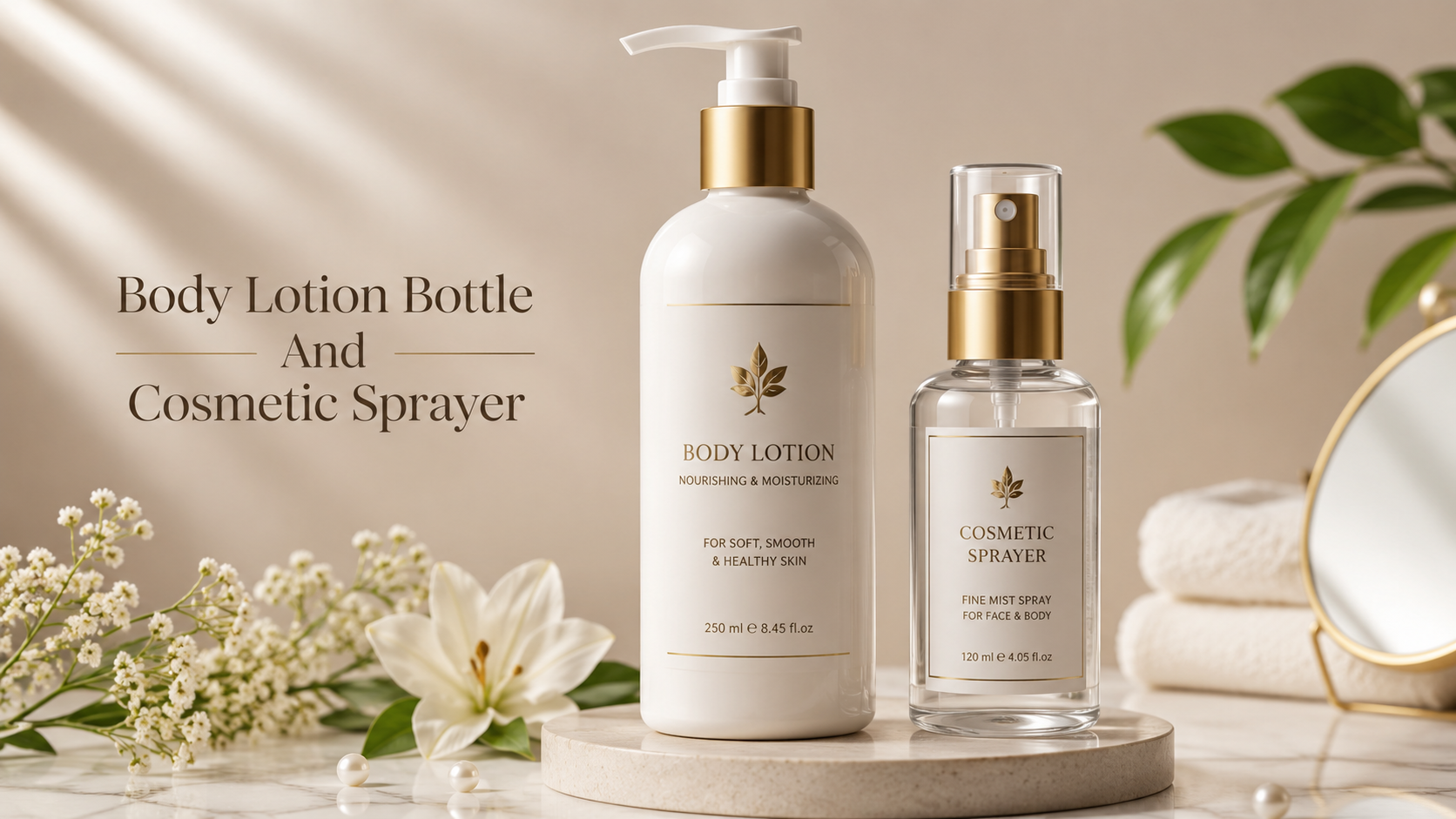
Packaging has a direct influence on how a skincare or personal care product is stored, dispensed and experienced by the customer. For lotions, moisturisers and other liquid formulations, selecting the right body lotion bottle is therefore more than a visual branding decision. The bottle must work with the formulation, dispensing system, intended market and everyday usage conditions.
The same principle applies when choosing a cosmetic sprayer. A suitable sprayer should deliver the formulation consistently while helping the user control the amount and area of application.
For cosmetic brands, private-label manufacturers and packaging buyers, understanding these practical details can make supplier selection and product development considerably easier.
What Is a Body Lotion Bottle?
A body lotion bottle is a packaging container designed primarily for lotions, moisturisers, body creams and similar personal care formulations. Depending on the product’s viscosity and positioning, the bottle may be paired with a lotion pump, disc-top cap, flip-top closure or another compatible dispensing mechanism.
Common packaging materials include PET, HDPE, PP and other plastics selected according to formulation compatibility, appearance, durability and manufacturing requirements.
The ideal bottle should balance several factors:
· Formulation compatibility
· Convenient dispensing
· Leak resistance
· Suitable capacity
· Comfortable handling
· Branding and decoration options
· Storage and transport requirements
· Recyclability or other sustainability objectives
In practice, there is no single bottle specification suitable for every lotion. Packaging should be evaluated as part of the complete product system rather than as an isolated container.
Why Body Lotion Bottle Selection Matters
Customers interact with packaging every time they use a personal care product. A bottle that looks attractive but is difficult to hold, dispense or store can weaken the overall product experience.
For manufacturers, inappropriate packaging may also create production and operational challenges. Bottle neck dimensions, pump compatibility, filling requirements and formulation characteristics all need to work together.
Product Protection
A bottle acts as the primary container between the formulation and its external environment. Its material and closure system should therefore be chosen with the product’s ingredients, intended shelf life and storage conditions in mind.
Compatibility testing is particularly important because oils, fragrances, active ingredients and other formulation components can interact differently with packaging materials.
Controlled Dispensing
A well-matched dispensing system allows consumers to access an appropriate quantity without unnecessary mess or waste.
For example, a lightweight body lotion may work effectively with a pump dispenser, whereas a thicker formulation may require a different pump specification or closure design.
Brand Presentation
Bottle shape, finish, colour and decoration contribute to shelf presence and brand recognition. A minimalist cylindrical bottle can support a clinical or contemporary identity, while a distinctive silhouette may help a premium skincare range establish stronger visual differentiation.
Consumer Convenience
Practical considerations often have the greatest long-term impact. Consumers generally expect lotion packaging to be straightforward to open, grip, dispense and store.
Common Materials Used for Body Lotion Bottles
Material selection should begin with the formulation rather than appearance alone.
| Material | Typical Characteristics | Potential Applications |
| PET | Clear appearance, lightweight and good visual presentation | Lotions, body care and beauty products |
| HDPE | Durable and commonly available in opaque formats | Personal care and everyday lotion packaging |
| PP | Frequently used for packaging components and closures | Bottles, caps, pumps and dispensing components |
| Glass | Premium appearance and good rigidity | Selected luxury or specialist skincare products |
Material suitability depends on the actual formulation. Brands should conduct appropriate compatibility and stability assessments before confirming packaging for commercial production.
Internal-link opportunity: Link the anchor text cosmetic packaging materials to a detailed guide comparing packaging materials for beauty products.
How to Choose the Right Body Lotion Bottle
A useful purchasing process starts with technical requirements and then moves towards aesthetics.
1. Understand the Formulation
Consider viscosity, ingredient profile, sensitivity to light and the way the formulation behaves during dispensing.
Thicker lotions can require different dispensing mechanisms from low-viscosity products. Testing the actual formulation with the proposed bottle and closure is preferable to selecting components based solely on catalogue specifications.
2. Select an Appropriate Capacity
Bottle size should reflect how the product will be used and sold.
Smaller formats can suit samples, travel products and premium ranges, while larger capacities may be more appropriate for daily-use family or value-oriented body care products.
3. Match the Neck and Closure
Bottle and closure compatibility is essential. A visually suitable pump is of little value if its neck finish does not correctly match the bottle.
Buyers should confirm dimensions, thread specifications, dip-tube requirements and closure compatibility with their packaging supplier.
4. Consider the User Experience
Ask practical questions:
Can the bottle be held comfortably with wet hands? Is the pump easy to operate? Can users control the amount dispensed? Will the bottle remain stable on a bathroom shelf?
These details can distinguish genuinely functional packaging from packaging selected mainly for appearance.
5. Plan Decoration Early
Decoration should be considered during packaging development rather than after bottle selection.
Depending on the packaging material and supplier capabilities, options can include labels, screen printing, hot stamping, colour customisation and other decorative finishes.
Internal-link opportunity: Use custom cosmetic bottles as an anchor for a page covering decoration, colour and branding options.
What Is a Cosmetic Sprayer?
A cosmetic sprayer is a dispensing component designed to release compatible liquid formulations as a spray or mist. It can be used across categories such as facial mists, haircare products, body sprays and selected skincare formulations.
A sprayer typically consists of an actuator, pump mechanism, closure and dip tube. These components must operate together to produce a reliable spray pattern.
Depending on the intended application, brands may require a fine mist or a more concentrated spray.
Where Are Cosmetic Sprayers Commonly Used?
A cosmetic sprayer can be suitable for products where controlled distribution over a surface is preferable to dispensing the formulation directly into the hand.
Typical applications include:
· Facial and hydrating mists
· Hair sprays and haircare treatments
· Body mists
· Toners
· Fragrance-related products
· Selected sun-care products
· Grooming formulations
· Other low-viscosity personal care liquids
However, a spray pump should never be selected simply because a formulation is liquid. Its viscosity and ingredient composition must be compatible with the sprayer mechanism.
Body Lotion Bottle vs Cosmetic Sprayer
Although these packaging components are used within the same broad beauty and personal care industry, their dispensing purposes differ.
| Consideration | Body Lotion Bottle with Pump | Cosmetic Sprayer |
| Primary purpose | Dispensing lotion or cream | Dispensing liquid as spray or mist |
| Typical formulation | Low-to-medium or higher viscosity, depending on pump | Generally lower-viscosity liquids |
| User application | Usually dispensed onto the hand or body | Applied across a wider area |
| Common products | Body lotion, moisturiser, hand lotion | Facial mist, toner, body mist, haircare |
| Dispensing mechanism | Lotion pump or closure | Spray/mist pump |
The decision should be based primarily on how the formulation needs to reach the user.
What Should Buyers Check Before Ordering Cosmetic Packaging?
Packaging samples should ideally be evaluated before a large commercial order is finalised.
Important checks include:
1. Bottle and closure compatibility – Confirm neck dimensions and closure fit.
2. Formulation compatibility – Test the actual product against packaging materials.
3. Dispensing performance – Check whether the required amount is delivered consistently.
4. Leak performance – Evaluate filled packs under relevant storage and transportation conditions.
5. Dip-tube length – Make sure it is appropriate for the selected bottle.
6. Decoration quality – Review printing, labels or finishes on actual production materials.
7. Packing configuration – Understand how components will be supplied and protected during transport.
These checks can reduce avoidable problems during filling, packing and commercial distribution.
Practical Example: Packaging a New Body Care Range
Consider a brand preparing a moisturising body care collection.
The main lotion has a medium-viscosity formulation intended for everyday home use. A practical approach might be to evaluate a PET or HDPE body lotion bottle with a compatible lotion pump.
The same collection could include a lightweight refreshing body mist. Because this product needs wider, more even application, the brand could evaluate a bottle fitted with an appropriate cosmetic sprayer.
Although both products belong to the same collection, their packaging systems perform different jobs. Colours, shapes and decoration can still be coordinated to maintain a consistent brand identity.
This is why successful cosmetic packaging development usually combines technical functionality with visual design.
Sustainability Considerations in Cosmetic Packaging
Sustainability is increasingly part of packaging development, but meaningful decisions require more than simply choosing a material described as environmentally friendly.
Brands can consider reducing unnecessary packaging weight, improving recyclability where appropriate, simplifying mixed-material structures and investigating refillable or reusable formats where these approaches make practical sense.
The complete packaging lifecycle, supply chain and local recycling infrastructure should be considered before environmental claims are made.
Internal-link opportunity: Link sustainable cosmetic packaging to a dedicated resource covering recyclable, refillable and reduced-material packaging approaches.
Questions to Ask a Body Lotion Bottle Supplier
Before selecting a packaging partner, ask for clear technical and commercial information. Useful questions include:
· Which materials and capacities are available?
· What neck finishes are offered?
· Which lotion pumps and closures are compatible?
· Are cosmetic sprayers available for matching bottle ranges?
· Can samples be supplied for compatibility testing?
· What decoration and customisation options are available?
· What are the minimum order requirements?
· What information is required for custom colours or designs?
· How are bottles, pumps and sprayers packed for transportation?
A capable supplier should be able to discuss technical compatibility rather than focusing only on appearance and price.
Frequently Asked Questions
What is the best bottle for body lotion?
There is no universal best option. The appropriate bottle depends on formulation viscosity, capacity, material requirements, closure type, branding and intended use.
Which material is commonly used for body lotion bottles?
PET, HDPE and PP are among the materials commonly considered for personal care packaging. Suitability should always be verified against the formulation.
Can a body lotion bottle use a pump dispenser?
Yes. Lotion pumps are widely used where the bottle neck and formulation are compatible with the selected pump.
What is a cosmetic sprayer used for?
A cosmetic sprayer dispenses compatible liquid formulations as a spray or mist, making it useful for products such as facial mists, toners and haircare formulations.
Can thick lotion be used with a cosmetic sprayer?
Generally, sprayers are better suited to lower-viscosity formulations. Thick products usually require a lotion pump or another suitable dispensing system.
How do I choose the correct bottle size?
Consider product usage frequency, target customer, retail positioning, portability and expected consumption.
Are custom colours available for cosmetic bottles?
Many packaging manufacturers provide colour customisation, although availability and minimum quantities vary by supplier and manufacturing process.
Should packaging be tested with the actual cosmetic formulation?
Yes. Compatibility and performance testing with the intended formulation is an important part of responsible packaging development.
What is a fine-mist cosmetic sprayer?
It is a dispensing system designed to break a compatible liquid into relatively small droplets, producing a mist-like application.
Can bottles and sprayers be customised for branding?
Depending on the supplier and material, options may include custom colours, labels, printing, hot stamping and other decorative treatments.