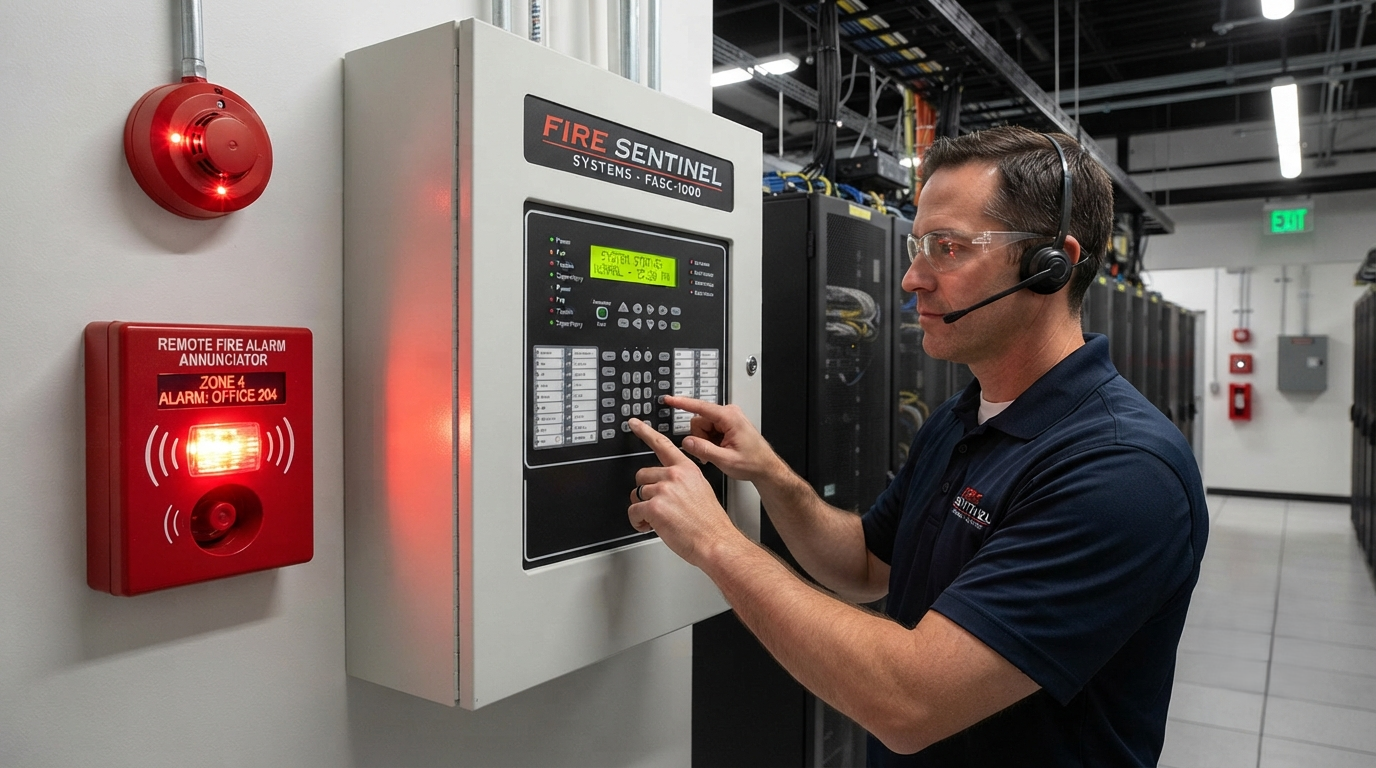
Fire safety is not simply about installing a few detectors and hoping they respond when needed. An effective fire alarm system is a coordinated safety network designed to identify potential fire conditions, alert occupants and help responsible personnel take appropriate action as quickly as possible.
From offices and warehouses to hotels, hospitals, schools, factories and residential developments, the right system depends on the building layout, occupancy, risk profile and applicable fire safety requirements. At the centre of many installations is the alarm panel, which receives information from detection devices and controls how the system responds.
This guide explains how fire alarm systems work, their main components, the role of the control panel and what building owners should consider when selecting, installing and maintaining a system.
What Is a Fire Alarm System?
A fire alarm system is a combination of detection, control and notification devices designed to identify signs of fire and warn people within a building.
Depending on the system design, it may monitor smoke, heat or manual activation points. When a device is triggered, information is transmitted to the control equipment, which can then activate sounders, visual indicators or other configured outputs.
A typical system may include:
· Smoke detectors
· Heat detectors
· Manual call points
· Fire alarm control panels
· Alarm sounders
· Visual alarm devices
· Input and output modules
· Power supplies and standby batteries
· Interfaces with other building safety systems
The exact configuration should be based on the premises and its fire risk rather than taking a one-size-fits-all approach.
How Does a Fire Alarm Work?
In simple terms, a fire alarm system follows three core stages: detection, processing and notification.
First, a detector or manual call point identifies a possible fire condition or is activated by a person. The signal is then sent to the alarm panel, where the information is processed. If an alarm condition is confirmed according to the system configuration, notification devices are activated.
For example, imagine smoke is detected in a storage area. The detector communicates with the panel, which identifies the affected circuit or device. Sounders may then operate throughout designated areas so occupants can follow the building’s emergency procedures.
More advanced installations can also interface with equipment such as door controls, smoke management systems or other building services where the overall fire strategy requires it.
What Is an Alarm Panel?
An alarm panel, commonly called a fire alarm control panel, acts as the central control point of the system.
It continuously supervises connected detection and alarm devices and provides information about the system’s current condition.
Depending on the equipment and installation, the panel may indicate:
· Normal operating condition
· Fire alarm activation
· Detector or zone location
· System faults
· Power supply problems
· Battery conditions
· Disabled devices or zones
· Communication faults
This information can be particularly important in larger premises because responsible personnel need to understand where an alarm originated and whether any part of the system requires attention.
Internal link opportunity: Use anchor text such as fire alarm control panels to link to your relevant product or service category.
Conventional vs Addressable Fire Alarm Systems
Two commonly used approaches are conventional and addressable systems.
Conventional Fire Alarm Systems
A conventional system divides a property into detection zones. Devices within each zone are connected to the control panel, and when an alarm occurs, the panel generally identifies the affected zone rather than an individual detector.
For example, a panel might indicate:
Fire – Zone 3 – First Floor
Personnel would then investigate the relevant area according to the site’s emergency procedures.
Conventional systems can be appropriate for certain smaller or less complex premises where zone-level identification provides sufficient information.
Addressable Fire Alarm Systems
An addressable system allows compatible devices to have individual addresses. This enables the control panel to identify the specific device reporting an alarm or fault.
Instead of simply displaying a zone, an addressable installation might provide information identifying a particular detector and its programmed location.
This level of identification can be useful in larger buildings, industrial facilities, hotels, healthcare environments and multi-storey properties where quickly locating an activated device is important.
| Feature | Conventional System | Addressable System |
| Identification | Zone based | Individual device based |
| Typical application | Smaller installations | Medium to large or complex premises |
| Fault/alarm location | General area | More precise device information |
| System flexibility | Generally simpler | Typically more configurable |
| Initial complexity | Lower | Higher |
System selection should always reflect the actual fire strategy and regulatory requirements of the premises.
Key Components of a Reliable Fire Alarm Installation
Smoke Detectors
Smoke detectors are designed to identify characteristics associated with smoke. Different detection technologies are available, and suitability depends on the environment and expected fire risks.
Incorrect detector selection can contribute to unwanted alarms, so environmental conditions should always be considered.
Internal link opportunity: Link smoke detection solutions to a detector product category.
Heat Detectors
Heat detectors respond to temperature-related conditions rather than smoke. They can be useful in environments where normal operations may produce fumes, steam or airborne particles that make certain smoke detection methods less suitable.
Manual Call Points
Manual call points allow occupants to initiate the alarm manually after discovering a fire or other emergency requiring evacuation.
Their positioning and installation should follow applicable fire safety design requirements.
Alarm Sounders and Visual Indicators
Detection alone is not enough. Occupants must be effectively alerted.
Sounders provide audible warnings, while visual alarm devices can provide additional notification where required by the building’s design, ambient noise conditions or accessibility considerations.
Fire Alarm Control Panel
The control panel connects and supervises key parts of the installation. Choosing an appropriate alarm panel requires consideration of system type, number of devices, zoning, future expansion, communication requirements and any necessary building-system interfaces.
Choosing the Right Fire Alarm for Your Building
The best system is not necessarily the one with the most features. It is the system correctly designed for the building and its risks.
Before selecting equipment, consider the following factors:
1. Building size and layout: A small office and a multi-floor industrial facility have very different detection requirements.
2. Occupancy: Consider who uses the building, how quickly they can respond to an alarm and whether additional warning methods may be necessary.
3. Environmental conditions: Dust, steam, heat and normal operational processes can influence detector selection.
4. Identification requirements: Determine whether zone-level information is sufficient or individual device identification would be more appropriate.
5. Expansion plans: If a facility is likely to expand, system capacity and flexibility should be considered from the beginning.
6. Maintenance requirements: Equipment should be accessible for appropriate inspection, testing and servicing.
7. Applicable regulations: System design, installation, commissioning and maintenance should follow relevant local legislation, standards and authority requirements.
A professional fire safety assessment can help establish these requirements before equipment is purchased.
Where Are Fire Alarm Systems Commonly Used?
Fire detection and warning systems are used across almost every type of occupied commercial and industrial property.
Common applications include offices, retail premises, schools, hospitals, hotels, warehouses, manufacturing facilities, shopping centres, data centres, apartment buildings and public facilities.
Industrial environments can require particularly careful planning. Processes involving dust, machinery, temperature fluctuations or challenging environmental conditions may affect which detection technologies are suitable.
Internal link opportunity: Link industrial fire detection systems to a dedicated industry solutions page.
Why Professional Fire Alarm Installation Matters
Even high-quality equipment can perform poorly if the overall system is incorrectly designed, installed or configured.
Professional installation should consider detector positioning, cable routing, zoning, device compatibility, alarm audibility, panel configuration, standby power and interfaces with related safety equipment.
Commissioning is equally important. It provides an opportunity to verify that devices communicate correctly, alarms operate as intended and faults are properly indicated.
Documentation should also be maintained so authorised personnel and service technicians can understand the installed system.
Fire Alarm Maintenance and Testing
Installation is only the beginning of a system’s working life.
Routine inspection, testing and maintenance help identify issues such as damaged devices, contaminated detectors, battery deterioration, wiring faults or unauthorised system changes.
Maintenance requirements vary according to system design and applicable regulations. Building owners and responsible persons should therefore establish a suitable servicing programme rather than waiting until a fault occurs.
If an alarm panel displays a persistent fault indication, it should be investigated by a competent person rather than simply being repeatedly reset.
Internal link opportunity: Use fire alarm maintenance services to direct visitors to your servicing or annual maintenance page.
Common Fire Alarm Mistakes to Avoid
Several avoidable issues can reduce the effectiveness of a fire detection system.
Installing inappropriate detectors for the environment can lead to unwanted alarms. Poorly planned zoning can make locating an incident unnecessarily difficult. Ignoring recurring panel faults can allow underlying problems to remain unresolved.
Other concerns include blocked or damaged detectors, insufficient maintenance, unauthorised modifications and failure to update the system when the building layout or use changes.
Fire protection should therefore be treated as an ongoing building-management responsibility rather than a one-time equipment purchase.
When Should a Fire Alarm System Be Upgraded?
An upgrade may be worth considering when an existing installation no longer meets the operational or safety requirements of the premises.
Warning signs can include ageing or obsolete equipment, difficulty sourcing compatible replacement parts, frequent faults, inadequate coverage after building alterations or insufficient capacity for planned expansion.
Changes in occupancy or building use can also justify a professional review.
Replacing equipment should not automatically mean replacing everything. A competent specialist can assess the existing infrastructure and determine what can reasonably be retained and what should be modernised.
Finding a Fire Alarm Supplier or Installer Near You
For local searchers looking for a fire alarm supplier near me, fire alarm installation company, or alarm panel supplier, product availability should not be the only consideration.
Look for a provider that can explain the differences between system options, assess the application properly and provide clear information about installation, commissioning and ongoing support.
Before requesting a quotation, prepare basic information including the property type, approximate building size, number of floors, existing fire detection equipment and whether you require a new installation, upgrade or maintenance service.
Providing these details can make the initial consultation considerably more useful.
Need Help Selecting a Fire Alarm System?
If you are planning a new installation or upgrading an existing system, speak with an experienced fire safety professional about your building’s requirements.
Request a site assessment or product consultation to identify a suitable fire alarm and alarm panel configuration for your premises.
Frequently Asked Questions
What is the main purpose of a fire alarm?
Its primary purpose is to detect or receive notification of a potential fire condition and warn building occupants so appropriate emergency action can be taken.
What does an alarm panel do?
An alarm panel receives and processes signals from connected devices and indicates alarm, fault and other system conditions.
What is the difference between conventional and addressable fire alarms?
Conventional systems generally identify an affected zone, while addressable systems can identify individual compatible devices.
Which fire alarm system is best for an office?
The appropriate system depends on office size, layout, occupancy, fire risk, regulatory requirements and the level of identification required.
Can smoke detectors connect directly to an alarm panel?
Compatible system smoke detectors are normally connected according to the manufacturer’s system architecture and installation requirements.
Where should fire detectors be installed?
Detector positioning depends on the building design, risk assessment, detector technology and applicable fire safety standards. A competent professional should determine suitable locations.
Why does a fire alarm panel show a fault?
Possible causes include device, wiring, communication, power supply or battery problems. Persistent faults should be professionally investigated.
How often should fire alarm systems be tested?
Testing and servicing frequency should follow applicable local regulations, standards, manufacturer guidance and the building’s fire safety procedures.
Can an existing fire alarm system be expanded?
Many systems can be expanded, provided sufficient panel capacity and compatible equipment are available. The existing installation should be assessed first.
Are addressable fire alarm systems better?
Not automatically. Addressable systems provide more detailed device identification and flexibility, but system choice should depend on the premises and fire safety requirements.
Can fire alarms be integrated with other building systems?
Depending on system design and applicable requirements, fire alarm equipment may interface with doors, smoke-control equipment and other building services.
How do I choose a reliable fire alarm company?
Look for relevant experience, competent technical support, appropriate certifications or approvals where applicable, transparent quotations and ongoing maintenance capability.
Read more – https://newsgrow.blogspot.com/2026/08/beam-detector-fire-alarm-protecting.html
https://gosarkarijobs.com/co-detector-a-practical-guide-to-carbon-monoxide-and-lpg-gas-safety/