Modern product development often requires companies to create accurate prototypes before moving into mass production. Vacuum casting China has become a popular option for businesses that need detailed prototypes, realistic product samples, and small production runs without investing heavily in expensive tooling. The process offers a practical balance between quality, flexibility, cost, and production speed.
What Is Vacuum Casting?
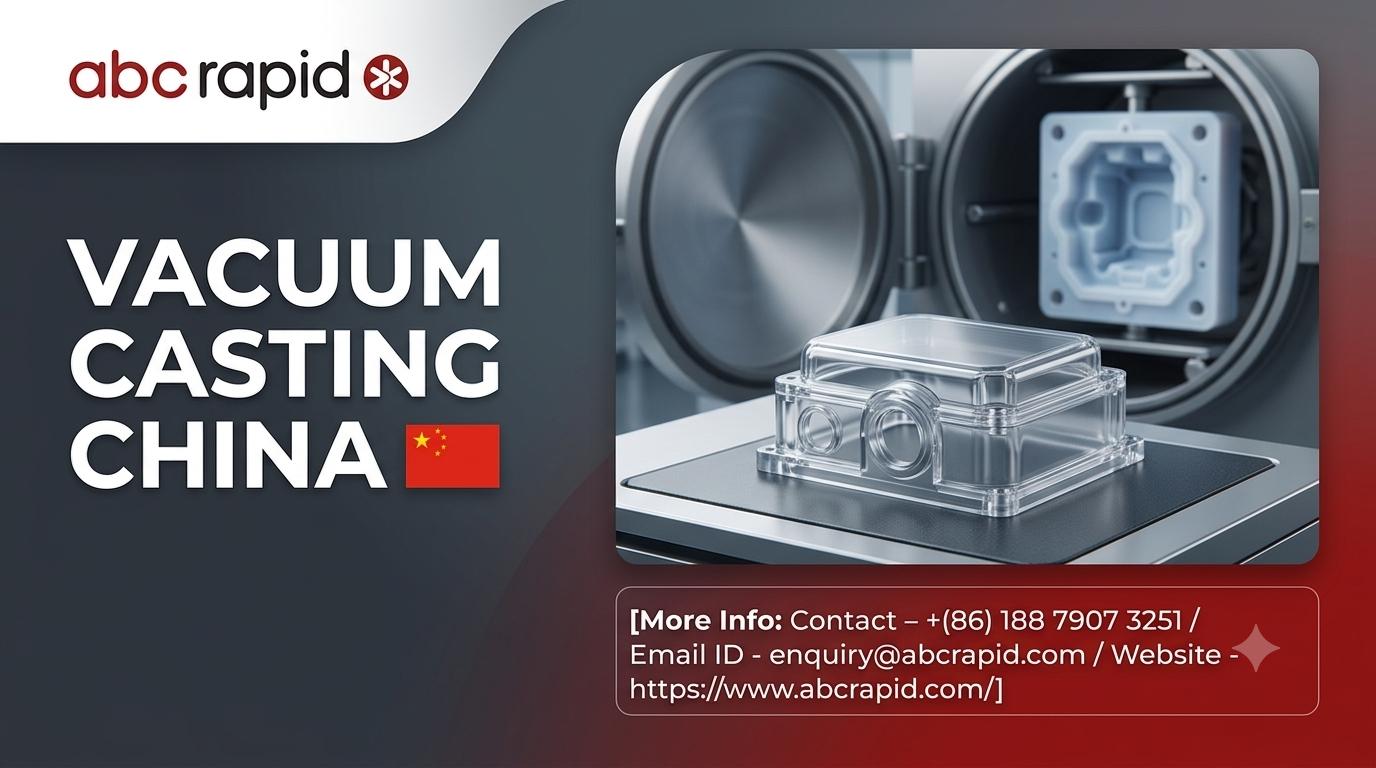
Vacuum casting is a manufacturing process mainly used for rapid prototyping and low-volume production. It usually starts with a master model created through CNC machining or 3D printing. A flexible silicone mold is then produced around the master model. Once the mold is ready, polyurethane or another suitable casting resin is introduced under vacuum conditions.
The vacuum helps reduce trapped air and supports better reproduction of small features, surface details, and complex shapes. After curing, the part is removed from the silicone mold and can receive additional finishing such as trimming, polishing, painting, or surface texturing.
Why Is Vacuum Casting Useful?
Product teams often need more than a digital CAD model. Physical samples allow engineers, designers, and customers to evaluate the actual product before production begins. Vacuum casting can help with:
- Product appearance evaluation
- Fit and assembly testing
- Ergonomic testing
- Functional prototype development
- Customer demonstrations
- Marketing samples
- Small-batch production
Benefits of Vacuum Casting China
One reason manufacturers consider vacuum casting China is the combination of manufacturing capability and cost efficiency. Chinese suppliers commonly support prototype development, mold making, casting, finishing, and quality inspection under one production workflow.
Cost-Effective Prototyping
Traditional injection molding requires production tooling that can be expensive, particularly when a design is still being modified. Silicone molds used for vacuum casting generally require a lower initial investment, making the process useful for early-stage product development.
Detailed Part Reproduction
Silicone molds can reproduce fine surface details from the master model. This makes vacuum casting suitable for products with complex shapes, textured surfaces, logos, ribs, and other design features.
Fast Design Validation
Creating prototypes before mass production allows teams to identify design problems earlier. Instead of discovering issues after expensive production tooling has been completed, manufacturers can test and improve the design at a lower cost.
Small-Batch Production
Vacuum casting is particularly useful when a company needs a limited number of parts. It can be a practical solution for pilot production, pre-launch samples, engineering testing, and market research.
How Does the Vacuum Casting Process Work?
The process usually follows several steps:
- Master model creation: The original model is produced using CNC machining, SLA 3D printing, or another precision manufacturing method.
- Silicone mold preparation: Silicone is formed around the master model and allowed to cure.
- Master removal: The original model is carefully removed from the cured mold.
- Resin preparation: The selected polyurethane resin is mixed with pigments or additives when required.
- Vacuum casting: The liquid resin is poured into the silicone mold under controlled vacuum conditions.
- Curing: The resin is allowed to solidify according to the material requirements.
- Demolding: The finished component is removed carefully from the flexible mold.
- Post-processing: Flash, gates, and other unwanted material are removed, followed by painting, polishing, or other finishing processes.
Vacuum Casting vs. Injection Molding
| FactorVacuum CastingInjection Molding | ||
| Tooling cost | Generally lower | Generally higher |
| Best for | Prototypes and low-volume parts | Medium and high-volume production |
| Mold material | Silicone | Metal |
| Design changes | Easier during development | Can require tooling modifications |
| Initial investment | Lower | Higher |
| Production volume | Small batches | Large production runs |
| Development speed | Generally faster | Longer tooling preparation |
The best manufacturing method depends on the project’s quantity, budget, material requirements, dimensional needs, and final application.
Choosing a Vacuum Casting Supplier
Selecting the right supplier is an important part of achieving consistent prototype quality. Companies should look beyond the quoted price and evaluate the manufacturer’s technical capabilities.
Review Manufacturing Capabilities
Check whether the supplier can handle the complete process, including master model production, silicone mold making, resin casting, post-processing, and inspection.
Check Material Selection
Different applications require different material properties. Ask about resin options, hardness, flexibility, color, transparency, temperature resistance, and other characteristics relevant to the final product.
Evaluate Quality Control
A reliable supplier should have inspection procedures for dimensions, appearance, surface quality, and other critical specifications. Clear quality standards can reduce the risk of receiving inconsistent parts.
Confirm Finishing Options
If the prototype needs a specific appearance, confirm whether the supplier can provide painting, polishing, texturing, printing, or other post-processing services.
When Should Businesses Use Vacuum Casting?
Vacuum casting can be a suitable option when a project requires realistic physical parts without the expense of full production tooling. It is commonly considered for:
- Product development
- Engineering prototypes
- Consumer electronics
- Automotive components
- Industrial equipment
- Medical product prototypes
- Product housings and enclosures
- Pre-production samples
- Trade-show models
- Low-volume customized parts
For very large production quantities, however, injection molding may provide a lower per-part cost once tooling expenses are spread across a large number of components.
Frequently Asked Questions
What is vacuum casting used for?
Vacuum casting is mainly used for prototypes and low-volume production where companies need accurate, detailed, and production-like parts.
Is vacuum casting suitable for small quantities?
Yes. It is particularly useful when only a limited number of parts are required and creating expensive metal tooling would not be economical.
What materials are used in vacuum casting?
Polyurethane resins are commonly used. Different formulations can provide rigid, flexible, transparent, ABS-like, or rubber-like properties.
Can vacuum-cast parts be painted?
Yes. Depending on the material and surface preparation, vacuum-cast parts can be painted or finished to achieve a desired appearance.
Can the process produce complex parts?
Yes. Flexible silicone molds can reproduce many complex geometries and fine details, although part design and mold construction must still be considered carefully.
How long does vacuum casting take?
Lead time depends on the master model, mold design, part size, quantity, resin, finishing requirements, and supplier workload. A detailed quotation should include the expected production schedule.
Is vacuum casting cheaper than injection molding?
For prototypes and low-volume production, it can be more economical because silicone molds generally cost less than production-grade injection molds.
Can vacuum casting produce transparent components?
Yes. Suitable transparent resins can be used for clear prototypes, although achieving a highly transparent or optical-quality finish may require additional processing.
Is vacuum casting suitable for functional testing?
It can be suitable for many functional tests when an appropriate resin is selected. Engineers should confirm that the material properties meet the requirements of the intended test.
What should be provided when requesting a quotation?
A supplier will typically need a 3D CAD file, required quantity, material preference, color, surface finish, tolerances, and delivery requirements to prepare an accurate quotation.
Final Thought
For businesses developing new products, vacuum casting China can provide an efficient way to turn digital designs into realistic physical components. Its lower tooling investment, detailed reproduction, flexible material choices, and suitability for small batches make it valuable for product testing and early-stage manufacturing.
Before selecting a supplier, compare technical capabilities, material options, quality systems, finishing services, communication, and delivery expectations rather than focusing only on price. A capable manufacturing partner can help reduce development risks and make the transition from prototype to production smoother.
For companies looking for dependable prototyping and low-volume manufacturing support, AbcRapid provides solutions designed to help turn product concepts into accurate, market-ready parts.
Contact – +(86) 188 7907 3251
Email ID – enquiry@abcrapid.com
Website – https://www.abcrapid.com/