Architectural metalwork is no longer considered only a structural requirement. Today, it plays an important role in defining the personality, safety, and visual character of residential and commercial spaces. Among the many metalwork solutions available, Wrought Iron Balusters have maintained a strong position because they combine durability, decorative craftsmanship, and architectural flexibility.
Whether used for an elegant staircase, luxury balcony, traditional villa, hotel, commercial building, or restoration project, iron balusters can transform an ordinary railing into a prominent design element. However, achieving the desired quality requires careful product selection and cooperation with an experienced Wrought Iron Supplier.
Understanding the Architectural Role of Wrought Iron Balusters
Balusters are the vertical components positioned between a handrail and the supporting staircase, floor, or railing base. Their primary purpose is to create a protective barrier, but their visual contribution can be equally significant.
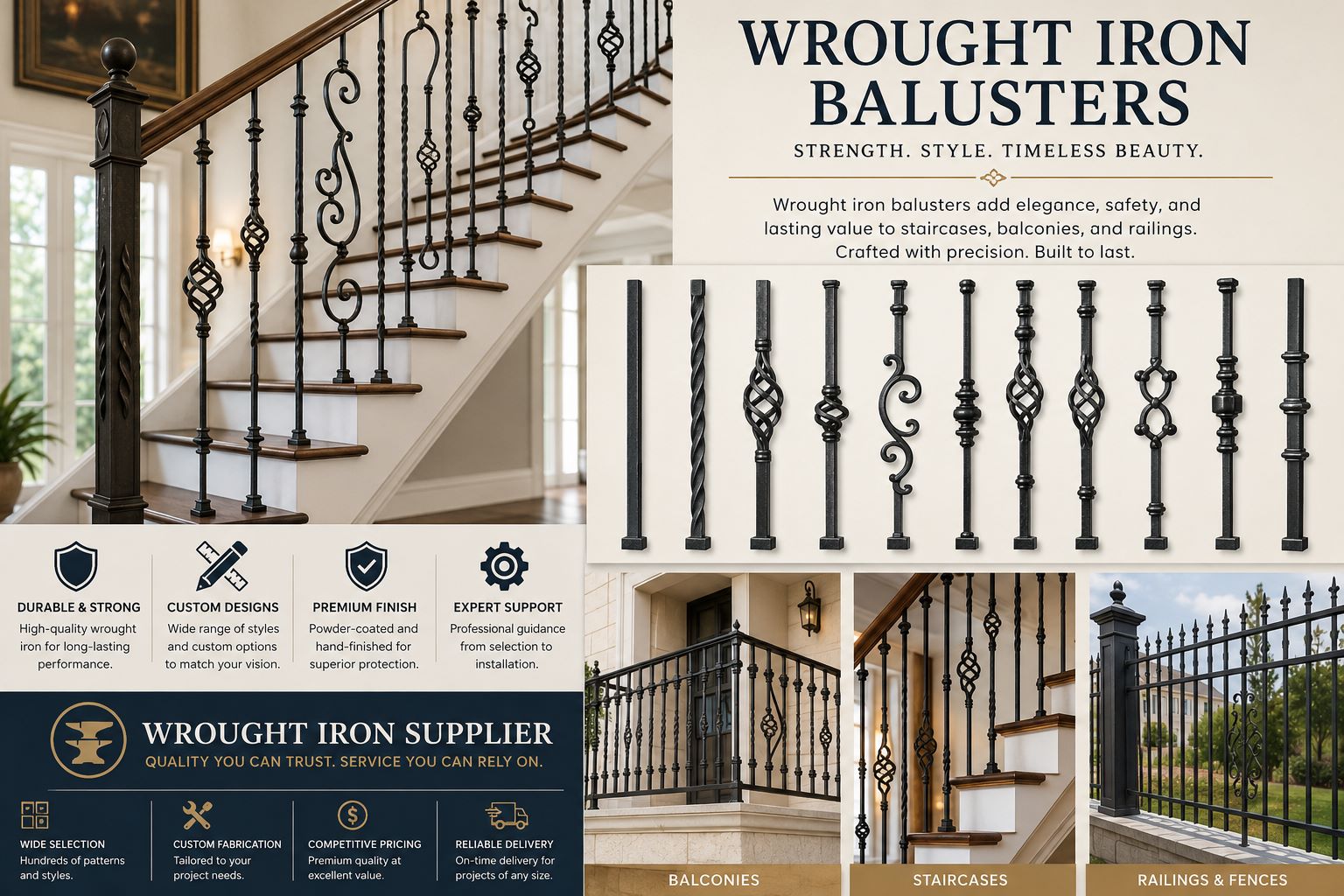
Wrought Iron Balusters are particularly valued because manufacturers can produce them in simple or highly decorative configurations.
Common styles include:
- Straight square balusters
- Twisted iron designs
- Single and double baskets
- Scroll patterns
- Hammered profiles
- Decorative knuckles
- Curved ornamental designs
- Geometric contemporary patterns
The selection should reflect the architecture surrounding the railing rather than being treated as an isolated decorative decision.
Why Wrought Iron Works Across Different Design Styles
One of ironwork’s strongest advantages is adaptability.
A simple black iron profile can complement a contemporary staircase featuring timber steps and clean architectural lines. Decorative scrolls and baskets can create an entirely different appearance suitable for traditional interiors.
Traditional Architecture
Classic interiors frequently incorporate ornamental shapes, scrollwork, twists, and decorative details. These elements provide visual depth without requiring major structural modifications.
Contemporary Architecture
Modern properties generally benefit from clean lines and repetitive geometric patterns. Straight Wrought Iron Balusters can create a sophisticated appearance when paired with wood, stone, glass, or neutral interior finishes.
Luxury Projects
Premium villas, hotels, resorts, and high-end residences may combine several baluster patterns to create custom staircase compositions.
An experienced Wrought Iron Supplier can help maintain consistency when multiple decorative elements are combined.
Understanding Quality Beyond Appearance
Two iron balusters may appear similar in photographs while differing considerably in manufacturing quality.
Buyers should examine the complete product rather than focusing exclusively on decorative design.
Dimensional Accuracy
Consistent dimensions are important because balusters are installed repeatedly along a railing. Small variations in height, width, or decorative positioning can become noticeable after installation.
Surface Quality
Surfaces should be properly prepared before coating. Poor preparation may result in uneven textures, premature coating failure, or corrosion.
Structural Integrity
The product should be appropriate for its intended railing application. Material dimensions, installation methods, and structural requirements should be evaluated before purchasing.
Finish Consistency
A dependable Wrought Iron Supplier should provide consistent color and texture throughout the supplied batch, especially when hundreds of components are required for a project.
Wrought Iron Balusters for Interior and Exterior Projects
Environmental exposure significantly influences material and finishing requirements.
| Consideration | Interior Application | Exterior Application |
| Moisture exposure | Limited | Frequent |
| Corrosion risk | Lower | Higher |
| Finish priority | Appearance | Protection and appearance |
| Inspection frequency | Occasional | Regular |
| Typical use | Stairs and landings | Balconies and terraces |
Exterior ironwork requires particular attention to protective coatings. Suitable primers, powder coating, galvanizing, or other corrosion-control methods may be recommended depending on environmental conditions.
Choosing the Right Baluster Design
A successful railing design requires balance.
Using too many decorative elements can make a staircase visually crowded, while an extremely simple design may not suit a highly traditional property.
A practical selection process includes:
- Identify the property’s architectural style.
- Determine whether the railing should become a focal point.
- Select a primary baluster pattern.
- Choose complementary decorative pieces if required.
- Decide on the surface finish.
- Confirm dimensions and installation requirements.
- Verify local railing safety regulations.
Consulting a knowledgeable Wrought Iron Supplier during this process can prevent incompatible combinations and unnecessary modifications during installation.
Why the Wrought Iron Supplier Matters
The supplier influences much more than the purchase price.
For architects, contractors, fabricators, developers, and property owners, reliable sourcing can determine whether products arrive with consistent specifications and are suitable for the intended application.
Product Knowledge
A specialist should understand different baluster profiles, finishes, installation requirements, and architectural applications.
Manufacturing Consistency
Large projects require repeatable quality. Decorative patterns, dimensions, surface texture, and coatings should remain consistent between pieces.
Customization Options
Standard catalogue products cannot satisfy every architectural concept. A capable Wrought Iron Supplier may provide customized dimensions, finishes, patterns, or fabrication services depending on project requirements.
Reliable Supply
For commercial developments and multi-property projects, product availability is particularly important. Delays in metal components can affect railing fabrication and overall project schedules.
Questions to Ask Before Selecting a Supplier
Price should never be the only selection criterion.
Before ordering, consider asking:
- What material specifications are available?
- Can product samples be supplied?
- What finishing processes are offered?
- Are exterior-grade treatments available?
- Can custom sizes be manufactured?
- Are matching accessories available?
- What quality-control procedures are followed?
- Can the supplier handle bulk requirements?
These questions help evaluate whether a Wrought Iron Supplier can support both immediate and long-term project requirements.
Installation and Safety Considerations
Even premium Wrought Iron Balusters require correct installation.
Baluster spacing, railing height, anchoring, alignment, handrail strength, and structural support should comply with applicable local building requirements.
Installation methods vary according to the staircase and railing construction. Components may be secured through drilled openings, mounting shoes, mechanical fasteners, adhesives, welding, or specialized railing systems.
Professional installation is recommended for structural railing applications.
Maintenance for Long-Term Performance
Indoor iron balusters generally require straightforward maintenance. Dust and surface marks can normally be removed using a soft cloth and appropriate cleaning methods.
Outdoor ironwork requires periodic inspection.
Areas That Should Be Checked
Look for:
- Surface scratches
- Chipped coatings
- Early rust formation
- Loose connections
- Damaged decorative components
- Water accumulation
- Deteriorated protective finishes
Early maintenance can prevent small surface problems from developing into extensive corrosion.
Emerging Trends in Decorative Ironwork
Modern railing design increasingly combines contrasting materials.
Wrought Iron Balusters paired with natural timber handrails remain popular because the warmth of wood balances the strong appearance of metal.
Other combinations include iron with stone staircases, glass panels, marble flooring, and contemporary architectural finishes.
Minimalism Is Increasing
Simple profiles are becoming increasingly popular in modern residential architecture. Instead of elaborate ornamentation, designers often rely on precise spacing, dark finishes, and clean geometry.
Traditional Craftsmanship Still Has Value
Decorative baskets, twists, scrolls, and hammered textures continue to attract buyers seeking distinctive architectural character.
Frequently Asked Questions
What are wrought iron balusters?
They are vertical metal components used within staircase, balcony, landing, and railing systems for safety and decorative purposes.
Where can wrought iron balusters be installed?
They can be used in homes, villas, hotels, commercial buildings, balconies, staircases, terraces, and restoration projects.
Are wrought iron balusters suitable for outdoor use?
Yes. Appropriate corrosion protection and weather-resistant finishing should be selected for exterior applications.
Which baluster style works with modern architecture?
Straight, square, slim, and geometric profiles generally complement modern and minimalist architecture.
Can decorative and plain balusters be combined?
Yes. Combining complementary patterns can create a balanced and customized railing design.
How should I choose a wrought iron supplier?
Consider manufacturing quality, product variety, technical knowledge, customization, finishing capabilities, reliability, and project experience.
Can wrought iron balusters be customized?
Customization may include dimensions, decorative patterns, surface textures, and finishes depending on manufacturing capabilities.
What finish is suitable for wrought iron?
Powder-coated, painted, textured, antique-style, and other protective finishes are commonly available depending on the application.
Do wrought iron balusters require maintenance?
Indoor installations require minimal care, while outdoor installations should be inspected periodically for coating damage or corrosion.
Why is product consistency important?
Consistent dimensions and patterns help create uniform spacing, easier installation, and a professional finished appearance.
https://gosarkarijobs.com/why-wrought-iron-components-are-redefining-modern-decorative-iron-work/
https://shopnets.com/a-complete-guide-to-wrought-iron-components-for-beautiful-decorative-iron-work/
https://newsgrow.blogspot.com/2026/08/wrought-iron-components-see-renewed.html