The electronics manufacturing industry is placing greater emphasis on long-term component availability as businesses develop products expected to remain operational through extended service periods.
From industrial automation equipment and medical instruments to smart appliances and commercial terminals, display components play an essential role in product functionality.
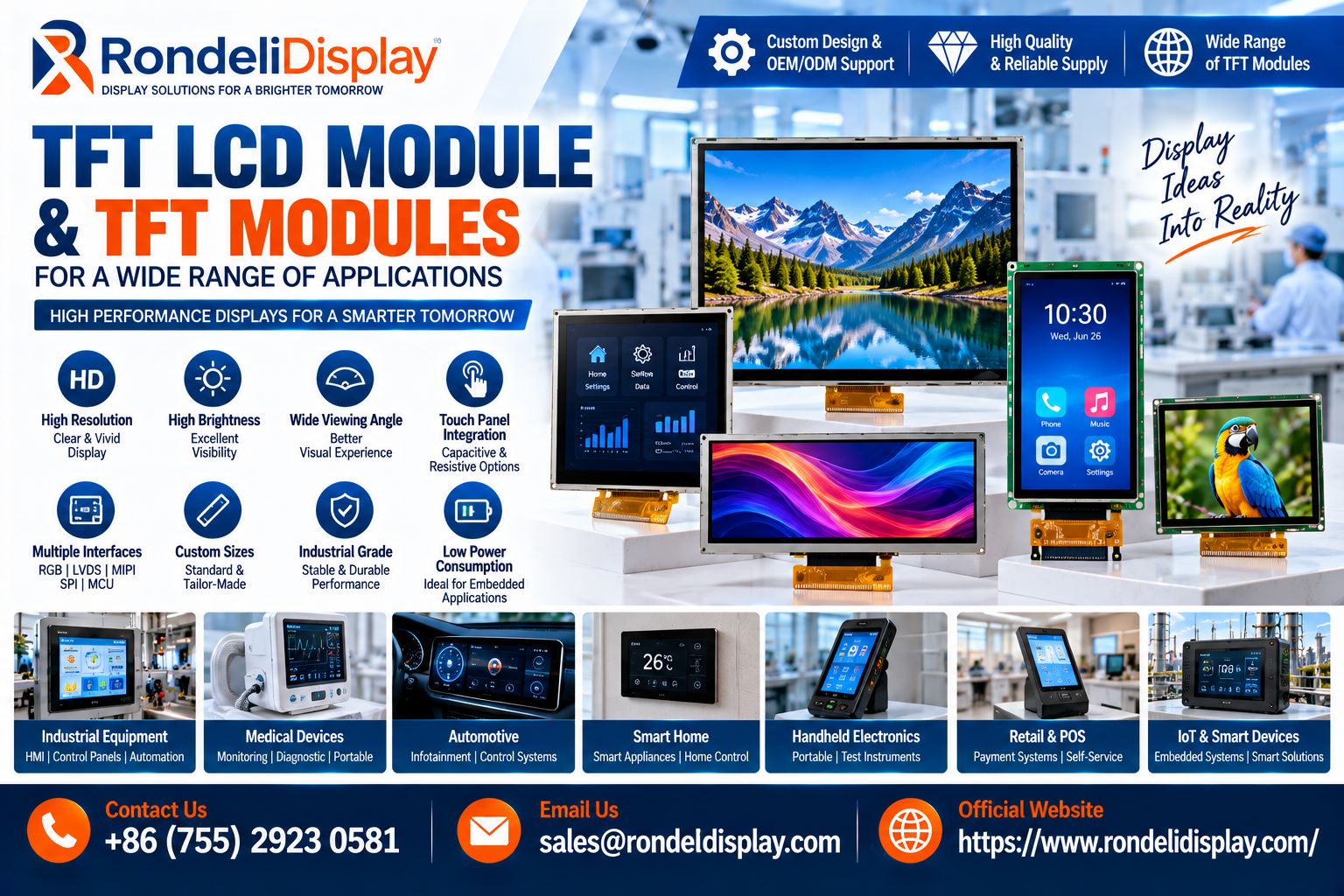
A TFT LCD Module provides graphical information through thin-film transistor liquid crystal display technology, allowing electronic devices to communicate operating information, images, and user instructions.
Meanwhile, TFT Modules are available in different configurations, offering manufacturers choices in screen dimensions, resolution, connectivity, and display performance.
However, selecting a suitable screen involves more than evaluating its initial specifications.
For OEM manufacturers and industrial equipment developers, component availability, technical documentation, replacement compatibility, and supplier communication are becoming important considerations in display procurement.
Why Display Lifecycle Planning Matters
Electronic products often remain in commercial use long after their initial development.
During this period, manufacturers may need replacement displays, additional production quantities, or compatible components for product maintenance.
Unexpected changes in display availability can complicate these requirements.
A replacement screen may have similar dimensions but different electrical interfaces, connector positions, or controller characteristics.
These differences can require engineering modifications.
Businesses should therefore include display lifecycle planning in their component selection process.
What Is a TFT LCD Module?
A TFT LCD Module is an active-matrix liquid crystal display assembly that uses thin-film transistors to control individual pixels.
It typically includes an LCD panel, backlight system, display-driving electronics, and suitable connections.
Depending on the design, it may also incorporate touch functionality or protective components.
These modules are used in applications requiring colour graphics, readable text, and visual information.
Important specifications include resolution, brightness, viewing angles, voltage requirements, and interface compatibility.
However, technical suitability should be assessed alongside expected supply continuity and product support.
Understanding Different TFT Modules
TFT Modules can differ significantly despite appearing similar.
Two displays with the same visible screen size may have different active areas, mounting dimensions, or electrical connections.
They may also use different display controllers or backlight configurations.
These variations can influence integration with the host equipment.
For example, an industrial controller designed around a particular display interface may require software or hardware changes if that interface becomes unavailable.
Manufacturers should maintain detailed specifications for approved components.
This helps engineering teams identify suitable alternatives when necessary.
Why Component Standardisation Supports Production
Standardisation can simplify purchasing and engineering across related product families.
A company manufacturing several electronic instruments may consider using compatible display configurations across multiple models.
This approach can reduce unnecessary component variations and simplify inventory management.
It may also support more consistent maintenance procedures.
However, standardisation should not override application requirements.
Products operating under different lighting, temperature, or power conditions may need different display specifications.
The objective is to identify compatible components where standardisation provides genuine operational value.
Managing Display Obsolescence Risks
Electronic components may become unavailable because of manufacturing changes, discontinued product lines, or evolving technology requirements.
When a display is discontinued, finding a replacement can become difficult.
Potential differences may involve display timing, electrical interfaces, mechanical dimensions, or optical characteristics.
Businesses should discuss product availability expectations with suppliers during procurement.
Maintaining approved engineering drawings and interface documentation can also support future redesign efforts.
For equipment requiring extended service support, replacement planning deserves particular attention.
Evaluating TFT Display Procurement Requirements
| Evaluation Factor | Technical Importance | Long-Term Business Consideration |
| Screen Dimensions | Mechanical integration | Replacement compatibility |
| Display Resolution | Visual information quality | Software consistency |
| Electrical Interface | Communication with host system | Alternative component availability |
| Backlight Configuration | Brightness and power consumption | Maintenance requirements |
| Operating Conditions | Environmental suitability | Product reliability |
| Supplier Documentation | Accurate engineering integration | Consistent procurement |
Evaluating these factors together can reduce unexpected engineering challenges.
Why Technical Documentation Is Essential
Reliable manufacturing depends on clear technical information.
Display documentation may include dimensional drawings, interface specifications, voltage requirements, timing information, and operating conditions.
These records help engineers integrate the screen correctly.
They also provide valuable references when reviewing replacement components.
Businesses should maintain controlled versions of approved specifications.
If a supplier introduces a component revision, engineering teams should determine whether it affects the finished product.
Proper documentation supports consistent manufacturing and more effective communication between suppliers and buyers.
The Importance of Prototype and Replacement Testing
A replacement display should not be approved solely because its advertised specifications appear similar.
Manufacturers should evaluate representative samples within the intended equipment.
Testing may include display functionality, brightness, electrical compatibility, mechanical fit, and environmental performance.
Software interaction should also be reviewed where display controllers or communication characteristics differ.
For industrial applications, additional reliability testing may be appropriate.
Sample qualification helps identify potential differences before new components enter commercial production.
How Custom TFT Modules Support OEM Requirements
Some electronic products require specialised display dimensions, interfaces, mounting arrangements, or optical characteristics.
Custom display development may address these requirements when standard products are unsuitable.
Depending on supplier capabilities, options may include modified connectors, selected brightness levels, touch integration, or cover glass configurations.
However, customisation can influence manufacturing quantities, development costs, and replacement availability.
Businesses should consider these commercial implications before approving a customised design.
A practical solution should balance functionality with manageable long-term procurement requirements.
Strengthening Display Supplier Relationships
A reliable display sourcing strategy requires consistent communication between procurement teams, engineers, and component suppliers.
Businesses should establish expectations concerning:
- Technical Specifications: Maintain approved electrical and mechanical requirements.
- Supply Planning: Discuss expected production quantities and availability.
- Engineering Changes: Establish procedures for reviewing component revisions.
- Sample Approval: Evaluate replacements before commercial use.
- Quality Control: Confirm inspection and acceptance standards.
- Product Support: Review documentation and technical assistance arrangements.
Clear supplier communication helps minimise production disruption and supports dependable equipment development.
Frequently Asked Questions (FAQs)
1. What is a TFT LCD Module?
A TFT LCD module is an active-matrix display assembly that uses thin-film transistor technology to present graphical information in compatible electronic equipment.
2. Where are TFT Modules commonly used?
They are used in industrial controllers, medical instruments, electronic terminals, smart appliances, and other products requiring graphical interfaces.
3. Why is display lifecycle planning important?
It helps manufacturers prepare for component revisions, availability changes, replacement requirements, and ongoing product support.
4. Can one TFT display be replaced with another of the same size?
Not always. Electrical interfaces, controller requirements, mounting dimensions, and other specifications must be verified.
5. How should OEM manufacturers choose a reliable TFT display supplier?
They should evaluate product specifications, documentation, sample quality, customisation capabilities, supply planning, and technical support.
Media Contact
Department: TFT LCD Module and OEM Display Technology Enquiries
Email: sales@rondelidisplay.com
Official Website: https://www.rondelidisplay.com/