The plastic manufacturing industry is exploring more flexible production methods as businesses expand product collections, introduce customised components, and respond to changing customer requirements.
Instead of developing completely independent manufacturing systems for every product variation, manufacturers are evaluating tooling strategies that accommodate multiple component designs while maintaining consistent quality.
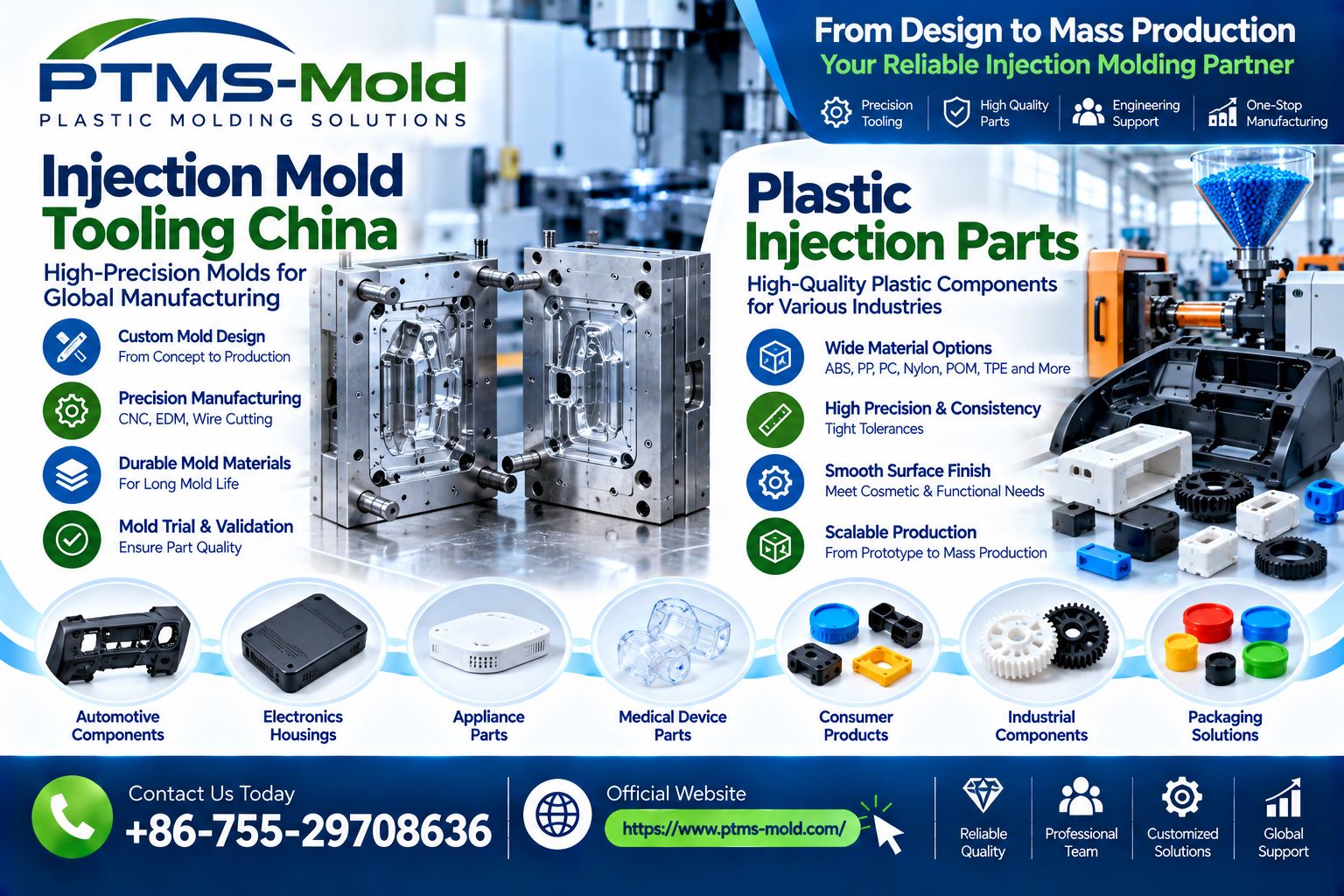
Injection Mold Tooling China offers sourcing opportunities for businesses seeking specialised mold engineering, interchangeable tooling components, and efficient plastic manufacturing solutions.
Meanwhile, Plastic Injection Parts remain essential across industries including electronics, automotive components, household appliances, industrial equipment, and consumer products.
An important consideration for product developers is how tooling can support future design variations without introducing unnecessary manufacturing complexity.
This shift towards flexible production planning is creating new opportunities for OEM companies, product designers, and industrial procurement teams.
Why Flexible Tooling Is Becoming Important
Modern product portfolios frequently include different sizes, colours, configurations, and design variations.
Manufacturing every variation through entirely separate tooling can increase initial investment and equipment storage requirements.
Flexible tooling strategies may help address these challenges.
For example, manufacturers can evaluate interchangeable mold inserts for related components that share suitable structural features.
However, not every product family can use the same mold structure.
“Effective tooling flexibility begins with identifying genuine similarities between components rather than forcing different products into one manufacturing system.”
Careful engineering evaluation helps determine whether a modular tooling approach is practical.
Understanding Injection Mold Tooling China
Injection Mold Tooling China refers to sourcing custom injection molds and related engineering services from manufacturing companies operating in China.
These services can involve mold design, precision machining, component manufacturing, assembly, testing, and production support.
Depending on supplier capabilities, buyers may request conventional molds, multi-cavity molds, or specialised tooling arrangements.
An important purchasing consideration is whether the selected supplier can support the project’s production requirements and expected component variations.
Buyers should establish clear specifications, inspection criteria, and manufacturing expectations before approving tooling development.
What Are Plastic Injection Parts?
Plastic Injection Parts are components produced by injecting molten thermoplastic material into a mold cavity.
After cooling and solidification, the component is removed from the mold.
This process can manufacture parts with detailed shapes, functional features, and controlled dimensions.
Examples include electronic housings, clips, connectors, appliance components, and industrial covers.
Material selection depends on factors such as strength, flexibility, chemical exposure, temperature resistance, and appearance.
The intended application determines which material and tooling configuration are most appropriate.
How Modular Injection Molds Support Product Variations
Modular injection molding uses tooling arrangements that allow selected components to be replaced or adjusted.
For example, a common mold base may accommodate interchangeable inserts designed for different but compatible part geometries.
This approach can be useful when manufacturers produce related components with shared design characteristics.
However, modular tooling introduces additional engineering requirements.
Insert alignment, cooling arrangements, material flow, and mechanical strength must remain suitable for each configuration.
Manufacturers should compare the cost of modular tooling with conventional dedicated molds before selecting an approach.
The objective is practical manufacturing flexibility, not unnecessary design complexity.
Why Product Family Planning Matters
A product family consists of related components sharing certain functional or dimensional characteristics.
For example, an electronics manufacturer might develop several enclosure models with similar external structures but different connector openings.
Engineers can evaluate whether these variations are suitable for interchangeable tooling components.
Early planning may reduce avoidable redesign work.
However, differences in wall thickness, material requirements, or production quantities can make shared tooling impractical.
“Successful product-family manufacturing depends on understanding which design features can remain consistent and which require independent engineering.”
This analysis supports better decisions about tooling investment.
Comparing Conventional and Modular Tooling
| Evaluation Factor | Conventional Dedicated Mold | Modular Injection Mold |
| Main Purpose | Produce a defined component | Support compatible component variations |
| Tooling Structure | Dedicated cavity configuration | May use replaceable inserts |
| Design Flexibility | Generally requires tooling modification | Depends on available modular features |
| Engineering Requirements | Part-specific mold development | Additional interface and alignment planning |
| Maintenance | Dedicated mold components | Shared and interchangeable components |
| Best Application | Stable product geometry | Suitable related product families |
Neither approach is universally superior. Production volume, design complexity, and total cost determine the appropriate solution.
The Role of Material Selection in Flexible Manufacturing
Different plastic materials behave differently during injection molding.
ABS, polypropylene, polycarbonate, and engineering nylons have distinct processing and shrinkage characteristics.
A mold developed for one material may require adjustments before another resin can be used successfully.
Material changes can influence cooling behaviour, dimensional accuracy, and surface appearance.
Therefore, modular tooling does not automatically support every material combination.
Manufacturers should validate each approved material and tooling configuration through suitable production trials.
Clear material specifications can help prevent unexpected component variations.
Managing Production Changeovers
Flexible manufacturing may require switching between different mold inserts, materials, or product configurations.
These transitions are commonly described as production changeovers.
Poorly planned changeovers can introduce unnecessary downtime and manufacturing errors.
Businesses should establish procedures covering tooling identification, equipment setup, process parameters, and sample approval.
Documented configurations help operators verify that the correct inserts and materials are installed.
Where suitable, standardised procedures can improve operational consistency.
However, production efficiency should never take priority over component quality or worker safety.
Why Quality Validation Remains Essential
Manufacturing flexibility increases the importance of reliable inspection.
Each tooling configuration must produce components that meet approved specifications.
Relevant checks can include dimensional measurements, surface inspection, assembly fit, and material verification.
For demanding applications, additional functional testing may be necessary.
First-article inspection helps confirm whether a changed configuration meets engineering requirements.
Maintaining records of approved setups and inspection results supports consistent manufacturing across repeated production orders.
Choosing a Reliable Injection Mold Supplier
Businesses evaluating manufacturing partners should consider:
- Engineering Expertise: Ability to assess modular and conventional mold designs.
- Precision Machining: Capacity to manufacture accurate tooling components.
- Material Knowledge: Understanding of relevant thermoplastic processing requirements.
- Prototype Development: Availability of mold trials and sample evaluation.
- Quality Control: Clear inspection procedures and dimensional verification.
- Production Support: Assistance with tooling adjustments and changeover planning.
The right supplier should recommend tooling arrangements based on technical feasibility rather than presenting one approach as suitable for every project.
Frequently Asked Questions (FAQs)
1. What is Injection Mold Tooling China?
It refers to sourcing injection mold design, engineering, and manufacturing services from Chinese tooling suppliers for producing customised plastic components.
2. What are Plastic Injection Parts commonly used for?
Plastic injection parts are used in electronics, automotive products, household appliances, industrial equipment, and various consumer products.
3. What is a modular injection mold?
A modular injection mold is a tooling arrangement designed with interchangeable or replaceable components that may support compatible product variations.
4. Can one injection mold produce different plastic components?
Some molds can accommodate multiple configurations through interchangeable inserts or specialised designs, but suitability depends on engineering requirements.
5. How can businesses improve flexible plastic manufacturing?
Businesses should evaluate product families, select appropriate tooling, document setup procedures, validate materials, and maintain consistent quality inspections.
Media Contact
Department: Precision Injection Tooling and Custom Plastic Manufacturing Enquiries
Contact: +86-755-29708636
Email: sales@ptms-mold.com
Official Website: https://www.ptms-mold.com/