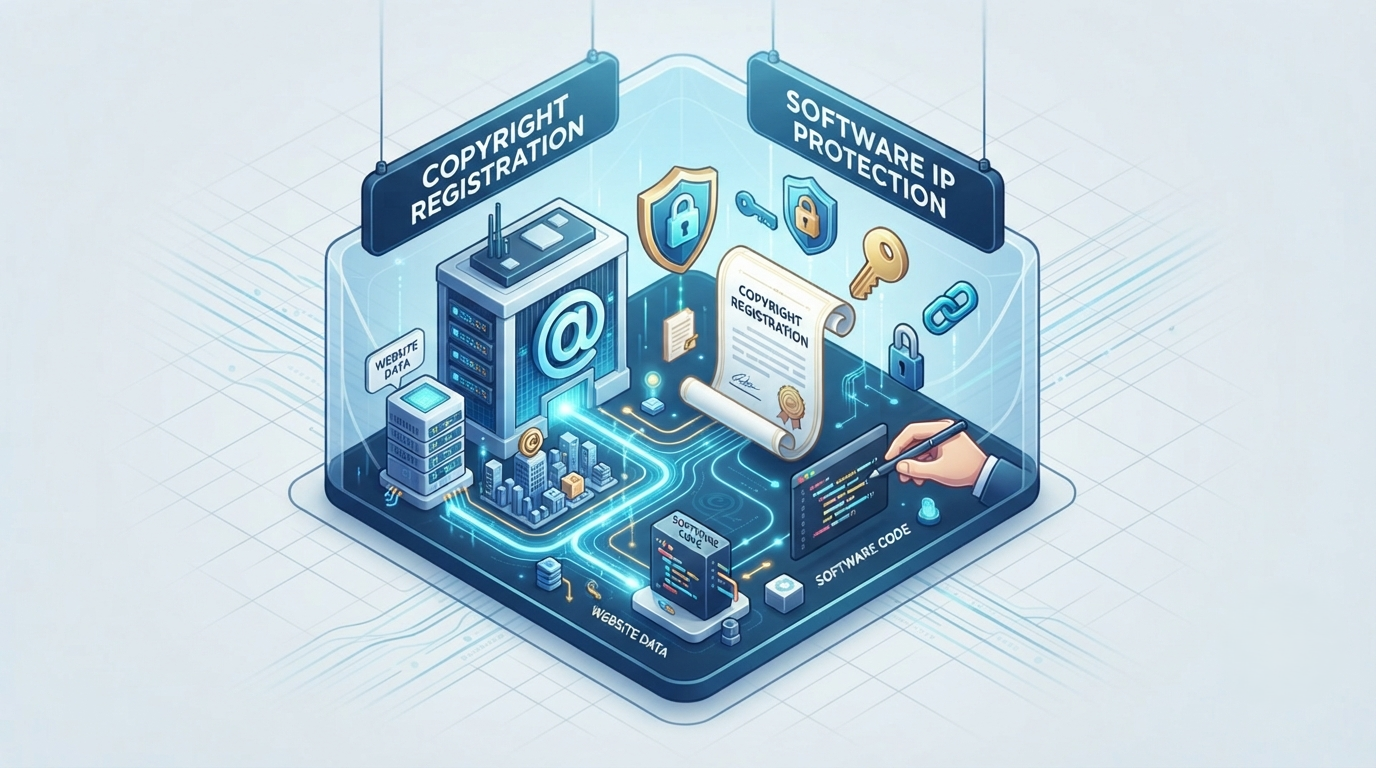
As India’s digital economy continues to expand, mobile applications have become important tools for startups, technology companies, and established businesses. With increasing investment in software development, understanding Mobile App Patent Registration India is becoming an important consideration for entrepreneurs seeking to protect innovative technologies and intellectual property.
Alongside technological protection, Logo Copyright Registration is gaining attention among businesses interested in safeguarding original brand artwork, visual identity, and creative assets.
From fintech platforms and healthcare applications to e-commerce solutions and artificial intelligence technologies, businesses must understand the differences between patents, copyright, and trademarks before choosing an intellectual property protection strategy.
Growing Importance of Mobile App Patent Registration India
Mobile applications have transformed how consumers access services, communicate, shop, and manage everyday activities.
Behind many successful applications are complex technical systems involving data processing, security technologies, communication protocols, and innovative software architectures.
However, developing a mobile application does not automatically make it eligible for patent protection.
Mobile App Patent Registration India refers to seeking patent protection for a qualifying technical invention associated with a mobile application, rather than obtaining a patent for the application concept itself.
Under the Patents Act, 1970, computer programs per se, algorithms, and certain other categories are excluded from patentability.
A computer-related invention may nevertheless require detailed assessment where it involves a qualifying technical contribution and meets applicable legal requirements.
What Is Mobile App Patent Registration?
Mobile app patent registration involves preparing and submitting a patent application for an eligible technical invention associated with mobile software or its supporting systems.
Patentable subject matter must satisfy applicable requirements, including novelty, inventive step, industrial applicability, and statutory exclusions.
Potential areas requiring professional assessment include technical improvements in mobile-device operations, network communication, data security, or hardware-software interactions.
However, not every technical feature qualifies for patent protection.
An innovative business model, ordinary application functionality, or abstract algorithm does not automatically become patentable simply because it operates through a smartphone.
Understanding Logo Copyright Registration
Logo Copyright Registration is the process of voluntarily registering an eligible original artistic logo with the relevant copyright authority in India.
A logo may include illustrations, graphical elements, artistic lettering, symbols, or other creative visual features.
Copyright protection generally arises automatically when an eligible original artistic work is created. Registration is not a prerequisite for the existence of copyright, although it may provide useful documentation and evidentiary benefits.
Businesses should also understand that copyright and trademark protection serve different purposes.
Copyright protects qualifying original artistic expression, while trademarks help distinguish the commercial source of goods or services.
Consequently, businesses may need to consider both forms of protection when developing their brand identity.
Key Differences Between Mobile App Patents and Logo Copyright
Selecting the correct intellectual property protection requires understanding what each legal mechanism covers.
| Mobile App Patent | Logo Copyright |
| Protects qualifying technical inventions | Protects eligible original artistic expression |
| Requires examination and patent grant | Copyright generally arises automatically |
| Governed primarily by patent law | Governed primarily by copyright law |
| Generally lasts 20 years from the applicable filing date, subject to requirements | Duration depends on the applicable copyright category and statutory rules |
| Focuses on eligible technical innovations | Focuses on original creative artwork |
These protections may complement one another but are not interchangeable.
Step-by-Step Mobile App Patent Filing Process in India
Businesses exploring Mobile App Patent Registration India should understand the main stages involved.
Step 1: Identify the Technical Invention
Determine whether the application contains a genuine technical innovation rather than only a general business idea or software feature.
Step 2: Conduct a Prior-Art Search
Review existing patent publications and technical information to identify potentially relevant inventions.
Step 3: Evaluate Patentability
Assess novelty, inventive step, industrial applicability, and compliance with Indian patent law.
Step 4: Prepare the Patent Specification
Document the technical problem, proposed solution, operating principles, and claims defining the protection sought.
Step 5: File the Application
Submit the prescribed patent documents and applicable fees through the Indian Patent Office’s filing system.
Step 6: Request Examination
An examination request must be submitted within the applicable statutory period.
Step 7: Respond to Objections
Patent examiners may identify legal or technical objections requiring clarification or amendments.
A patent may be granted only when the application satisfies applicable requirements.
How Logo Copyright Registration Works in India
Businesses seeking to register original logo artwork can follow a structured approach.
First, establish the ownership of the artwork and confirm that the design is original.
Next, identify the appropriate copyright registration category and prepare the required information.
Applicants can submit the prescribed application and supporting documents through the applicable registration procedure.
The application may be examined, and objections or other procedural requirements may need to be addressed.
Special considerations can arise where artistic works are used or capable of being used in relation to goods or services, including trademark-related documentation requirements.
Registration does not automatically resolve ownership disputes or guarantee that a logo does not infringe another party’s rights.
Why Startups Should Protect Both Technology and Brand Identity
Technology startups often invest significant resources in software development, product design, and marketing.
A comprehensive intellectual property strategy may involve patents for eligible technical inventions, copyright for original creative works, and trademarks for distinctive commercial identifiers.
Different rights address different risks. Patent protection concerns qualifying inventions, while copyright and trademark law can address separate aspects of creative and brand identity.
Companies should review intellectual property ownership agreements, particularly where applications or logos are created by external developers, agencies, or contractors.
Common Intellectual Property Mistakes to Avoid
Businesses sometimes assume that registering a company or domain name automatically protects every associated logo and technology.
Others publicly disclose inventions before evaluating patentability or use third-party artwork without appropriate permission.
Additional concerns include incomplete patent documentation, unclear intellectual property ownership, and confusing copyright registration with trademark registration.
Professional guidance can help businesses identify which protection methods are appropriate for their particular assets.
Frequently Asked Questions (FAQs)
1. What is Mobile App Patent Registration India?
It refers to applying for patent protection for an eligible technical invention associated with a mobile application under Indian patent law.
2. Can a mobile application be patented in India?
Certain qualifying computer-related inventions may be patentable, but computer programs per se, abstract algorithms, and other excluded subject matter are not patentable merely because they are innovative.
3. What is Logo Copyright Registration?
It is the voluntary registration of eligible original logo artwork under India’s copyright registration system.
4. Is logo copyright registration compulsory?
No. Copyright generally arises automatically in eligible original artistic works. Registration is optional but may provide documentary benefits.
5. What is the difference between copyright and trademark protection for a logo?
Copyright protects original artistic expression, while trademark protection concerns distinctive identifiers used to distinguish goods or services.
6. How long does a mobile app patent last in India?
An Indian patent generally has a 20-year term from the applicable filing date, subject to legal requirements and renewal obligations.
7. Can startups apply for software-related patents?
Yes. Startups may apply for protection of qualifying technical inventions, subject to statutory patentability requirements.
8. Can someone copy a logo after copyright registration?
Unauthorized reproduction of protected artwork may constitute infringement, depending on the facts, applicable exceptions, and ownership rights.
9. How much does patent and copyright registration cost?
Costs vary according to applicant category, applicable government fees, documentation requirements, professional services, and procedural complexity.
10. Can one business obtain patent, copyright, and trademark protection?
Yes. Different aspects of a business may qualify for different intellectual property rights when the relevant legal requirements are satisfied.
Media Contact
Department: Intellectual Property & Patent Services Enquiries
Industry: Intellectual Property, Patent Filing, Copyright & Trademark Services
Service Region: India
Contact Number: +91 8123585484
Email: info@ansipms.com
Official Website: https://www.ansipms.com/