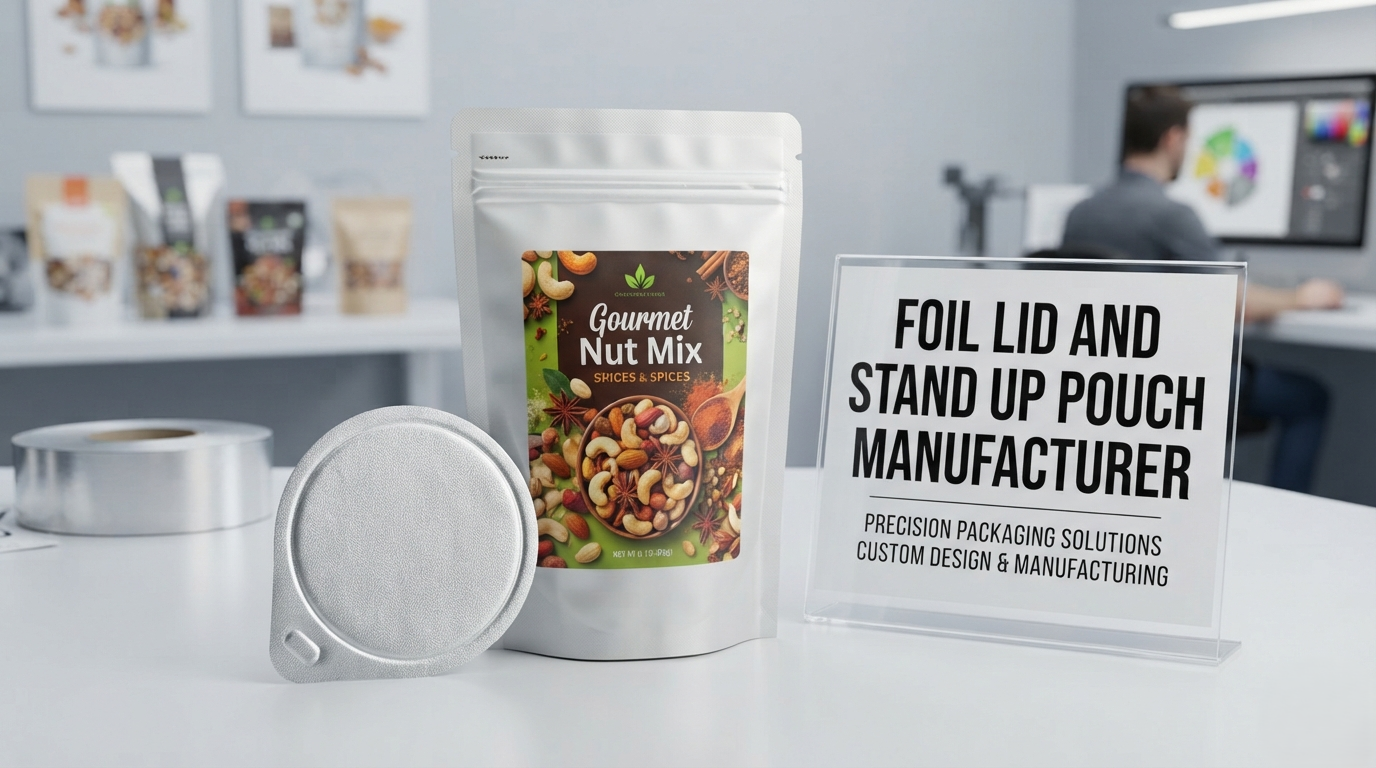
Packaging is no longer limited to protecting a product during transportation. It now plays an important role in shelf life, product safety, convenience, branding, sustainability, and consumer experience. Two formats that demonstrate this transformation are Foil Lid packaging and stand-up pouches. From traditional sealing applications to advanced flexible packaging, both formats have developed significantly and continue to attract manufacturers across food, beverages, pharmaceuticals, cosmetics, chemicals, and consumer goods.
The journey of a stand up pouch manufacturer reflects the wider development of flexible packaging. Manufacturers are moving from conventional multilayer materials toward smarter, lighter, and more recyclable structures while maintaining the barrier and sealing performance that modern products require.
The Early Development of Foil Lid Packaging
Aluminum foil became an important packaging material because of its ability to provide an effective barrier against light, moisture, oxygen, and contaminants. These characteristics made foil particularly useful for products that require controlled protection during storage and distribution.
The development of Foil Lid technology enabled manufacturers to seal containers without relying entirely on rigid closures. Foil lids became common for cups, tubs, trays, jars, and other containers used for food, pharmaceutical, healthcare, and personal-care products.
Early foil-lid solutions were primarily focused on function. Over time, manufacturers improved:
- Heat-sealing performance
- Peelability
- Printability
- Barrier protection
- Tamper evidence
- Material consistency
- Compatibility with automated filling equipment
This evolution transformed the foil lid from a simple closure into a technically engineered component of the complete package.
The Emergence of Stand-Up Pouches
Stand-up pouches developed as flexible packaging became more sophisticated. Their bottom gusset enables the package to stand vertically, providing better shelf presentation than conventional flat bags.
The format offered several advantages over many traditional rigid packages. It could use less material, weigh less, occupy less space during transportation, and provide convenient opening and dispensing options.
As consumer lifestyles changed, demand increased for packaging that was:
- Lightweight
- Portable
- Easy to open
- Resealable
- Space-efficient
- Visually attractive
These requirements encouraged the growth of stand-up pouches in snacks, coffee, pet food, sauces, powders, detergents, personal care, and other consumer categories.
How Stand-Up Pouch Manufacturing Changed
The early generation of flexible pouches commonly depended on laminated film structures. Different layers were combined to provide mechanical strength, printing capability, barrier properties, and heat sealing.
A modern stand up pouch manufacturer can select structures according to the product’s specific requirements. For example, a moisture-sensitive powder may require a different barrier solution from a liquid sauce or oxygen-sensitive food product.
Modern pouch designs can include:
- Zipper closures
- Spouts
- Tear notches
- Handles
- Rounded corners
- Custom shapes
- Hang holes
- Transparent windows
- High-barrier films
These features have expanded the role of pouches from simple bags to highly functional packaging systems.
The Present Role of Foil Lid Manufacturing
Today, Foil Lid production involves more than cutting aluminum foil into the correct shape. A successful lid must work with the container, sealing machine, filling line, and product.
Manufacturers may engineer the lid with several functional layers. Depending on the application, these can support printing, heat sealing, protection, and controlled opening.
For packaging buyers, important considerations include:
- Container material compatibility
- Sealing temperature
- Seal strength
- Peel performance
- Barrier requirements
- Storage conditions
- Filling-line speed
- Product sensitivity
A properly designed lid helps protect the contents while also providing consumers with a predictable opening experience.
Comparing Foil Lids and Stand-Up Pouches
| Factor | Foil Lid | Stand-Up Pouch |
| Packaging format | Container closure | Flexible package |
| Main strength | Barrier and sealing | Lightweight convenience |
| Typical application | Cups, tubs and trays | Foods, beverages and consumer products |
| Customization | Shape, printing and seal layer | Size, shape, printing and closure |
| Resealability | Usually limited | Available with zipper or spout |
| Transportation | Depends on container | Generally space-efficient |
| Sustainability potential | Material-dependent | Strong potential with optimized structures |
Neither format is universally better. The correct choice depends on the product, distribution environment, filling process, consumer requirements, and sustainability objectives.
The Sustainability Shift in Packaging
Sustainability is becoming one of the most important forces shaping packaging development. Brands want packaging that reduces unnecessary material without compromising shelf life or product protection.
For flexible packaging, one major direction is the development of mono-material structures. Conventional multilayer packaging can provide excellent performance, but its complex composition may make recycling more difficult in some waste-management systems.
Future pouch development is therefore expected to focus on:
- Recyclable PE and PP structures
- Lightweight film technology
- Reduced material consumption
- Improved barrier coatings
- Better seal performance
- Responsible sourcing
- Greater compatibility with recycling systems
However, sustainability should not be judged solely by whether a package is marketed as recyclable. The complete material structure, local collection infrastructure, product protection, and actual end-of-life pathway all matter.
Future Innovations for Foil Lid Packaging
The future of Foil Lid technology will focus on achieving high performance with efficient material use. Foil remains valuable where strong barrier protection is necessary, particularly for products affected by moisture, oxygen, or light.
Research and manufacturing improvements may increasingly concentrate on:
Improved Barrier Engineering
Manufacturers will continue developing thinner or optimized structures that maintain the required protection while reducing material consumption.
Better Peel Technology
Consumer-friendly opening will remain important. Future lids are likely to focus on predictable peel forces and cleaner opening without compromising seal integrity.
Advanced Printing
Digital and high-resolution printing can provide greater flexibility for product branding, promotional campaigns, smaller batches, and variable designs.
Automated Quality Control
Vision inspection, process monitoring, and data analytics can help manufacturers identify defects and maintain consistent sealing and printing quality.
The Future of Stand-Up Pouch Manufacturing
The next generation of the stand up pouch manufacturer will likely combine material science, automation, digital printing, and sustainable design.
Future pouches may increasingly incorporate:
- Recyclable mono-material constructions
- Advanced high-barrier coatings
- Smart dispensing systems
- Improved resealable closures
- Lightweight designs
- Short-run digital printing
- Enhanced puncture resistance
- Better filling-line compatibility
Manufacturers will also need to understand regional recycling requirements because a material considered suitable for recycling in one market may have limited recovery options elsewhere.
What Should Buyers Consider?
Selecting a packaging manufacturer should involve more than comparing prices. Buyers should evaluate the supplier’s ability to consistently deliver the required specifications.
Important Questions to Ask
- Can the manufacturer customize the material structure?
- Does the packaging suit the intended filling equipment?
- What barrier performance is available?
- Can the manufacturer provide recyclable options?
- What quality-control procedures are used?
- Are printing and finishing capabilities available?
- Can the supplier support different order volumes?
- Does the manufacturer provide technical guidance?
A technically capable supplier should help identify the most suitable packaging structure rather than simply selling a standard product.
FAQ About Foil Lid and Stand-Up Pouches
What is a Foil Lid used for?
A Foil Lid is commonly used to seal cups, tubs, trays, and other containers while helping protect the contents from external exposure.
Why is foil useful for packaging?
Aluminum foil provides strong barrier properties against light, moisture, and oxygen.
What makes a pouch stand upright?
A bottom gusset creates a stable base that allows the pouch to stand vertically.
Are stand-up pouches lightweight?
Yes. Their flexible construction can reduce packaging weight compared with many rigid formats.
Can stand-up pouches be resealed?
Yes. Zippers and other closure systems can allow consumers to reseal the package after opening.
Can a stand-up pouch contain liquids?
Yes. Suitable structures and closures can be engineered for sauces, beverages, liquid foods, and other products.
Are stand-up pouches customizable?
Yes. Manufacturers can customize dimensions, artwork, material structures, closures, gussets, and fitments.
Are foil lids recyclable?
Recyclability depends on the complete lid structure and the collection and recycling infrastructure available in the target market.
What is a high-barrier pouch?
A high-barrier pouch is designed to minimize the transfer of oxygen, moisture, aromas, or light to help protect sensitive products.
What is the biggest future trend in flexible packaging?
Sustainability is expected to remain a major trend, alongside lightweighting, recyclable structures, automation, digital printing, and improved barrier technology.