Manufacturers across the electronics, automotive, industrial equipment, and consumer technology sectors are placing greater emphasis on lightweight materials, functional product designs, and efficient manufacturing processes.
As products become more compact and performance requirements become increasingly demanding, engineers need reliable methods to evaluate metal components before committing to commercial production.
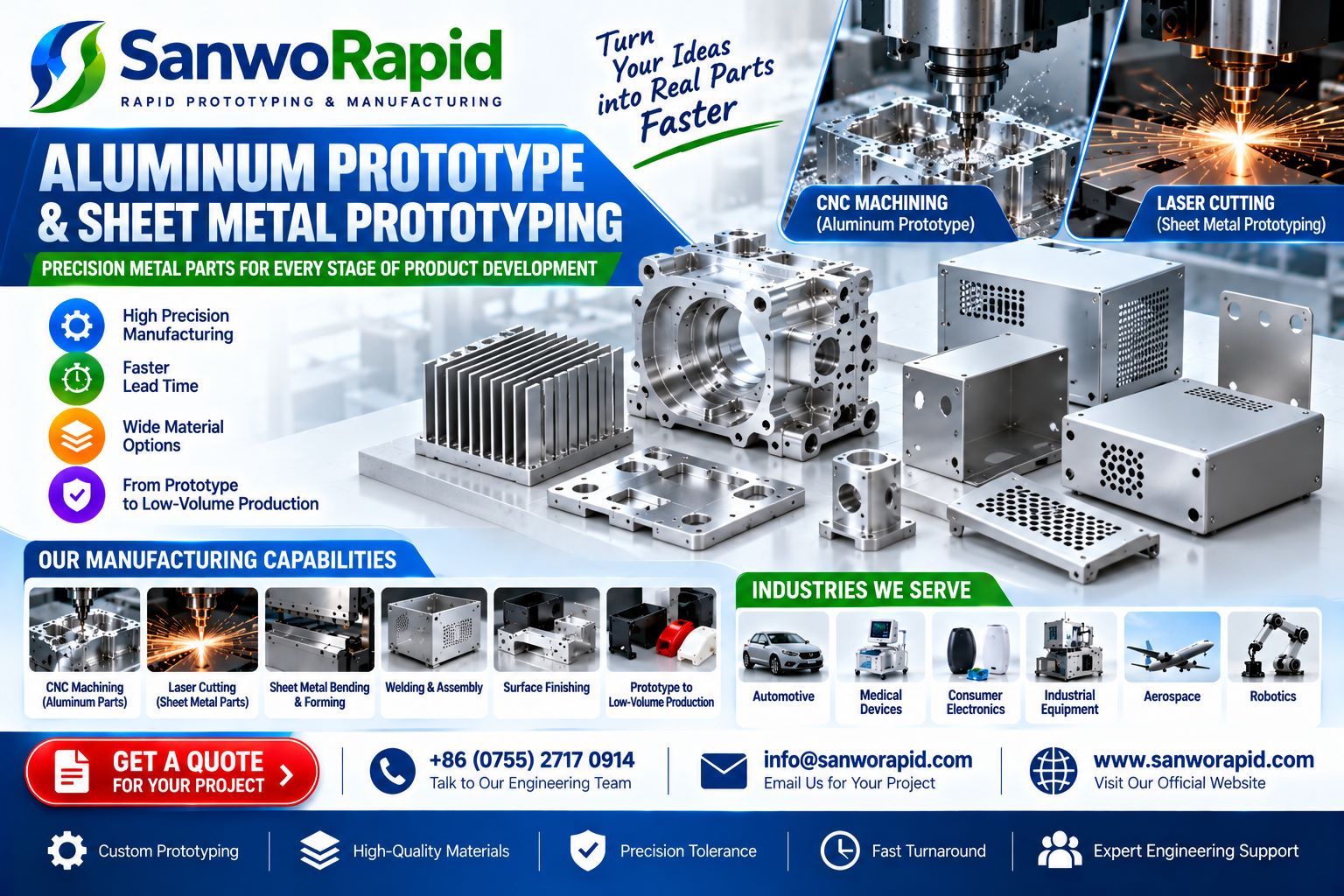
An aluminum prototype allows product developers to assess component geometry, structural performance, thermal considerations, and assembly requirements using an appropriate aluminium alloy.
Meanwhile, sheet metal prototyping provides a practical manufacturing approach for creating custom enclosures, brackets, panels, and other components from formed metal sheets.
Although these processes share certain applications, they offer different engineering possibilities.
Understanding their capabilities can help businesses improve product development decisions, reduce avoidable design changes, and select suitable manufacturing methods.
Why Lightweight Engineering Is Important in Product Development
Product weight can influence transportation, handling, equipment performance, and overall usability.
Aluminium is commonly considered for engineered components because it combines relatively low density with useful mechanical and thermal properties.
However, the performance of an aluminium component depends on the selected alloy, geometry, manufacturing process, and operating conditions.
A lightweight design must still satisfy appropriate strength, stiffness, and functional requirements.
Physical prototypes help engineers evaluate whether these objectives are realistic.
What Is an Aluminum Prototype?
An aluminum prototype is a physical sample manufactured from aluminium to evaluate a component’s design, dimensions, appearance, or selected functional characteristics.
Depending on the required geometry, prototypes may be produced through CNC machining, sheet metal fabrication, or other suitable manufacturing processes.
Aluminium prototypes are frequently considered for mechanical housings, structural brackets, equipment frames, electronic enclosures, and industrial components.
Using aluminium rather than an unrelated substitute material may provide more relevant information about weight, stiffness, and thermal behaviour.
However, prototype performance must be evaluated against the specified alloy and manufacturing conditions.
Understanding Sheet Metal Prototyping
Sheet metal prototyping involves producing sample components from metal sheets through operations such as cutting, bending, forming, and joining.
It is particularly useful for creating thin-walled parts, protective covers, cabinets, mounting structures, and customised enclosures.
Typical operations may include laser cutting, punching, press brake bending, and suitable assembly processes.
Compared with manufacturing a similar component from a solid metal block, sheet metal fabrication can offer material-efficient solutions for certain geometries.
However, this advantage depends on product design and manufacturing requirements.
Engineers should assess whether the component can be produced using practical forming and assembly methods.
CNC Machined Aluminum vs Sheet Metal Prototypes
Choosing between machining and sheet metal fabrication requires an understanding of the component’s intended function.
| Comparison Factor | CNC Machined Aluminum | Sheet Metal Prototyping |
| Starting Material | Solid stock or suitable workpiece | Metal sheet |
| Manufacturing Method | Material removal | Cutting and forming |
| Typical Components | Precision housings and mechanical parts | Panels, brackets, and enclosures |
| Complex Internal Features | Suitable for accessible machined geometries | Usually requires formed or assembled structures |
| Main Design Consideration | Machining access and material removal | Bend geometry and sheet thickness |
| Material Efficiency | Depends on stock and machining strategy | Can be efficient for suitable thin-walled designs |
Neither method is universally superior.
The appropriate choice depends on geometry, production requirements, material properties, and functional objectives.
Evaluating Thermal Management Through Prototypes
Thermal behaviour is an important consideration for certain electronic and industrial products.
Aluminium offers useful thermal conductivity, making it relevant to selected housings, heat-spreading components, and equipment structures.
An aluminium prototype can help engineers evaluate contact surfaces, ventilation arrangements, and component positioning.
However, thermal performance depends on more than material selection.
Surface contact, airflow, heat generation, surrounding components, and operating conditions all influence results.
A prototype should therefore be tested under representative conditions when thermal performance is critical.
This approach supports more informed design refinement.
Why Bend Design Matters in Sheet Metal Manufacturing
Sheet metal components require careful attention to bend-related features.
During bending, the material experiences deformation that influences the finished geometry.
Factors such as material thickness, bend radius, grain direction, and tooling can affect manufacturability.
Engineers must also consider bend allowances when developing flat patterns.
Poorly positioned holes or cutouts near bends may create distortion or manufacturing complications.
A suitable prototype can reveal these concerns before production tooling or processing methods are finalised.
Design changes should preserve required strength and assembly functionality.
The Importance of Assembly and Fastening Evaluation
Metal components rarely operate in isolation.
They may need to connect with plastic housings, electronic assemblies, fasteners, or other mechanical structures.
An aluminium prototype can help verify mounting positions, clearance, and alignment.
Sheet metal samples can also be used to assess fastening methods such as suitable screws, rivets, inserts, and welded connections.
However, fastening performance depends on material thickness, loading conditions, joint design, and manufacturing quality.
Prototype assembly testing helps identify practical issues that may not be immediately visible in a digital model.
Surface Finishing and Product Appearance
Appearance can influence product acceptance, particularly for consumer-facing equipment and visible industrial components.
Aluminium parts may require suitable finishing operations such as anodising, brushing, polishing, or coating.
Sheet metal products may also undergo powder coating or other appropriate surface treatments.
Finishing can influence colour, corrosion behaviour, surface texture, and dimensional characteristics.
For example, coating buildup may affect certain close-fitting assembly features.
Manufacturers should define relevant cosmetic and dimensional acceptance criteria before approving the prototype.
Applications Across Manufacturing Industries
Aluminium and sheet metal prototypes can support different product development requirements.
- Electronics: Equipment housings, mounting structures, and protective panels.
- Automotive Engineering: Lightweight brackets and selected structural components.
- Industrial Automation: Machine covers, frames, and equipment accessories.
- Robotics: Mechanical supports and customised mounting components.
- Consumer Products: Metal casings and appearance-focused components.
- Testing Equipment: Precision enclosures and instrument structures.
The manufacturing process should always match the application’s engineering and performance requirements.
How to Improve Prototype Development Decisions
Businesses can make prototype projects more effective by establishing clear engineering objectives.
Important considerations include:
- Material Selection: Specify the appropriate aluminium alloy and condition.
- Component Geometry: Evaluate machining or forming feasibility.
- Functional Requirements: Identify loading, thermal, and assembly expectations.
- Manufacturing Tolerances: Apply suitable dimensional requirements.
- Surface Finishing: Define appearance and protective treatment needs.
- Prototype Inspection: Verify critical features before design approval.
A structured evaluation process can reduce unnecessary revisions and support the transition towards production.
Frequently Asked Questions (FAQs)
1. What is an aluminum prototype used for?
An aluminium prototype helps engineers evaluate component dimensions, assembly compatibility, weight, appearance, and selected functional characteristics before production.
2. What is sheet metal prototyping?
It is the manufacture of sample metal components using suitable cutting, bending, forming, and assembly operations.
3. Which process is better for aluminium enclosures?
Sheet metal fabrication may suit thin-walled enclosures, while CNC machining may be appropriate for designs requiring solid sections or precision-machined features.
4. Can aluminum prototypes be used for functional testing?
Yes, provided the alloy, manufacturing method, and testing conditions are suitable for the intended evaluation.
5. What information is required for a sheet metal prototype quotation?
Manufacturers generally require CAD files, material specifications, sheet thickness, component quantities, tolerances, finishing requirements, and relevant assembly details.
Media Contact
Department: Aluminum Prototyping and Sheet Metal Manufacturing Enquiries
Contact: +86 (0755) 2717 0914
Email: info@sanworapid.com
Official Website: https://www.sanworapid.com/
Read More:-